

The Mushroom Coffee Trend: What You Need to Know
If you’re curious about mushroom coffee, it’s a blend of regular coffee and powdered medicinal mushrooms like lion’s mane or chaga, offering a gentler caffeine boost and potential health perks like improved focus and immune support. The flavor tends to be earthy and slightly bitter, varying by mushroom type. While promising, the health benefits aren’t fully confirmed, and it may cause mild side effects for some. Keep exploring to find out how it’s made and brewed.
What Is Mushroom Coffee?
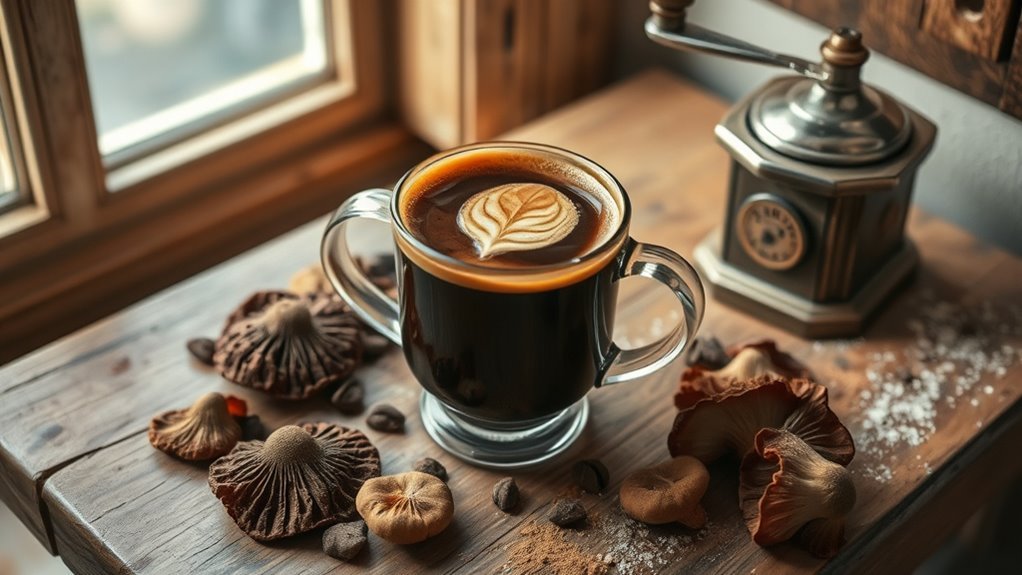
Although it might sound unusual, mushroom coffee is a blend that combines traditional coffee with powdered medicinal mushrooms like lion’s mane or chaga. This innovative beverage offers a unique alternative to regular coffee, appealing to those seeking different coffee alternatives with potential health benefits. By incorporating various mushroom types, mushroom coffee aims to provide a balanced experience, often with less caffeine and added antioxidants. While research is ongoing, some studies suggest these mushroom blends may support cognitive function and immune health. If you’re exploring coffee alternatives that align with a lifestyle valuing freedom and wellness, mushroom coffee might be worth trying. Just remember, its effects can vary depending on the mushroom types used and your personal tolerance.
Types of Mushrooms Used in Mushroom Coffee
Mushroom coffee blends typically feature specific medicinal mushrooms known for their health-promoting properties. Common varieties include Lion’s Mane, Chaga, and Reishi. Lion’s Mane is praised for supporting cognitive function, offering subtle earthy and slightly sweet flavor profiles that complement coffee well. Chaga provides antioxidants with a mildly bitter, rich taste, adding depth without overpowering your cup. Reishi, often called the “mushroom of immortality,” is valued for immune support and stress reduction, though its bitter notes can be more pronounced. Each mushroom contributes unique health benefits, allowing you to customize your experience based on what you seek—whether focus, immunity, or relaxation. Understanding these types helps you choose blends that align with your wellness goals while enjoying distinctive flavor profiles.
How Mushroom Coffee Is Made
When you brew mushroom coffee, the process begins by carefully selecting and preparing the medicinal mushrooms to preserve their beneficial compounds. Mushroom sourcing is essential; high-quality, organic mushrooms are often chosen to guarantee purity and potency. After sourcing, the mushrooms undergo drying and grinding into a fine powder. This powder is then blended with coffee beans. Roasting techniques play an important role here—both the mushroom powder and coffee are roasted to enhance flavor without degrading key nutrients. The blend is roasted gently to maintain balance between taste and health benefits. Finally, the roasted mix is ground, packaged, and ready for brewing. This method respects both the unique qualities of mushrooms and the familiar coffee experience, so you can enjoy a beverage that’s both functional and flavorful.
Potential Health Benefits of Mushroom Coffee

Now that you know how mushroom coffee is crafted to preserve both flavor and nutrients, it’s worth exploring what benefits it might offer. Different mushroom varieties like Lion’s Mane, Chaga, and Reishi are often blended for their unique compounds. Some health claims suggest these mushrooms may support cognitive function, boost immunity, and reduce inflammation. However, while preliminary studies show promise, the evidence isn’t definitive yet. You should consider mushroom coffee as a supplement rather than a cure-all. It can be a way to enjoy some added antioxidants and adaptogens with your morning brew, but results vary by individual. Always check product quality and consult with a healthcare professional if you have specific health concerns or conditions before making it a regular part of your routine.
Common Flavors and Taste Profile
When you try mushroom coffee, you’ll notice flavors vary depending on the mushroom used, like lion’s mane or chaga, each bringing unique notes. These varieties often blend with coffee’s natural bitterness to create earthy, slightly nutty or woody tastes. Understanding these combinations can help you decide which flavor profile suits your palate best.
Popular Mushroom Varieties
Exploring popular mushroom varieties in coffee reveals distinct flavors that can enhance your drinking experience. Lion’s mane, known for its mild, slightly sweet, and earthy taste, blends smoothly without overpowering your brew. It’s also praised for potential cognitive benefits, helping you stay sharp and focused. Chaga offers a deeper, woodsy flavor with subtle bitterness, bringing richness to your cup. Beyond taste, chaga benefits include antioxidant properties that support overall health. Other varieties like reishi provide a more bitter, robust profile often sought for relaxation effects. When choosing mushroom coffee, understanding these flavor profiles helps you pick what suits your palate and wellness goals, giving you freedom to enjoy both taste and function in every cup.
Flavor Combinations Explained
Understanding the unique flavors of each mushroom variety sets the stage for appreciating how they combine with coffee and other ingredients. Mushroom coffee often features earthy, nutty, and slightly bitter taste profiles that complement the rich, roasted notes of coffee. For example, chaga mushrooms bring a mild, woody flavor that blends smoothly, while lion’s mane adds a subtle sweetness. Flavor pairings may include cinnamon, vanilla, or cocoa to balance bitterness and enhance complexity. Adaptogens like reishi can introduce a slightly bitter, herbal undertone, so pairing with natural sweeteners helps create a balanced cup. By exploring these flavor pairings thoughtfully, you can enjoy mushroom coffee that’s both functional and satisfying without sacrificing taste. This approach gives you freedom to customize your brew according to your palate and wellness goals.
Comparing Mushroom Coffee to Regular Coffee
Although both mushroom coffee and regular coffee share a similar brewing process, their compositions and effects differ greatly, which can influence your choice depending on your health goals and taste preferences. Regular coffee is well-known for its caffeine content, providing a quick energy boost but sometimes causing jitters or crashes. Mushroom coffee, a popular coffee alternative, blends ground mushrooms—like lion’s mane or chaga—with coffee, offering potential mushroom benefits such as enhanced focus, reduced inflammation, and lower caffeine levels. If you’re seeking a gentler stimulant with added health perks, mushroom coffee might suit you better. However, if you prefer traditional coffee’s bold flavor and higher caffeine punch, regular coffee remains the go-to. Ultimately, understanding these differences helps you make an informed choice that aligns with your wellness and taste freedom.
Who Should Consider Drinking Mushroom Coffee?
If you’re looking for a coffee alternative with added health benefits, mushroom coffee might be worth trying. It’s often suitable for those with specific dietary needs, such as low caffeine tolerance or a preference for natural supplements. Plus, many users report improved energy and focus without the jitters typical of regular coffee.
Health Benefits Overview
While mushroom coffee isn’t a miracle cure, it offers several health benefits that might appeal to you, especially if you’re looking for a gentler alternative to regular coffee. Different mushroom varieties like lion’s mane, chaga, and reishi provide antioxidants, support immune function, and may promote mental clarity. It’s important to separate health myths from facts—while evidence suggests benefits, mushroom coffee isn’t a cure-all. If you want a balanced boost without jitters or crashes, it could be a good fit.
| Benefit | Mushroom Variety | Notes |
|---|---|---|
| Immune Support | Chaga, Reishi | Rich in antioxidants |
| Cognitive Boost | Lion’s Mane | May enhance focus and memory |
| Reduced Jitters | Blend of varieties | Lower caffeine than regular coffee |
Suitable Dietary Needs
Because mushroom coffee typically contains less caffeine and added antioxidants, it can be a suitable choice for people sensitive to caffeine or those looking to support their immune system naturally. If you’re vegan or require gluten free options, you’ll find many mushroom coffee brands cater to these dietary needs, making it accessible without compromising your lifestyle. Additionally, if you want a coffee alternative that’s gentle on digestion or helps reduce caffeine jitters, mushroom coffee might fit well into your routine. However, it’s important to check ingredient lists for any additives or allergens. As with any dietary change, consider your personal health conditions and consult a healthcare professional if uncertain. This approach helps guarantee mushroom coffee complements your unique dietary needs safely and effectively.
Energy and Focus Effects
Though mushroom coffee contains less caffeine than traditional coffee, it still offers a gentle energy boost that can enhance focus without the typical jitters or crashes. If you seek cognitive enhancement but are sensitive to caffeine’s effects, mushroom coffee might be a good choice. Its unique blend includes adaptogenic mushrooms, which some studies suggest support mental clarity and reduce stress. This means you could experience sustained energy and improved concentration throughout your day. However, it’s not a magic solution—results vary among individuals. If you value balanced alertness and want to avoid the highs and lows of regular coffee, mushroom coffee can fit into your routine. Consider trying it if you want an alternative that supports cognitive enhancement while promoting steady energy levels.
Possible Side Effects and Risks
Even though mushroom coffee offers potential health benefits, you should be aware of possible side effects and risks. While generally safe, some people might experience unwanted reactions. It’s important to reflect on how mushroom coffee interacts with your body, especially if you’re sensitive to caffeine or have allergies.
- Allergic reactions can occur if you’re sensitive to certain mushroom varieties.
- Caffeine interaction might cause jitters or sleep disturbances, depending on your tolerance.
- Digestive issues like upset stomach or nausea may arise, particularly if you exceed recommended dosage guidelines.
- Long term safety remains under-researched, so moderation is key until more data is available.
How to Brew Mushroom Coffee at Home
When brewing mushroom coffee at home, you’ll want to start by selecting the right type of mushroom blend based on your taste and desired benefits. Different brewing methods, such as using instant powders or steeping mushroom extracts like tea, can affect the flavor and potency. To enhance the taste, consider adding natural ingredients like cinnamon or a splash of milk, which can balance the earthiness of the mushrooms.
Choosing Mushroom Coffee Types
Since mushroom coffee combines the benefits of both coffee and medicinal mushrooms, choosing the right type depends on your taste preferences and health goals. Different mushroom varieties offer unique flavor profiles and health benefits. Here’s what you should consider:
- Chaga: Earthy and slightly bitter, known for antioxidant properties.
- Lion’s Mane: Mild, nutty flavor; supports cognitive function.
- Reishi: Bitter and woody, often used for stress relief and immunity.
- Cordyceps: Subtle, slightly sweet, popular for energy and endurance.
Brewing Methods Explained
Brewing mushroom coffee at home is straightforward once you understand the key steps and options. You can choose from various brewing techniques, such as French press, drip coffee maker, or pour-over, each affecting flavor and extraction. Start by mixing mushroom coffee powder with your preferred ground coffee, paying attention to coffee ratios—typically, a 1:1 ratio of mushroom blend to coffee grounds works well. Adjust ratios based on taste and desired potency. Use water heated between 195°F and 205°F to optimize extraction without bitterness. Steep or brew for 3-5 minutes depending on your method. Since mushroom coffee blends differ in texture and density from regular coffee, experimenting with brewing time and ratios helps you find the balance that suits your taste and desired effects.
Enhancing Flavor Tips
A few simple adjustments can greatly enhance the flavor of your mushroom coffee at home. By focusing on flavor profiles and aroma enhancements, you can elevate your brew without sacrificing the natural benefits of mushrooms. Here are some tips to get you started:
- Use freshly ground coffee and high-quality mushroom powder for richer flavor profiles.
- Brew with water just off the boil (around 200°F) to extract ideal taste without bitterness.
- Add a pinch of cinnamon or nutmeg to introduce warm, complementary aroma enhancements.
- Experiment with milk or plant-based alternatives to balance earthiness and create a smoother finish.
These small tweaks let you enjoy mushroom coffee tailored to your taste while preserving its unique health benefits. Embrace freedom in your brewing ritual by adjusting flavors to suit your personal preference.
Where to Buy Quality Mushroom Coffee Products
Where can you find reliable sources for quality mushroom coffee products? Start by exploring reputable mushroom coffee brands known for transparency and quality sourcing. Many of these brands offer detailed information about their ingredients and production methods, helping you make informed choices. Online retailers provide convenient access to a variety of options, often featuring customer reviews and third-party certifications that reinforce product credibility. While physical health stores can be useful, they might have limited selections compared to online platforms. To guarantee you’re getting genuine products, check for clear labeling on mushroom species and sourcing practices. By choosing trusted mushroom coffee brands through reliable online retailers, you maintain your freedom to select products aligned with your health goals and values without compromising on quality or authenticity.
Frequently Asked Questions
Can Mushroom Coffee Be Used in Espresso Machines?
You can use mushroom coffee in espresso machines, but it depends on the mushroom varieties and the blend’s consistency. Some blends, especially those with powdered mushrooms like reishi or chaga, may not extract well or could clog your machine. Brewing methods matter—you might get better results using a drip or French press. If you want freedom to experiment, start with small amounts and adjust to see what works best for your espresso setup.
How Long Does Mushroom Coffee Stay Fresh After Opening?
Once opened, mushroom coffee typically stays fresh for about 1 to 2 months if you follow proper freshness tips. To maintain its quality, you should store it in an airtight container away from heat, moisture, and direct sunlight. Using these storage methods helps preserve the flavor and beneficial compounds. Remember, keeping it cool and dry gives you the freedom to enjoy your coffee at its best, without rushing through the bag.
Is Mushroom Coffee Safe for Pregnant or Breastfeeding Women?
Wondering if mushroom coffee is safe during pregnancy or breastfeeding? It’s wise to be cautious—some mushrooms can carry toxicity risks, and caffeine levels, though often lower than regular coffee, still matter. Research on safety is limited, so you shouldn’t take chances with your health or your baby’s. Always consult your healthcare provider before adding mushroom coffee to your routine. Staying informed helps you make choices that truly set you free.
Can Mushroom Coffee Help Improve Athletic Performance?
You might find that mushroom coffee offers some endurance enhancement thanks to compounds like cordyceps, which have been studied for boosting stamina. Plus, certain mushrooms contain antioxidants that could support recovery benefits by reducing inflammation after exercise. However, while initial research is promising, the evidence isn’t definitive yet. So, if you’re aiming to improve athletic performance, it’s worth trying but don’t rely on it exclusively—balance it with proper training and nutrition.
Are There Any Environmental Benefits to Mushroom Coffee Production?
You might be surprised to learn that mushroom coffee production often embraces sustainable sourcing and eco-friendly practices. By utilizing agricultural waste and requiring less water than traditional coffee, it reduces environmental impact. These methods support biodiversity and lower carbon footprints, giving you a beverage choice aligned with your values of freedom and responsibility. While not perfect, this approach offers a promising step toward more sustainable, earth-conscious consumption you can feel good about.