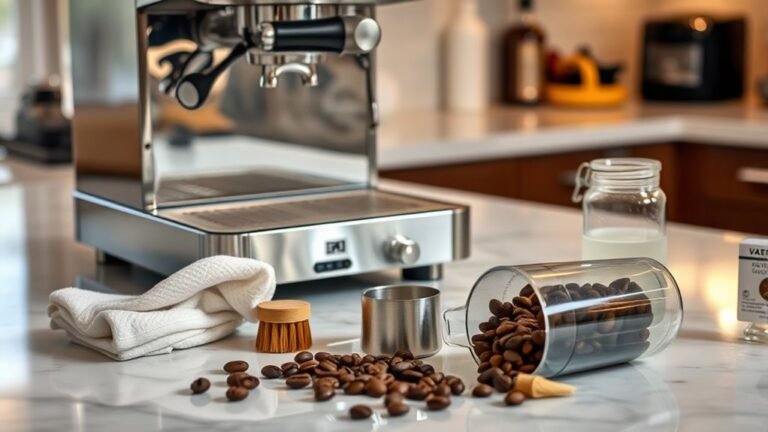

How to Clean Your Vietnamese Coffee Filter
To clean your Vietnamese coffee filter, start by disassembling it into the top, chamber, and drip tray. Rinse each piece under warm water to remove any coffee grounds, then use a soft sponge and mild dish soap to scrub away oils and debris. If stubborn residue clings on, soak in hot water or use a baking soda paste. Rinse thoroughly and let air dry completely before reassembling. With proper care, you’ll guarantee a delightful brew every time. There’s more to maintaining your filter for peak flavor.
Understanding Your Vietnamese Coffee Filter

When you’re diving into the world of Vietnamese coffee, understanding your coffee filter is essential for brewing that perfect cup. These filters, often made from stainless steel or aluminum, are designed to withstand high temperatures while allowing rich flavors to infuse your brew. The design typically includes a lid and a perforated plate, which helps control the brewing process. You’ll want to explore various brewing techniques—whether you prefer a slow drip for a robust flavor or a quicker method for a lighter taste. Each technique can considerably impact the coffee’s final profile. Embrace the journey of experimenting with different filter materials and brewing styles to discover what resonates with your taste buds, and enjoy the freedom of crafting your ideal cup!
The Importance of Regular Cleaning
Regular cleaning of your Vietnamese coffee filter is essential for a great brew. It helps prevent bitter residue from building up, ensuring every cup tastes as rich and flavorful as it should. Plus, keeping your filter clean can extend its lifespan, so you can enjoy your favorite coffee for years to come.
Preventing Bitter Residue
To enjoy the rich, aromatic flavors of Vietnamese coffee without the unpleasant bitterness, it’s essential to keep your coffee filter clean. Over time, residue buildup can occur from coffee grounds and oils, leading to bitter coffee that masks the true essence of your brew. Regular cleaning prevents this residue from turning your favorite drink into a bitter experience. Simply rinsing your filter after each use isn’t enough; a deeper clean every so often will guarantee you’re savoring every drop. Use warm water and mild soap, and don’t forget to check for any stubborn spots! Treat your coffee filter with care, and you’ll be rewarded with the vibrant flavors that make Vietnamese coffee a true delight.
Maintaining Flavor Integrity
If you want to truly appreciate the unique flavors of Vietnamese coffee, maintaining a clean filter is essential. Regular cleaning isn’t just a chore; it’s a commitment to flavor preservation. Residual oils and coffee particles can build up, dulling the vibrant notes that make each cup special. When you keep your filter spotless, you’re ensuring that every brew showcases the true essence of your coffee, enhancing its quality.
Imagine savoring that first sip, where rich chocolate and nutty undertones dance on your palate—this is what a clean filter delivers. By prioritizing this simple maintenance, you’re not just cleaning; you’re honoring the artistry behind Vietnamese coffee and ensuring every experience is as enriching as it should be.
Extending Filter Lifespan
While it might seem like a minor task, cleaning your Vietnamese coffee filter regularly is crucial for extending its lifespan. Neglecting this simple chore can lead to a buildup of oils and residues that can damage the filter materials over time. By adopting longevity techniques, like rinsing your filter after each use and deep cleaning weekly, you can keep it in prime condition. An occasional soak in soapy water can work wonders, too. Remember, a well-maintained filter not only lasts longer but also guarantees a cleaner, richer brew. Embrace these practices, and you’ll enjoy your coffee ritual with a filter that stands the test of time, giving you the freedom to savor every cup without worry.
What You’ll Need for Cleaning
Cleaning a Vietnamese coffee filter doesn’t require a long list of supplies, but having the right tools on hand makes the process smoother. You’ll want to gather a few essential cleaning supplies to keep your filter materials in top shape. Here’s what you’ll need:
- Soft Sponge or Cloth – To gently scrub the filter without scratching.
- Mild Dish Soap – A gentle cleanser to remove any coffee oils and residues.
- Hot Water – To help dissolve stubborn stains and sanitize the filter.
- Small Brush – A fine brush can reach the nooks and crannies of your filter.
Equipping yourself with these items will guarantee your cleaning experience is efficient and effective, allowing you to enjoy your next cup of coffee without any lingering flavors.
Step-by-Step Cleaning Process

To effectively clean your Vietnamese coffee filter, follow these simple steps that guarantee every part is thoroughly refreshed. Start by disassembling the filter, separating the top, chamber, and drip tray. Rinse each component under warm water to remove loose coffee grounds. For the filter materials, use a gentle sponge or cloth with mild dish soap—this helps avoid damaging the metal or plastic. Scrub carefully, ensuring you reach all nooks and crannies. Once cleaned, rinse everything thoroughly to eliminate any soap residue. Finally, let the pieces air dry completely before reassembling. Regularly using these cleaning techniques will keep your filter in top shape, ensuring each cup of coffee is as delightful as the last—cheers to freedom in your brewing ritual!
Dealing With Stubborn Residue
If you’re facing stubborn residue that just won’t budge, soaking your coffee filter in hot water can help loosen it up. For tougher spots, a baking soda paste can work wonders, breaking down the grime easily. Let’s explore these effective methods to restore your filter to its former glory!
Soaking in Hot Water
Although stubborn residue can be a common challenge when cleaning your Vietnamese coffee filter, soaking it in hot water can make all the difference. This soaking technique loosens the gunk, making it easier to clean. Here’s how you can effectively use hot water for this purpose:
- Boil water: Heat water to just below boiling for ideal soaking.
- Submerge the filter: Place your filter in a bowl and pour the hot water over it, ensuring it’s fully submerged.
- Let it soak: Allow the filter to soak for 10-15 minutes, giving the heat time to work on the residue.
- Rinse and scrub: After soaking, rinse it under warm water and gently scrub with a soft brush or cloth.
This simple method will help keep your coffee filter in great shape!
Baking Soda Paste
When stubborn residue clings to your Vietnamese coffee filter, a baking soda paste can be your secret weapon for restoring its shine and functionality. Simply mix three parts baking soda with one part water to form a thick paste. Apply it to the affected areas and let it sit for about 15 minutes. The baking soda benefits include its natural abrasive properties, making it effective in breaking down grime without scratching your filter.
Here’s a quick comparison of cleaning methods:
| Method | Effectiveness | Time Required |
|---|---|---|
| Baking Soda Paste | High | 15 minutes |
| Vinegar Soak | Medium | 30 minutes |
| Lemon Juice | Low | 10 minutes |
For tough spots, consider baking soda alternatives like salt or cream of tartar.
Drying and Storing Your Filter

Once you’ve finished brewing your delicious cup of Vietnamese coffee, properly drying and storing your filter is essential to maintain its quality and longevity. Here are some effective drying techniques and storage solutions to keep your filter in top shape:
- Air Drying: Place your filter upside down on a clean dish rack to allow air circulation, preventing moisture buildup.
- Towel Drying: Gently pat your filter with a soft, lint-free towel to remove excess water.
- Avoid Direct Sunlight: Keep your filter away from direct sunlight, as it can cause fading or warping.
- Store in a Dry Place: Choose a cool, dry cabinet or drawer to keep your filter safe, ensuring it’s free from dust and contaminants.
Tips for Maintaining Your Filter
Keeping your Vietnamese coffee filter in great condition goes beyond just drying and storing it properly. To guarantee its longevity, choose the right filter materials. Stainless steel is durable and easy to clean, while aluminum may require more care to prevent corrosion.
Establish a cleaning frequency that suits your brewing habits—ideally after every use. Rinse your filter with hot water to remove coffee oils, and occasionally use a gentle soap to eliminate stubborn residue. Avoid abrasive cleaners that can scratch the surface, compromising its integrity.
If you notice any signs of wear or rust, address them promptly to maintain your filter’s performance. By following these tips, you can enjoy a superior brew while keeping your coffee filter in tip-top shape.
When to Replace Your Coffee Filter

Knowing when to replace your coffee filter is essential for maintaining the quality of your brews. Ignoring the signs of wear can lead to a less enjoyable coffee experience. Here are some indicators it’s time for a change:
- Rust Spots: If you notice any rust forming, it’s a clear sign that your filter’s integrity is compromised.
- Bending or Warping: A filter that’s no longer flat can affect the brewing process and lead to uneven extraction.
- Cracks or Holes: Any visible damage means your filter can’t hold water properly, ruining your coffee.
- Staining or Odors: Persistent stains or unpleasant smells are indicators that your filter has absorbed too much over time.
Stay attentive to these signs, and your coffee will thank you!
Enjoying Your Clean Coffee Brew
After confirming your coffee filter is in top shape, you can truly appreciate the rich flavors and aromas of a well-brewed cup. As the hot water slowly drips through, the intoxicating coffee aroma fills the air, inviting you to indulge in this sensory experience. Each sip reveals the intricate notes of your chosen beans, enhancing your brew enjoyment. Whether you savor it black or add a splash of condensed milk, the freshness of a clean filter guarantees that every cup is a delight. Take a moment to enjoy the warmth of your mug in hand, letting the taste transport you to a cozy café in Vietnam. This ritual becomes a celebration of freedom, one delicious brew at a time.
Frequently Asked Questions
Can I Use a Dishwasher to Clean My Coffee Filter?
You might be wondering if you can toss your coffee filter in the dishwasher for a quick clean. While it may seem convenient, it’s important to take into account dishwasher safety and the durability of your filter. Many filters aren’t designed for high heat and strong detergents, which could warp or damage them. Instead, hand washing with warm, soapy water is often the safest way to maintain your filter’s longevity and guarantee great coffee every time.
What Materials Are Vietnamese Coffee Filters Made From?
When you explore Vietnamese coffee filters, you’ll find they’re typically made from stainless steel or aluminum, offering durability and heat retention. There are two main filter types: the traditional phin, which brews slowly, and the newer versions with enhanced designs. Each material has its benefits, ensuring you get that rich, flavorful coffee experience. So, whether you prefer a simple phin or a modern twist, you’re bound to enjoy the essence of Vietnamese coffee culture.
How Often Should I Deep Clean My Coffee Filter?
You should aim for a cleaning frequency that suits your coffee habits. If you’re brewing daily, a quick rinse after each use will suffice for daily maintenance. However, a deep clean every few weeks is recommended to prevent buildup and keep your coffee tasting fresh. Think of it as a ritual—taking care of your filter guarantees every cup reflects your love for quality coffee and freedom in every sip.
Can I Use Vinegar for Cleaning My Filter?
Yes, you can use vinegar for cleaning your coffee filter! Vinegar’s benefits include its natural antibacterial properties and ability to break down coffee oils and residue. To use it effectively, mix equal parts of vinegar and water. Let your filter soak in this solution for about 30 minutes, then rinse thoroughly. This cleaning tip not only keeps your filter fresh but also enhances the flavor of your brews, giving you that freedom to enjoy pure, delicious coffee.
Are There Any Specific Cleaning Products to Avoid?
You might think any cleaning product will do, but that’s not the case when it comes to filter maintenance. Avoid abrasive cleaners or harsh chemicals, as they can damage your filter and affect your coffee’s taste. Instead, stick to gentle dish soap or natural options. For effective cleaning tips, always rinse thoroughly to remove residues. Your filter deserves some care to guarantee every cup you brew is pure and delicious, reflecting your love for coffee.