
Tips for Hosting a Coffee Tasting Event
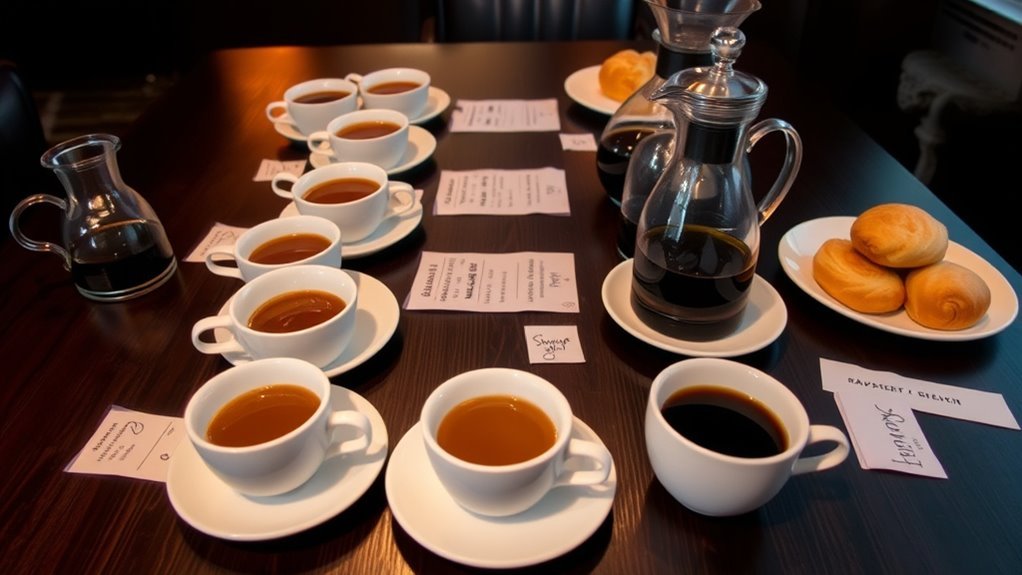
When hosting a coffee tasting, choose a variety of beans from different origins with diverse roast levels to showcase unique flavor profiles. Set up clean, labeled cups and prepare multiple brewing methods like pour-over and French press for varied extraction. Create a cozy, well-lit space with soft music to encourage relaxed discussion. Offer palate cleansers and pair coffee thoughtfully with complementary foods. Engage guests by prompting shared flavor observations and stories, enhancing both appreciation and connection. Discover more ways to elevate your coffee tasting experience with these essentials.
Selecting a Variety of Coffee Beans
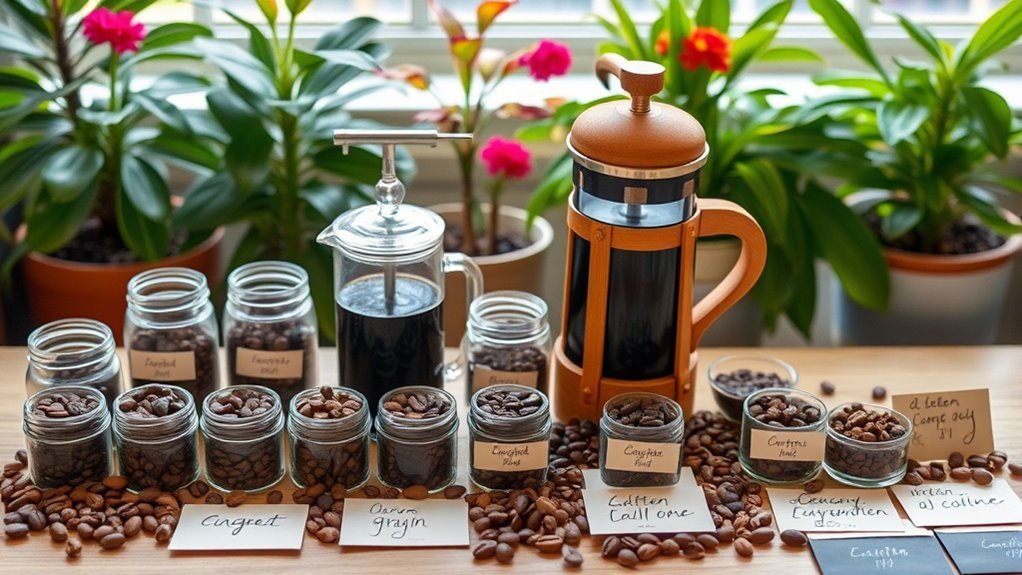
When selecting a variety of coffee beans for your tasting event, you’ll want to contemplate a diverse range of origins, roast levels, and flavor profiles to engage your guests fully. Choosing single origin beans is essential—they offer unique characteristics tied to specific regions, revealing extraordinary flavor diversity. For example, Ethiopian beans might bring floral and citrus notes, while Brazilian beans lean toward nutty, chocolatey undertones. Including different roast levels—from light to dark—further enhances the tasting experience, allowing guests to appreciate how roasting influences acidity, body, and aroma. By curating a thoughtful selection, you empower your guests to explore coffee’s complex spectrum freely, discovering their personal preferences without constraint. This deliberate approach transforms your event into a sensory journey celebrating coffee’s rich, global heritage.
Preparing the Tasting Setup
Having selected a diverse range of coffee beans, your next step is setting up an environment that highlights their unique qualities. To prepare an effective tasting setup, consider these key elements:
Creating an inviting space is essential to truly savor the unique flavors of each coffee brew.
- Arrange clean, clear cups or glasses labeled for each coffee, ensuring no cross-contamination affects the tasting notes.
- Set up your coffee equipment—grinders, brewers, and kettles—nearby for fresh preparation, allowing each coffee’s aroma and flavor to shine.
- Provide neutral palate cleansers like water and plain crackers to reset the senses between samples.
- Create a quiet, well-lit space that encourages focus and discussion, freeing guests to explore each coffee’s distinct character without distraction.
This thoughtful setup will empower you and your guests to fully appreciate the nuances of every brew.
Understanding Coffee Flavor Profiles
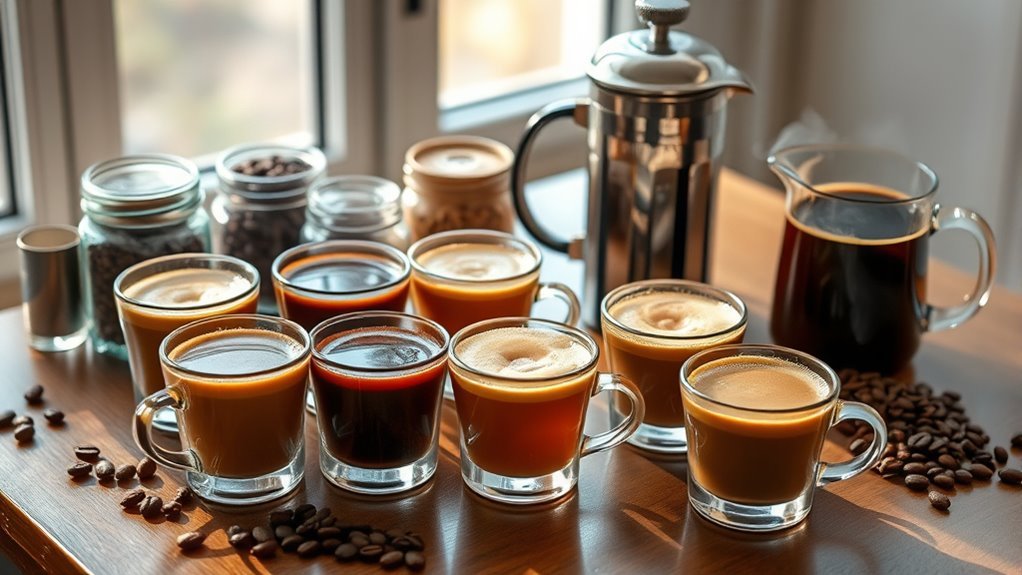
You’ll want to start by identifying key flavor notes like fruity, nutty, or floral, which reveal a coffee’s unique character. Understanding these nuances becomes clearer when you explore the coffee’s origin, as regions impart distinct tastes. This knowledge helps you appreciate the complexity behind each cup and guides your tasting experience.
Identifying Key Flavor Notes
Although identifying key flavor notes can seem challenging at first, developing a keen palate is essential for truly appreciating coffee’s complexity. To start, familiarize yourself with the flavor wheel; it’s an invaluable tool that categorizes common tasting notes. Next, engage in aroma assessment by deeply inhaling your coffee’s fragrance, which reveals subtle scent layers. Then, practice palate training by sampling different brews, noting each flavor’s intensity and balance. Finally, record your observations meticulously to refine your skill over time. Here’s a simple guide to help you:
- Use the flavor wheel to identify potential notes.
- Conduct aroma assessment before tasting.
- Train your palate regularly with diverse coffees.
- Document tasting notes systematically for progress.
This approach empowers you to discern and appreciate coffee’s intricate flavors freely.
Exploring Coffee Origins
Once you’ve sharpened your ability to identify key flavor notes, understanding where those flavors originate adds a new layer to your appreciation. Each coffee region brings unique coffee varieties shaped by local traditions, agricultural methods, and environmental impact. Sustainable sourcing guarantees that these flavor diversity and historical significance are preserved, honoring cultural practices and tasting rituals. Here’s a quick guide to exploring coffee origins:
| Coffee Region | Flavor Profile | Notable Aspects |
|---|---|---|
| Ethiopia | Floral, fruity | Birthplace of coffee, rich cultural practices |
| Colombia | Balanced, nutty, caramel | Sustainable sourcing, diverse agricultural methods |
| Sumatra | Earthy, full-bodied | Unique local traditions, strong environmental impact |
Embrace these origins to deepen your tasting experience and celebrate freedom in flavor exploration.
Brewing Techniques to Showcase
When preparing for a coffee tasting event, selecting the right brewing techniques is essential to highlight the unique flavors and aromas of each coffee. Different brewing methods emphasize various aspects of flavor extraction, allowing your guests to experience the full spectrum of each coffee’s profile. Consider these four brewing methods to showcase:
- Pour-over: Offers control over water flow and saturation, revealing delicate notes.
- French Press: Enhances body and richness through full immersion.
- Aeropress: Combines immersion and pressure for a bright, clean cup.
- Cold Brew: Extracts subtle sweetness and reduces acidity with slow, cold steeping.
Guiding Your Guests Through the Tasting
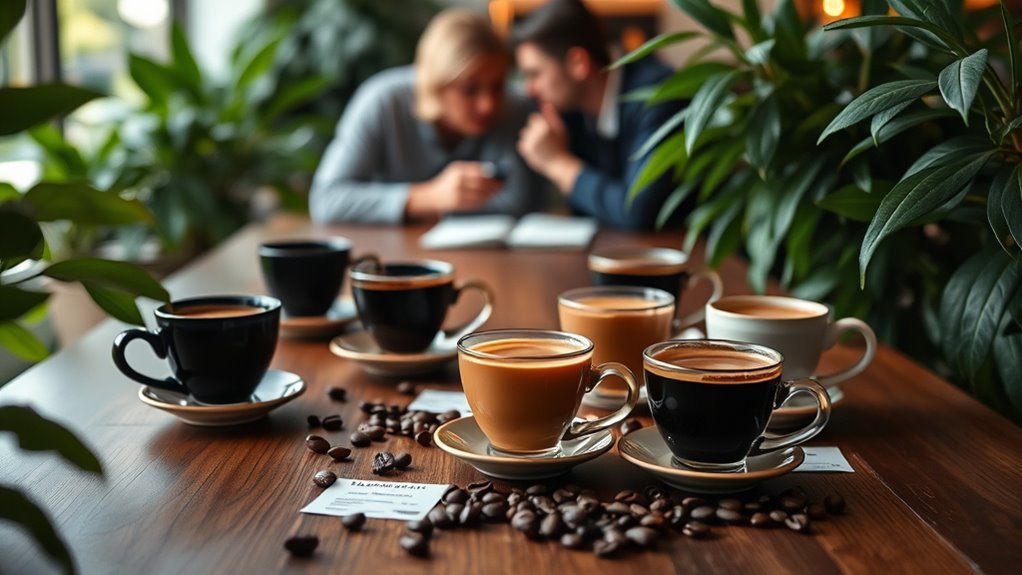
As you guide your guests through the tasting, it’s important to create a clear and engaging narrative that helps them focus on the distinct characteristics of each coffee. Invite them to observe the aroma, noting the subtle layers before sipping. Encourage attention to tasting notes—whether fruity, nutty, or floral—and how these evolve on the palate. Ask about their flavor preferences, fostering open dialogue to deepen appreciation. Provide context about the origin and processing methods that influence each cup’s profile. Guide them to compare acidity, body, and aftertaste thoughtfully, emphasizing personal experience over right or wrong answers. By leading with precision and freedom, you empower guests to explore and articulate their unique responses, making the tasting both educational and liberating.
Creating a Comfortable and Inviting Atmosphere
To make your coffee tasting event truly enjoyable, focus on comfortable seating and warm, adjustable lighting that sets a relaxed mood. Choose ambient music that complements the experience without overpowering conversation or the subtle flavors of the coffee. These thoughtful touches help guests feel welcome and engaged throughout the event.
Seating and Lighting
Although the focus of a coffee tasting is on the flavors and aromas, how you arrange seating and lighting plays an essential role in setting the mood. A well-thought-out seating arrangement encourages conversation and comfort, while thoughtful lighting effects enhance the overall experience.
- Choose flexible seating that allows guests to move easily, fostering interaction.
- Opt for seating arrangements that promote eye contact, like circular or semi-circular layouts.
- Use soft, warm lighting to create an inviting ambiance without overpowering the delicate coffee aromas.
- Avoid harsh overhead lights; instead, consider adjustable lamps or natural light to highlight the tasting area subtly.
Ambient Music Choices
Bringing in the right ambient music can really set the tone for your coffee tasting event, helping guests feel relaxed and engaged. To create a comfortable and inviting atmosphere, choose mood settings that complement the rich aromas and flavors of the coffee. Opt for soft acoustic tunes, light jazz, or instrumental pieces that don’t overpower conversation but add warmth and depth to the room. When curating playlist suggestions, consider tracks with steady rhythms and gentle melodies that encourage mindfulness and connection. Avoid abrupt changes in tempo or overly energetic songs that might distract or disrupt the tasting flow. By thoughtfully selecting ambient music, you’ll enhance the sensory experience, making your event not just a tasting but a memorable journey for everyone involved.
Pairing Coffee With Food
When you pair coffee with food thoughtfully, you reveal new layers of flavor that enhance both. Mastering coffee pairings means understanding how flavor complements interact, revealing a richer tasting experience. Here’s how to get started:
- Match light roasts with citrus or berry desserts to highlight acidity and brightness.
- Pair medium roasts with nutty or caramel-flavored pastries, emphasizing sweetness and body.
- Serve dark roasts alongside dark chocolate or smoked cheeses to balance bitterness with richness.
- Introduce savory options like cheeses or spiced nuts to contrast and elevate flavor profiles.
Encouraging Discussion and Sharing Experiences
Pairing coffee with food opens up a world of flavors that naturally invites conversation. Encourage your guests to share their coffee memories and flavor preferences, fostering a relaxed atmosphere where everyone feels free to express their palate’s journey. Prompt discussions about brewing experiences and favorite roasters to deepen connections and expand knowledge. Introduce tasting techniques that highlight subtle notes, allowing participants to appreciate regional specialties and their unique characteristics. Explore the cultural significance behind coffee rituals from different parts of the world, enriching the tasting with stories that resonate beyond the cup. By guiding your group to openly discuss and compare, you create a dynamic space where coffee becomes a shared language—celebrating individuality while uniting everyone through the joy of discovery.
Frequently Asked Questions
How Far in Advance Should I Plan the Coffee Tasting Event?
You should start your event timeline at least 4 to 6 weeks before the day. This gives you enough time to create a thorough planning checklist, secure your venue, select coffee varieties, and arrange supplies. It also allows flexibility for unforeseen changes, ensuring a smooth experience. By giving yourself ample time, you can focus on the details that matter, making your event enjoyable and freeing you from last-minute stress.
What Is the Ideal Number of Guests for a Coffee Tasting?
When deciding on the ideal number of guests, aim for a group small enough to foster engaging guest dynamics yet diverse enough to explore varied tasting preferences. Around 6 to 10 people works well—you’ll have lively conversations without feeling overwhelmed. This size lets everyone share their thoughts freely while you manage the tasting smoothly. Keeping it intimate guarantees each guest can savor and discuss the nuances of each coffee, making the experience richer for all.
Can I Host a Virtual Coffee Tasting Event?
Hosting a virtual coffee tasting event is like sending a telegram in the digital age—unexpected but invigorating. You can easily connect with friends on virtual platforms like Zoom or Google Meet. Prepare coffee pairings ahead, emailing participants detailed tasting notes. Encourage freedom to explore flavors together, sharing impressions in real time. This setup lets you enjoy rich discussions and discover new brews without geographic limits, making your tasting both accessible and engaging.
What Equipment Is Essential for a Professional Coffee Tasting?
You’ll need a quality coffee grinder to guarantee fresh, consistent grounds for each sample—precision matters here. Cupping bowls are essential too; they’re designed to hold the perfect amount of coffee and allow you to evaluate aroma and flavor fully. Along with a reliable scale, spoons for tasting, and hot water at the right temperature, these tools give you the freedom to explore coffee profiles professionally and enjoy the full sensory experience.
How Do I Clean Equipment Between Different Coffee Brews?
When cleaning equipment between different coffee brews, you’ll want to use effective cleaning techniques to guarantee no flavors mingle. Start by rinsing with hot water immediately after each brew to prevent residue buildup. Follow with thorough equipment sanitization using a mild detergent or specialized coffee equipment cleaner. Be sure to rinse well to avoid any soap taste. This careful process lets you enjoy each coffee’s unique profile without interference, giving you true freedom to savor every sip.