The Science Behind the Perfect Coffee Extraction Time
You’ll achieve perfect coffee extraction by precisely balancing grind size, water temperature, and brew time. Finer grounds speed extraction but risk bitterness, while coarser grinds slow it down, risking sourness. Ideal water temperature ranges from 195°F to 205°F, optimizing flavor extraction without over or under-extracting. Each brew method has a specific extraction window—espresso generally needs 25-30 seconds, pour-overs 2.5-4 minutes. Understanding these variables sets the foundation for mastering your ideal cup’s flavor nuances.
Understanding Coffee Extraction
Although it might seem straightforward, understanding coffee extraction requires a precise grasp of how water interacts with coffee grounds. Extraction chemistry involves dissolving compounds at different rates, influencing coffee flavor. When water contacts the grounds, it first extracts acids and sugars, creating brightness and sweetness. Over-extraction pulls out bitter, undesirable compounds, while under-extraction leaves the brew weak and sour. You must recognize that the balance of extraction chemistry determines the final flavor profile, demanding control over variables like grind size and water temperature. By mastering this interaction, you gain freedom to craft coffee that aligns with your taste preferences, avoiding common pitfalls. Your awareness of extraction dynamics transforms coffee brewing into a deliberate, exact process rather than guesswork, ensuring consistent, flavorful results every time.
Factors Influencing Extraction Time
Since extraction time directly impacts flavor balance, understanding the factors that influence it is essential for precise brewing control. You’ll want to evaluate grind size first: finer grounds increase surface area, accelerating extraction, while coarser grounds slow it down. Next, the brew ratio—the coffee-to-water proportion—plays a critical role. A higher brew ratio demands longer extraction to maintain extraction balance, avoiding under- or over-extraction. Water temperature also affects extraction speed; hotter water extracts solubles faster, shortening ideal extraction time. Finally, agitation or flow rate can alter contact between water and grounds, impacting extraction uniformity. By mastering these variables, you gain freedom to tailor your brew, achieving consistent flavor profiles with precise control over extraction time.
Optimal Extraction Times for Different Brew Methods
When you’re pulling an espresso shot, timing is critical—typically around 25 to 30 seconds—to balance acidity and bitterness precisely. For pour-over methods, extraction usually takes between 2.5 to 4 minutes, allowing nuanced flavors to develop through controlled saturation and flow rate. Understanding these time frames helps you tailor your brew for ideal flavor extraction.
Espresso Extraction Timing
As you dial in your espresso, understanding the ideal extraction time is essential for balancing flavor intensity and avoiding under- or over-extraction. Extraction variables like grind size, pressure, and dose all influence your espresso shot’s timing. Typically, a 25-30 second window yields a balanced profile, but precise control releases nuanced flavors.
| Brew Method | Best Extraction Time (seconds) |
|---|---|
| Ristretto | 18-22 |
| Standard Espresso | 25-30 |
| Lungo | 35-40 |
| Double Shot | 25-30 |
| Aeropress | 60-90 |
Mastering espresso timing grants you freedom to craft your preferred taste, avoiding sour or bitter extremes through accurate calibration of extraction variables.
Pour-Over Brew Duration
Three key factors determine the ideal pour-over brew duration: grind size, water temperature, and filter type. Adjusting grind size affects how quickly water flows through your coffee grounds; finer grinds slow extraction, requiring longer brew times, typically between 2.5 to 4 minutes. Water temperature around 195–205°F guarantees peak solubility, balancing extraction speed without scorching flavors. Filter type influences flow rate—paper filters slow extraction compared to metal ones. Mastering these variables within your pour over equipment lets you tailor brew techniques to your taste preference and desired strength. For most pour-over methods, aiming for a total brew duration of 3 to 4 minutes strikes a balance between under- and over-extraction. This precise control grants you the freedom to craft a cup that highlights your coffee’s nuanced flavors.
The Role of Grind Size in Extraction
Although grind size might seem like a minor detail, it plays an essential role in controlling your coffee’s extraction time and flavor profile. When you adjust grind size, you directly influence the surface area exposed to water, thereby speeding up or slowing down extraction. Consistent grind consistency guarantees uniform particle shape, which prevents uneven extraction that can lead to bitterness or sourness. If your grind is too coarse, water flows quickly, under-extracting the coffee; too fine, and water struggles to pass through, over-extracting flavors. By mastering grind size and maintaining precise particle shape, you gain control over extraction dynamics, allowing you to tailor brew time and flavor intensity. This precision sets you free to experiment confidently, achieving your ideal cup every time.
Impact of Water Temperature on Extraction
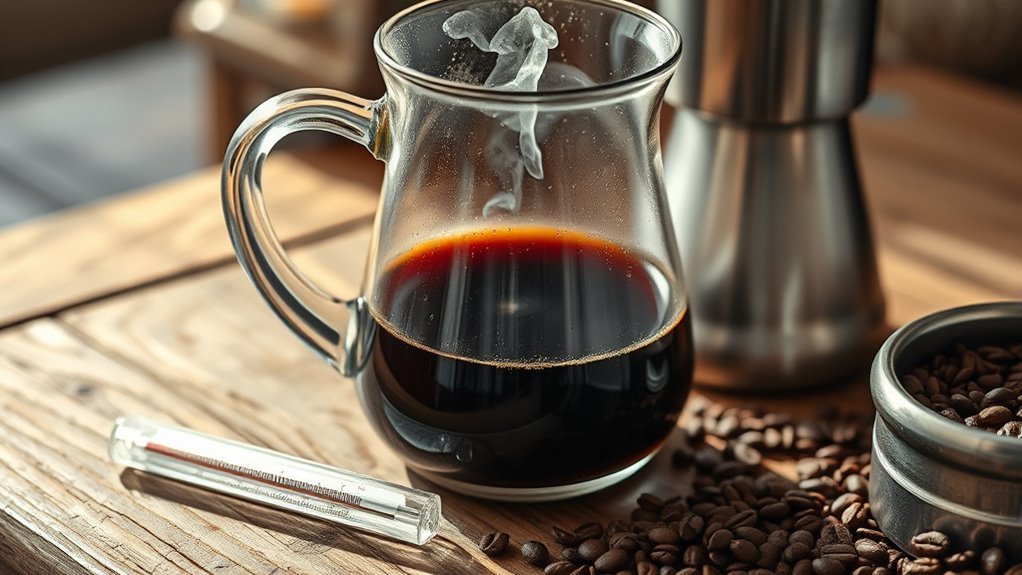
You’ll need to keep your water temperature within the ideal range of 195°F to 205°F to extract balanced flavors without bitterness or sourness. Temperatures outside this window can under-extract or over-extract compounds, altering the coffee’s profile drastically. Consistently maintaining heat during brewing guarantees a stable extraction time and preserves the desired taste characteristics.
Optimal Temperature Range
Maintaining water temperature between 195°F and 205°F is essential for achieving ideal coffee extraction, as slight fluctuations within this range can considerably alter flavor profiles. When you control the temperature precisely, you harness the full potential of your brewing techniques. Temperatures below 195°F risk under-extraction, leaving your coffee sour and weak, while exceeding 205°F can lead to over-extraction, causing bitterness and harshness. The narrow window allows optimal solubility of coffee compounds, balancing acids, sugars, and oils. To guarantee consistency, use a reliable thermometer or temperature-controlled equipment. Mastering this range empowers you to experiment confidently, adjusting temperature to subtly influence extraction kinetics without compromising freedom in your brewing style. Ultimately, respecting this optimal temperature range is a foundational step toward crafting coffee with nuanced, vibrant flavor profiles.
Temperature Effects on Flavor
When water temperature shifts within the ideal range, the chemical extraction of coffee compounds changes considerably, directly influencing your brew’s flavor profile. By carefully managing the temperature profile during extraction, you control the solubility of acids, sugars, and bitter compounds. Higher temperatures accelerate extraction, intensifying bitterness and body, while lower temperatures emphasize acidity and brightness. Striking the right temperature balance guarantees optimal extraction of desirable flavors without over-extracting harsh elements. This delicate interplay allows you to craft a cup that highlights nuanced flavor balance, revealing the coffee’s full potential. Understanding how even small temperature variations affect extraction empowers you to experiment and refine your brewing process, achieving a consistent, precise flavor expression that aligns with your taste preferences and desire for freedom in crafting your perfect cup.
Maintaining Consistent Heat
Although temperature fluctuations may seem minor, they can considerably alter the extraction process, affecting the balance of flavors in your coffee. Maintaining consistent heat is essential to guarantee peak extraction. When you control heat retention effectively, the water temperature remains stable throughout the brewing cycle, preventing under- or over-extraction. Temperature stability directly influences solubility rates of coffee compounds; even slight deviations can lead to bitterness or sourness. To achieve this, you need equipment with reliable thermal properties and minimal heat loss. Additionally, preheating your brewing vessel and using insulated containers help sustain temperature stability. By prioritizing consistent heat, you empower yourself to extract coffee’s full potential, balancing flavor complexity and smoothness, ultimately delivering a cup that reflects precision and freedom in your brewing technique.
Troubleshooting Common Extraction Issues
Why does your coffee sometimes taste bitter, sour, or weak despite following extraction guidelines? The answer lies in controlling extraction variables that directly impact flavor balance. You’re not just fighting time; grind size, water temperature, dose, and pressure all interplay intricately. To troubleshoot:
Flavor balance hinges on fine-tuning grind size, temperature, dose, and pressure—not just timing alone.
- Grind Size: Too fine causes over-extraction (bitterness); too coarse leads to under-extraction (sourness).
- Water Temperature: Below 195°F extracts sour notes; above 205°F extracts bitter compounds.
- Dose Consistency: Variations alter strength and extraction time.
- Tamping Pressure: Uneven tamping creates channeling, disrupting uniform extraction.
- Brew Time: Too short yields weak coffee; too long pulls excessive bitterness.
Mastering these variables lets you reclaim flavor freedom, ensuring every cup hits the perfect extraction sweet spot.
Frequently Asked Questions
How Does Altitude Affect Coffee Extraction Time?
You’ll notice altitude affects coffee extraction time because of pressure differences; at higher elevations, lower atmospheric pressure slows water’s boiling point. This change impacts brewing methods, like espresso, which rely on precise pressure to extract flavors efficiently. You’ll need to adjust your technique—maybe extend extraction time or tweak pressure settings—to guarantee peak flavor. Understanding these variables lets you experiment freely and customize your perfect cup regardless of altitude.
Can Water Mineral Content Alter Extraction Efficiency?
Yes, water mineral content can definitely alter extraction efficiency. When you consider water hardness, which relates to calcium and magnesium levels, it directly impacts how well your coffee compounds dissolve. A proper mineral balance helps extract flavors evenly, preventing sourness or bitterness. If your water’s too soft or too hard, it disrupts this balance, leading to under- or over-extraction. So, adjusting mineral content can really free up your coffee’s full potential.
What Is the Impact of Coffee Bean Roast Level on Extraction?
You might think roast intensity doesn’t affect extraction much, but it actually plays an essential role. Darker roasts have more porous beans, making them easier to extract, while lighter roasts require longer contact with water to fully develop their flavor profile. Understanding this lets you adjust grind size and brew time precisely, giving you the freedom to access the exact tastes you want from any roast level.
How Does Coffee Freshness Influence Extraction Time?
When your coffee is fresh, it releases more carbon dioxide, which affects extraction time by slowing water flow through the grounds. Proper coffee storage is essential to maintain freshness and avoid stale beans that extract too quickly. You’ll need to adjust your grind size accordingly—finer for older coffee to compensate for reduced gas release, coarser for fresher beans to prevent over-extraction. This balance guarantees you control flavor and extraction precisely.
Does Agitation During Brewing Change Extraction Results?
You might think agitation just stirs coffee unnecessarily, but it actually plays an essential role in extraction. Agitation effects vary across brewing methods, influencing how evenly coffee grounds interact with water. By gently stirring or swirling, you promote uniform extraction, reducing under- or over-extracted pockets. This precision lets you release balanced flavors and fuller aroma profiles. So, don’t shy away from agitation—it’s a simple tweak that can elevate your brew’s quality considerably.