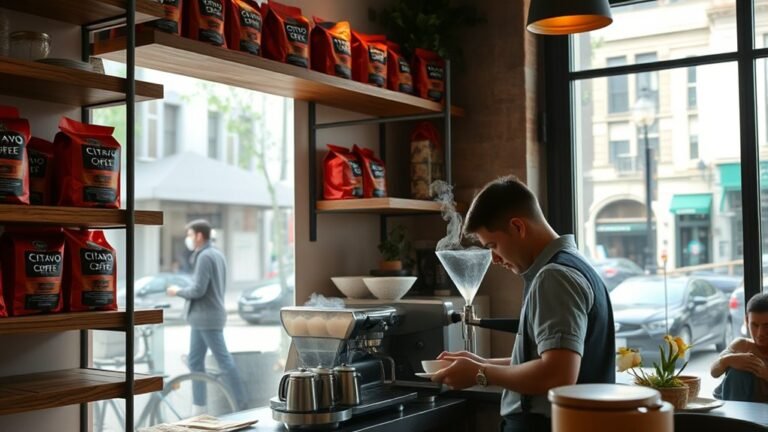
The Pros and Cons of Pre-Ground Coffee
Pre-ground coffee offers you unmatched convenience, saving time by skipping grinding steps, which is great for busy mornings. However, it sacrifices freshness and flavor due to rapid oxidation and aroma loss after grinding. It also has a shorter shelf life and may cost more per ounce than whole beans. Storage and environmental factors matter too, with packaging influencing sustainability. If you want to weigh these factors carefully, there’s plenty more detail to reflect upon about its overall fit for your coffee routine.
Convenience and Time-Saving Benefits

Although freshly ground coffee often boasts superior flavor, pre-ground coffee offers unmatched convenience and time-saving benefits that appeal to many consumers. You’ll appreciate the time efficiency it provides, especially during busy mornings or rushed schedules. Since pre-ground coffee eliminates the need for grinding, you cut down preparation steps, which leads to hassle reduction and a smoother routine. This convenience allows you to enjoy coffee without the added effort of equipment maintenance or measuring beans precisely. For those who value freedom in their daily rituals, pre-ground coffee minimizes barriers to a quick caffeine fix. Evidence shows that this streamlined process supports consistent brewing times, enhancing your ability to integrate coffee into fast-paced lifestyles without sacrificing accessibility or ease.
Impact on Coffee Freshness and Flavor
You’ll notice that pre-ground coffee tends to lose its aroma quickly due to increased exposure to air, which accelerates oxidation. This chemical process considerably alters flavor compounds, often resulting in a flatter taste profile compared to freshly ground beans. Balancing the convenience of pre-ground coffee with the inevitable freshness decline is a key consideration for any coffee drinker.
Aroma Retention Challenges
Since aroma compounds are highly volatile, pre-ground coffee faces significant challenges in retaining its freshness and flavor over time. When coffee is ground, its increased surface area accelerates aroma degradation, allowing essential volatile compounds to dissipate quickly. This leads to noticeable flavor loss, diminishing the coffee’s complexity and richness that you expect from freshly ground beans. Studies show that even brief exposure to air can reduce the concentration of key aromatic molecules, impacting your sensory experience. While airtight packaging helps slow this process, it can’t fully prevent the inevitable decline. If you value freedom in flavor—enjoying coffee that truly reflects its origin and roast—understanding these aroma retention challenges is vital when choosing between pre-ground and freshly ground coffee.
Oxidation Effects on Flavor
While pre-ground coffee offers convenience, its exposure to oxygen triggers oxidation processes that markedly alter flavor compounds. Once ground, the increased surface area accelerates the oxidation timeline, leading to rapid flavor degradation. Studies show that within hours to days, key aromatic oils and acids break down, diminishing complexity and introducing stale, rancid notes. You’ll notice a loss of brightness and a flattening of the coffee’s profile, directly linked to oxidative breakdown. This chemical reaction is irreversible, meaning the freshness you seek fades quickly after grinding. Understanding this oxidation timeline helps you grasp why pre-ground coffee can’t maintain peak flavor for long. If you value freedom in your coffee experience, recognizing these effects empowers you to make informed choices about storage and consumption timing.
Convenience Versus Freshness Trade-off
Although pre-ground coffee offers undeniable convenience, it inevitably compromises freshness and flavor quality due to accelerated oxidation and volatile compound loss. When you opt for pre-ground coffee, you accept a trade-off: you gain ease and speed but lose nuanced taste and aroma. Studies show that taste degradation begins soon after grinding, as exposure to oxygen and moisture diminishes essential oils responsible for flavor complexity. While pre-ground coffee can provide consistent particle size, which aids brewing consistency, this benefit often doesn’t offset the rapid decline in freshness. If you prioritize freedom in your coffee routine, knowing this trade-off helps you decide when convenience justifies sacrificing peak flavor. Ultimately, your choice hinges on whether you value immediate accessibility over the richest coffee experience.
Storage and Shelf Life Considerations
Because pre-ground coffee exposes more surface area to air, it generally has a shorter shelf life compared to whole beans. To maximize freshness, your storage methods must be strategic. Here’s how you can extend the shelf life:
Pre-ground coffee has a shorter shelf life than whole beans, so smart storage is key to freshness.
- Use an airtight container to minimize oxygen exposure.
- Store coffee in a cool, dark place away from heat and light.
- Avoid refrigeration or freezing, as moisture can degrade flavor.
- Purchase pre-ground coffee in small quantities to prevent long storage times.
These practices help preserve flavor and aroma, giving you the freedom to enjoy quality coffee without compromise. Understanding these storage and shelf life considerations empowers you to make informed choices and avoid stale, flat brews.
Cost Implications of Pre-Ground Coffee
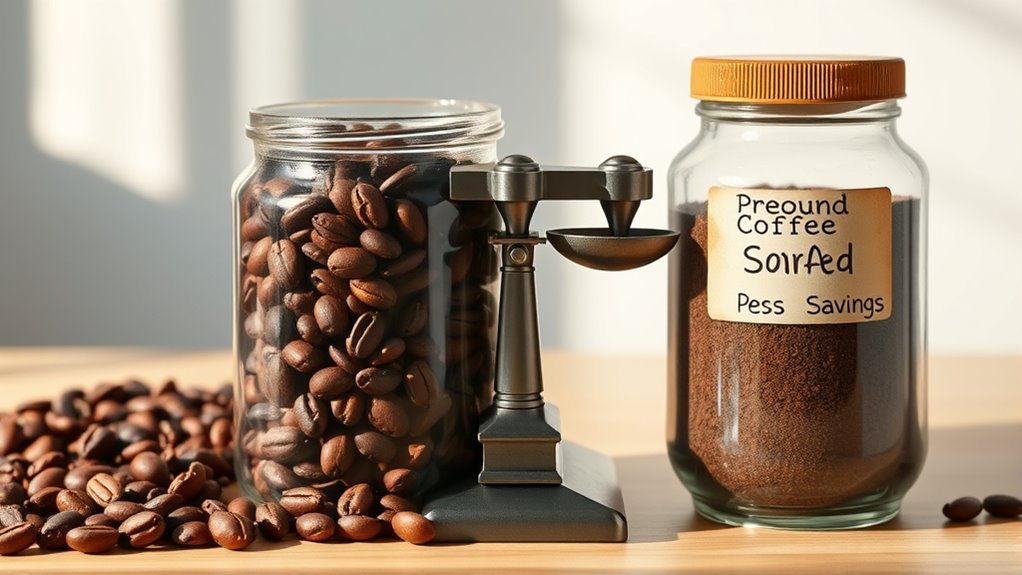
When comparing prices, pre-ground coffee often comes at a slightly higher cost per ounce than whole beans. However, you should also consider long-term expenses, including potential waste from quicker staling. Evaluating both upfront price and ongoing value helps determine which option fits your budget best.
Price Comparison
How much more are you really paying for the convenience of pre-ground coffee? Price variations between pre-ground and whole bean coffee can be subtle yet impactful on your budget considerations. When analyzing cost:
- Pre-ground coffee often carries a premium of 10-20% compared to whole beans.
- Packaging and shelf-stability factors drive price differences.
- Buying whole beans in bulk usually reduces cost per pound.
- Specialty pre-ground blends add further price variability.
Understanding these elements helps you evaluate whether the convenience justifies the extra expense. If freedom to customize grind and freshness matters, investing in whole beans might align better with your financial and lifestyle goals. Ultimately, you control how much convenience is worth—balancing price variations against your personal budget considerations empowers you to make an informed choice.
Long-Term Expense
Evaluating the long-term expense of pre-ground coffee requires a careful look at recurring costs and consumption habits. While pre-ground coffee often appears convenient, it may lead to higher ongoing expenses compared to whole beans, especially if you consume coffee frequently. Budget considerations must include not only the initial purchase price but also how storage and potential quality loss affect how much you use. Over time, pre-ground coffee’s shorter shelf life can result in buying more often, reducing any long term savings. However, if convenience outweighs cost and you prefer simplicity, this trade-off might be acceptable. Ultimately, understanding your daily consumption patterns and balancing them against price and freshness will help you make a financially sound choice that aligns with your desire for freedom and flexibility.
Suitability for Different Brewing Methods
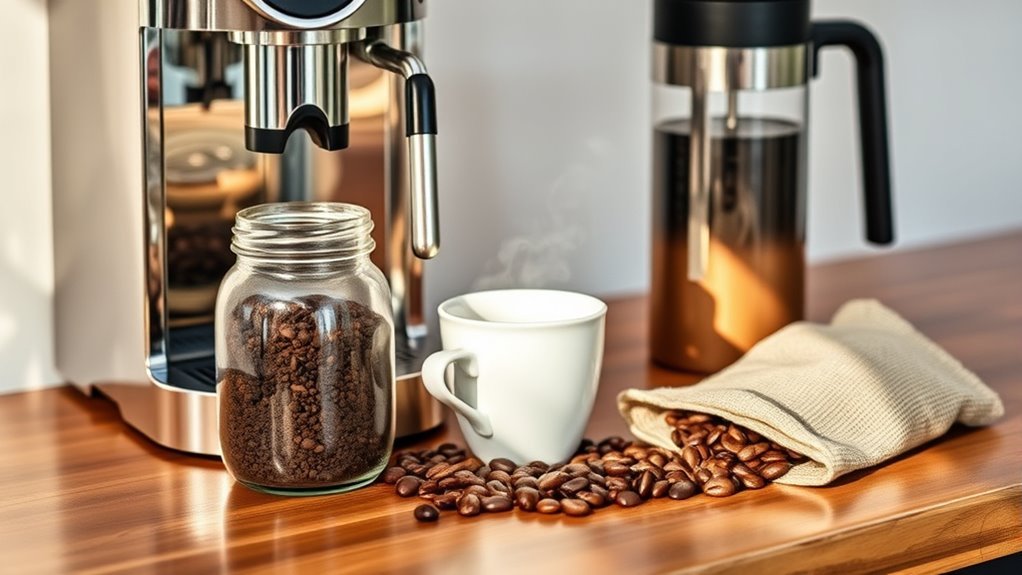
Although pre-ground coffee offers convenience, its suitability varies considerably across different brewing methods due to grind size consistency and extraction requirements. You need to evaluate brewing versatility and grind uniformity when choosing pre-ground coffee, as these factors directly impact flavor and extraction quality.
Pre-ground coffee’s convenience comes with trade-offs in grind consistency and brewing versatility affecting flavor.
- Drip machines often handle medium grind well, making pre-ground coffee a practical choice.
- French press demands coarse, uniform grinds—pre-ground coffee may lack this precision, affecting taste.
- Espresso requires fine, consistent grinds; pre-ground coffee rarely meets this standard, limiting brewing freedom.
- Pour-over brewing thrives on precise grind control, often compromised by pre-ground options.
Understanding these nuances helps you decide if pre-ground coffee aligns with your preferred brewing method without sacrificing quality or freedom.
Environmental and Packaging Factors
Since pre-ground coffee is often packaged for convenience, its environmental impact largely depends on the materials used and the packaging’s recyclability. You should look for brands that prioritize sustainable packaging, such as biodegradable bags or recyclable containers, to minimize ecological harm. Packaging that’s difficult to recycle or made from mixed materials contributes considerably to landfill waste. By choosing pre-ground coffee with sustainable packaging, you actively support waste reduction efforts. Additionally, consider how packaging size affects waste; smaller, single-use packs generate more waste compared to bulk options. Being mindful of these environmental and packaging factors helps you enjoy convenience without compromising your commitment to sustainability and freedom from unnecessary waste. Informed choices here directly contribute to reducing coffee-related environmental footprints.
Frequently Asked Questions
How Does Grind Size Affect Caffeine Extraction?
Ever noticed how your morning brew hits differently? That’s grind size at work—finer grinds increase surface area, boosting extraction efficiency and caffeine yield. But if you want consistent caffeine levels, grind consistency is key; uneven grinds lead to over- or under-extraction, muddling flavors and caffeine content. You’re in control when you match grind size precisely to your brewing method, maximizing extraction without sacrificing taste or freedom to experiment.
Can Pre-Ground Coffee Cause More Stomach Irritation?
If you have stomach sensitivity, pre-ground coffee might increase irritation because it often has higher acidity levels due to oxidation after grinding. This can lead to more acidic compounds in your brew, potentially upsetting your digestive system. However, individual reactions vary, so you might not always experience discomfort. To minimize irritation, consider fresher grounds or low-acid blends. Understanding your body’s response helps you choose coffee that aligns with your freedom to enjoy it comfortably.
What Is the Best Water Temperature for Brewing Pre-Ground Coffee?
For ideal brewing of pre-ground coffee, you’ll want water heated between 195°F and 205°F (90°C to 96°C). This range extracts flavors effectively without causing bitterness. Remember, water quality is equally important—use filtered water free from chlorine and impurities to enhance taste clarity. By controlling temperature and ensuring clean water, you can reveal your coffee’s full potential, giving you the freedom to enjoy a balanced and flavorful cup every time.
Are There Health Risks Associated With Stale Pre-Ground Coffee?
Imagine biting into bread that’s gone stale—unpleasant, right? Similarly, stale coffee can harbor health concerns. When coffee goes stale, oxidation produces compounds that may irritate your stomach or cause digestive discomfort. Research shows stale coffee loses antioxidants, weakening its health benefits. While not outright harmful, regularly drinking stale coffee could impact your wellbeing. So, if you crave freedom in health choices, opt for fresh grounds to enjoy flavor and safety.
How Does Altitude Impact Coffee Bean Grinding?
Altitude effects considerably influence coffee bean quality, which in turn impacts grinding outcomes. When you source beans grown at higher altitudes, they typically have denser structures due to slower maturation, requiring finer or adjusted grinding to extract ideal flavors. Understanding these altitude effects lets you tailor your grind size precisely, preserving bean quality and maximizing taste. So, by considering altitude, you gain the freedom to control your brewing experience more effectively.