The Pros and Cons of Decaf Coffee
If you enjoy coffee but want to limit caffeine, decaf offers a safer option with about 2-5 mg per cup versus 95 mg in regular brews. It retains antioxidants and many nutrients, making it gentler on digestion and heart health. However, decaf isn’t caffeine-free and may have slightly fewer antioxidants. Processing methods vary, some using chemicals while others don’t, affecting flavor and safety. Knowing these factors can help you decide if decaf suits your lifestyle and health needs.
What Is Decaf Coffee?

Decaf coffee is simply coffee that has had most of its caffeine content removed. Understanding decaf origins reveals it emerged in the early 20th century as a response to those seeking coffee’s flavor without caffeine’s stimulating effects. Over time, decaf varieties have expanded, reflecting different beans and processing methods that retain taste while minimizing caffeine. When you choose decaf, you’re selecting a coffee option designed to offer the familiar aroma and flavor but with reduced caffeine impact. This supports your freedom to enjoy coffee without compromising your sensitivity to caffeine or sleep patterns. Knowing decaf’s background and its diverse varieties empowers you to make informed choices aligned with your lifestyle and preferences, balancing enjoyment with health considerations.
How Is Decaf Coffee Made?
You might wonder how decaf coffee loses most of its caffeine while still tasting like coffee. Several decaffeination methods exist, such as the Swiss Water Process and solvent-based techniques, each affecting flavor differently. Understanding these methods helps you appreciate the balance between caffeine removal and taste preservation.
Decaffeination Methods Overview
Removing caffeine from coffee beans involves several carefully controlled processes designed to preserve flavor while reducing stimulant content. These decaffeination methods rely on specific chemical processes to extract caffeine efficiently without compromising taste preservation.
Here are the four main techniques you should know:
- Solvent-based methods: Use chemical solvents like methylene chloride or ethyl acetate to dissolve caffeine selectively.
- Swiss Water Process: Employs water and osmosis to remove caffeine naturally, avoiding chemicals.
- CO2 Process: Utilizes supercritical carbon dioxide to extract caffeine, balancing efficiency and flavor retention.
- Triglyceride Process: Involves soaking beans in coffee oils to draw out caffeine.
Each method aims to maintain the coffee’s original character while reducing caffeine, giving you options based on your preferences for purity and taste preservation.
Impact on Coffee Flavor
Although the decaffeination process is designed to reduce caffeine content, it inevitably affects the coffee’s flavor profile to some extent. When caffeine is extracted, some of the compounds responsible for the decaf aroma and taste are also removed or altered. You might notice decaf coffee tends to have a milder flavor profile, often described as less robust or slightly muted compared to regular coffee. Different decaffeination methods, such as the Swiss Water Process or CO2 extraction, vary in how much they preserve the coffee’s original characteristics. If you value freedom in your coffee experience, understanding these impacts helps you choose a decaf option that aligns with your taste preferences, balancing reduced caffeine with a satisfying flavor profile that doesn’t stray too far from what you enjoy in regular coffee.
Caffeine Content in Decaf Vs Regular Coffee
You might expect decaf coffee to have no caffeine, but it actually contains small amounts—typically about 2 to 5 milligrams per cup compared to 70 to 140 milligrams in regular coffee. This difference means decaf has a much milder effect on your alertness and energy levels. Understanding these caffeine levels can help you choose the coffee that best fits your sensitivity and lifestyle.
Caffeine Levels Comparison
While decaf coffee is often chosen for its lower caffeine content, it’s important to understand how much caffeine it actually contains compared to regular coffee. You might be surprised that decaf isn’t completely caffeine-free, which matters if you’re monitoring your caffeine sources or exploring decaf alternatives.
- Regular coffee typically contains about 95 mg of caffeine per 8-ounce cup.
- Decaf coffee usually has 2 to 5 mg of caffeine per 8-ounce cup, though this can vary.
- The caffeine removal process reduces caffeine by about 97%, but trace amounts remain.
- Different decaffeination methods and bean types influence the final caffeine level.
Knowing these facts helps you make informed choices about caffeine intake without giving up the freedom to enjoy your favorite brew.
Effects on Alertness
Because decaf coffee contains considerably less caffeine than regular coffee, its effects on alertness are remarkably milder. When you choose decaf, you’ll notice lower alertness levels compared to regular coffee, which delivers a stronger caffeine boost. However, decaf still provides some stimulation, influencing your energy perception subtly without the jittery side effects. This makes it a suitable option if you want to enjoy coffee’s flavor without significant caffeine impact.
| Coffee Type | Average Caffeine (mg) | Typical Alertness Effect |
|---|---|---|
| Regular Coffee | 95 | High alertness, increased energy perception |
| Decaf Coffee | 2-5 | Mild alertness, subtle energy perception |
| No Coffee | 0 | Baseline alertness, no added stimulation |
Your choice depends on how much alertness boost you want while keeping freedom from caffeine’s downsides.
Health Benefits of Decaf Coffee
Although decaf coffee contains considerably less caffeine than regular coffee, it still offers several health benefits supported by research. Choosing decaf can help you avoid certain health risks linked to high caffeine intake while still providing valuable nutrients. Here are some benefits you might appreciate:
- Antioxidant Content: Decaf retains many antioxidants, which help combat oxidative stress and may reduce chronic disease risk.
- Reduced Acid Reflux: It’s less likely to trigger acid reflux, making it gentler on your digestive system.
- Nutritional Value: Decaf offers small amounts of essential minerals like magnesium and potassium.
- Lower Heart Disease Risk: Some studies suggest decaf may support heart health by improving blood vessel function.
Potential Drawbacks of Drinking Decaf
Even though decaf coffee offers several health benefits, it’s important to contemplate some potential drawbacks before making it your primary choice. One common concern relates to the decaffeination process, which can involve chemicals like methylene chloride or ethyl acetate. While regulations guarantee safety, some people prefer organic or Swiss Water Process decaf to avoid these additives. Another issue is that decaf misconceptions may lead you to believe it’s completely caffeine-free; in reality, it still contains small amounts of caffeine, which might affect sensitive individuals. Additionally, some studies suggest decaf may have slightly lower antioxidant levels compared to regular coffee, though the difference is minimal. Ultimately, understanding these factors helps you make informed decaf preferences aligned with your health goals and lifestyle.
Flavor Differences Between Decaf and Regular Coffee
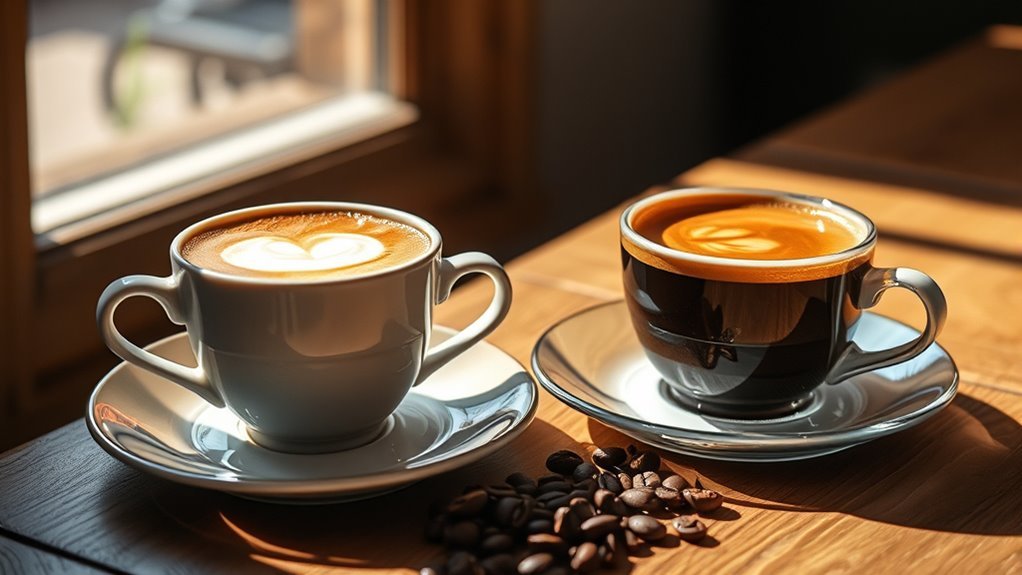
When comparing decaf to regular coffee, you’ll notice distinct flavor differences that stem from the decaffeination process itself. These differences impact both aroma and taste, influencing your overall coffee experience. Here’s what to contemplate:
- Bitterness: Decaf flavor tends to be less bitter than regular flavor, as caffeine contributes to bitterness.
- Aroma: Regular coffee often has a more robust aroma since some volatile compounds are lost during decaffeination.
- Body and Mouthfeel: Decaf generally has a lighter body, affecting richness and texture.
- Flavor Complexity: Regular coffee typically offers a broader range of flavor notes; decaf can taste flatter or muted.
Understanding these distinctions helps you appreciate the unique qualities of each and choose based on your flavor freedom preferences.
Common Decaffeination Methods and Their Impact
The flavor differences you experience between decaf and regular coffee largely result from the method used to remove caffeine. Common decaffeination methods include the Swiss Water Process, chemical solvent extraction, and CO2 extraction. The Swiss Water Process, using only water, preserves much of the bean’s original flavor without chemicals, aligning with growing decaf trends toward natural options. Chemical solvents like methylene chloride can alter flavor but are used within safety limits, dispelling many decaf myths about toxicity. CO2 extraction is selective, maintaining flavor integrity but is costlier. Understanding these methods helps you make informed choices without sacrificing flavor or safety, giving you freedom to enjoy decaf coffee tailored to your preferences and health concerns.
Who Should Consider Drinking Decaf Coffee?
If you have certain health conditions like acid reflux or heart issues, decaf coffee might be a safer choice due to its lower caffeine content. You might also consider decaf if you’re sensitive to caffeine’s effects, such as anxiety or insomnia. Understanding how your body reacts to caffeine can help you decide if switching to decaf makes sense.
Health Conditions Benefits
Because caffeine can exacerbate certain health issues, you might consider switching to decaf coffee if you have conditions like acid reflux, anxiety disorders, or heart arrhythmias. The decaf benefits include reduced stimulation of the nervous system and less acid production in the stomach, which can ease symptoms associated with these health conditions. Here are some specific health conditions where decaf may be advantageous:
- Gastroesophageal reflux disease (GERD) – decaf is less likely to trigger reflux.
- Anxiety disorders – decaf reduces caffeine-induced nervousness.
- Cardiac arrhythmias – lowers the risk of irregular heartbeats.
- Hypertension – decaf may have a milder effect on blood pressure.
Choosing decaf allows you to enjoy coffee’s taste while managing health conditions responsibly.
Caffeine Sensitivity Considerations
Managing certain health conditions with decaf coffee naturally leads to contemplating who else might benefit from choosing decaf. If you’re sensitive to caffeine, even small amounts can disrupt your sleep, increase anxiety, or cause jitters. Opting for decaf helps avoid these issues without sacrificing coffee’s familiar taste and aroma, which remain largely intact despite reduced caffeine content. Additionally, if you’ve experienced caffeine withdrawal symptoms like headaches or irritability when cutting back, switching gradually to decaf may ease this change. Your sensory perception still plays a role; decaf allows you to enjoy the complex flavors of coffee without overstimulating your nervous system. Ultimately, if you value control over your caffeine intake and want to minimize adverse effects, decaf coffee is a practical choice worth considering.
Environmental Considerations of Decaf Coffee Production
While decaf coffee offers a caffeine-free alternative, its production involves specific environmental factors you should consider. Sustainable sourcing is essential since decaf beans often come from the same farms as regular coffee, where pesticide usage can impact ecosystems. Additionally, the decaffeination process itself may consume more resources.
Decaf coffee provides a caffeine-free choice but involves environmental impacts like pesticide use and resource-heavy processing.
- Sustainable Sourcing: Opting for beans from farms practicing sustainable agriculture reduces environmental harm.
- Pesticide Usage: Excessive use can degrade soil and water quality, affecting biodiversity.
- Water and Energy Consumption: Decaffeination methods vary in resource intensity, with some using large amounts of water or chemicals.
- Waste Management: Proper disposal of byproducts during decaffeination prevents pollution.
Tips for Brewing the Best Decaf Coffee
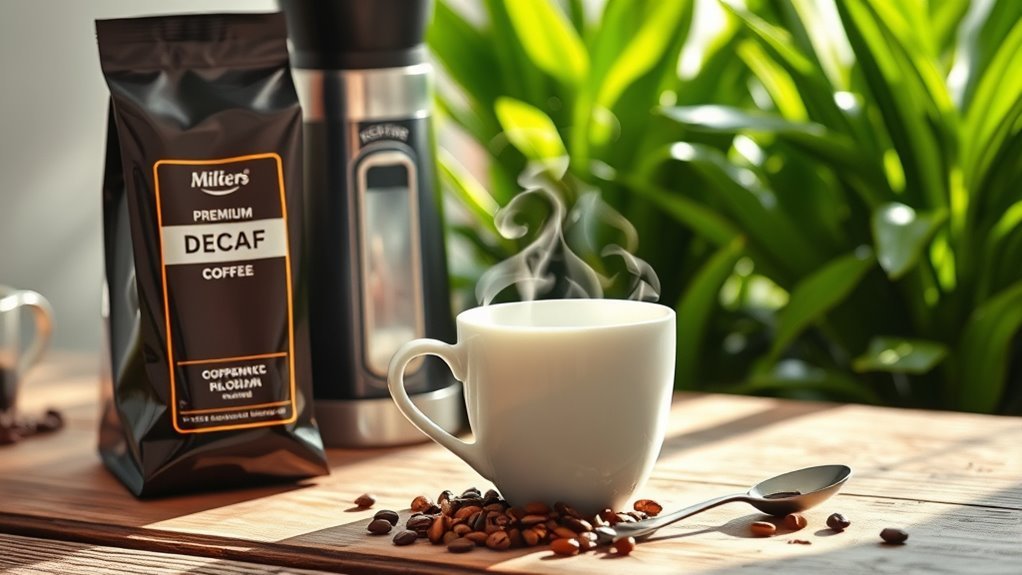
Understanding the environmental impact of decaf coffee production can enhance your appreciation for the beverage, but brewing it well is what ultimately shapes your daily experience. To get the best flavor, focus on precise brewing techniques. Use fresh, quality decaf beans and grind them just before brewing to preserve aroma and taste. Water temperature plays a critical role; aim for 195°F to 205°F (90°C to 96°C) to extract balanced flavors without bitterness. Avoid boiling water, as it can scorch the grounds and degrade flavor. Additionally, adjust the coffee-to-water ratio based on your preferred strength, typically one to two tablespoons per six ounces. By controlling these variables, you guarantee a satisfying cup that respects the complexities of decaf coffee while granting you the freedom to enjoy it your way.
Frequently Asked Questions
Can Decaf Coffee Cause Insomnia or Sleep Disturbances?
You might wonder if decaf coffee can cause insomnia or affect your sleep quality. Although decaf coffee contains only a small amount of caffeine, it’s usually not enough to disrupt sleep for most people. However, if you’re particularly sensitive to caffeine, even the minimal decaf caffeine could impact your rest. Monitoring your individual response helps you make choices that support your freedom to enjoy coffee without sacrificing good sleep.
Does Decaf Coffee Have Antioxidants Like Regular Coffee?
Yes, decaf coffee still contains antioxidants, though usually in slightly lower amounts than regular coffee. If you’re looking at health comparisons, decaf benefits include delivering many of the same protective compounds without the caffeine, making it a great option if you want to reduce stimulant intake. These antioxidants help fight free radicals, supporting overall health. So, choosing decaf can offer similar antioxidant advantages while giving you more freedom with your caffeine limits.
Is Decaf Coffee Safe During Pregnancy?
Think of your body as a garden, where every choice impacts growth. When it comes to decaf safety during pregnancy consumption, decaf coffee is generally considered safe because it contains considerably less caffeine than regular coffee. However, it’s wise to limit intake to avoid any risks linked to caffeine. Always consult your healthcare provider to make certain your choices nourish both you and your baby, giving you the freedom to enjoy your favorite beverages responsibly.
How Does Decaf Coffee Affect Acid Reflux or Heartburn?
If you suffer from acid reflux or heartburn, decaf coffee might offer some relief compared to regular coffee. One decaf benefit is its lower caffeine content, which tends to reduce stomach acid production and irritation. However, decaf drawbacks include the presence of other acidic compounds that can still trigger symptoms in sensitive individuals. You’ll want to monitor how your body reacts and choose options that minimize discomfort while enjoying your coffee freedom.
Are There Any Additives or Chemicals in Decaf Coffee?
You might find it unsettling to know that decaf coffee undergoes chemical processes to gently part with caffeine. Depending on decaf methods, solvents like methylene chloride or ethyl acetate may be used, but these are typically removed before you brew. Alternatively, water or CO2 methods avoid chemicals entirely. So, while some decaf can involve additives, many brands prioritize natural processes, giving you the freedom to choose what feels best for your body.