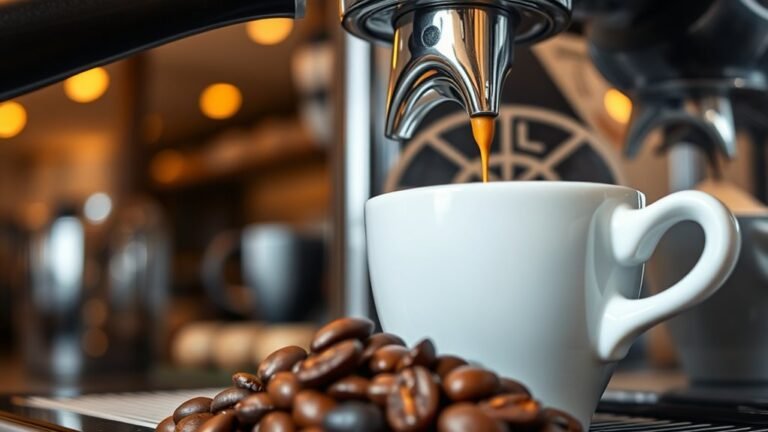

The Importance of Coffee Bean Freshness
You need to understand that coffee beans rapidly lose freshness due to oxidation, which degrades oils and volatile compounds critical to flavor and aroma. This causes diminished acidity, sweetness, and complexity, resulting in stale, flat coffee. Whole beans maintain quality longer than ground ones, as pre-grinding accelerates degradation. Proper airtight, opaque storage slows aging and preserves freshness. Knowing how freshness impacts brewing and storage can help you maximize coffee’s flavor potential—explore further to enhance your brewing experience.
How Coffee Beans Change Over Time

Although freshly roasted coffee beans boast peak flavor and aroma, their chemical composition begins to degrade soon after roasting, affecting freshness over time. You’ll notice that the aging process involves oxidation and the gradual breakdown of volatile compounds, which are essential to the bean’s sensory profile. As these compounds diminish, the coffee’s flavor evolution shifts from vibrant and complex to flat and stale. Lipid oxidation alters the bean’s oils, impacting mouthfeel and bitterness, while the loss of aromatic compounds reduces the overall sensory impact. Understanding this degradation helps you control storage conditions to slow the aging process, preserving freshness longer. By managing factors like oxygen exposure, temperature, and humidity, you maintain the coffee’s dynamic flavor evolution, enabling you to savor the freedom of a fresh, expressive brew.
The Role of Aroma and Flavor in Fresh Coffee
Aroma and flavor are critical indicators of coffee freshness, directly reflecting the chemical integrity of the beans. When you evaluate fresh coffee, the distinct aroma profiles reveal volatile compounds like aldehydes and esters that degrade over time. These compounds contribute to the initial sensory experience, signaling freshness. Similarly, flavor complexity—encompassing acidity, sweetness, bitterness, and body—depends on the preservation of organic acids and oils within the beans. As freshness diminishes, these nuanced attributes flatten, reducing the coffee’s vibrancy and depth. By understanding the interplay between aroma profiles and flavor complexity, you can better assess coffee quality and select beans that retain their full sensory potential. Your freedom to enjoy coffee at its peak hinges on recognizing how aroma and flavor interplay defines freshness.
The Impact of Oxidation on Coffee Quality
You’ll notice that oxidation triggers a rapid decline in coffee’s volatile compounds, directly diminishing its flavor complexity and aroma intensity. Understanding the chemical pathways of oxidative degradation helps you implement targeted measures—like vacuum sealing or inert gas flushing—to preserve bean quality. Controlling oxygen exposure is essential to maintaining the freshness and sensory profile of your coffee over time.
Oxidation and Flavor Loss
When coffee beans are exposed to oxygen, a series of chemical reactions begin that degrade their flavor compounds, directly impacting the quality of your brew. These oxidation effects initiate the breakdown of lipids and volatile aromatics, leading to flavor degradation that dulls the vibrant notes you expect. You’ll notice diminished acidity, muted sweetness, and a loss of complexity as essential oils oxidize and transform into rancid compounds. This process not only alters taste but also affects the mouthfeel, resulting in a stale, flat profile. Understanding oxidation’s role helps you appreciate why freshness matters—each moment oxygen interacts with the bean accelerates flavor loss, limiting your freedom to enjoy coffee at its peak. Recognizing these chemical pathways underscores the critical link between oxidation effects and compromised coffee quality.
Preventing Oxidative Degradation
Because oxygen exposure rapidly diminishes coffee bean quality, implementing strategies to prevent oxidative degradation is crucial for preserving flavor integrity. You must minimize oxidative stress by controlling air, light, and temperature exposure to retain those volatile aromatics and nuanced flavors. Using airtight, opaque containers and storing beans in cool, dark environments slows molecular oxidation, preserving freshness and freedom in your cup. The table below shows how different methods impact flavor preservation and emotional satisfaction:
| Storage Method | Oxidative Stress Level | Emotional Impact |
|---|---|---|
| Open Air | High | Frustration, loss |
| Airtight, Opaque | Low | Satisfaction, freedom |
| Vacuum-Sealed | Minimal | Confidence, joy |
Mastering these techniques guarantees your coffee remains a liberating sensory experience, unshackled by degradation.
Differences Between Whole Beans and Ground Coffee
Although both whole beans and ground coffee originate from the same source, their freshness and flavor retention differ markedly due to variations in surface area exposure and oxidation rates. When you grind coffee beans, you exponentially increase their surface area, accelerating exposure to oxygen and causing rapid flavor degradation. This contrasts with whole bean advantages, where intact beans exhibit slower oxidation, preserving volatile aromatic compounds longer. However, ground coffee convenience is undeniable; pre-ground coffee saves time and effort, appealing to those prioritizing ease over maximum freshness. If you’re seeking ideal flavor freedom, opting for whole beans and grinding just before brewing is technically superior. Conversely, if time constraints dominate, ground coffee offers practical benefits despite the trade-off in freshness and nuanced flavor complexity. Understanding this balance empowers you to select coffee form aligned with your lifestyle and taste priorities.
How to Identify Fresh Coffee Beans

Choosing between whole beans and ground coffee hinges on freshness, but recognizing truly fresh coffee beans requires more than just selecting the whole form. Start with a visual inspection: fresh beans have a glossy, oily sheen from natural oils that evaporate over time. Their color should be uniform, without excessive cracks or dullness, indicating proper roasting and freshness. Next, check the packaging date — this is your most reliable freshness indicator. Beans are best consumed within a few weeks after roasting; avoid beans without a clear packaging date or those too old. Avoid pre-ground coffee, as it loses freshness rapidly. By combining these analytical steps—visual inspection and packaging date verification—you empower yourself to select beans that deliver ideal flavor and aroma, granting you true freedom in your coffee experience.
Best Storage Practices to Maintain Freshness
How can you guarantee your coffee beans stay as fresh as the day you bought them? The key lies in choosing the right storage containers with airtight seals to prevent oxidation. Store your beans away from light, heat, and moisture, which accelerate staling. Use opaque containers to block light and keep beans at a stable, cool temperature but avoid refrigeration due to condensation risks.
| Storage Factor | Recommended Practice | Reason |
|---|---|---|
| Container Type | Opaque, airtight containers | Blocks light, minimizes oxygen |
| Temperature | Cool, consistent (15-20°C) | Slows chemical degradation |
| Humidity | Low, dry environment | Prevents mold and spoilage |
| Location | Dark cupboard | Shields from UV damage |
| Quantity | Small batches | Maintains peak freshness |
Adhering to these practices preserves your freedom to enjoy peak coffee quality anytime.
The Effect of Freshness on Brewing Methods
You’ll notice that the freshness of your coffee beans directly impacts extraction efficiency, as fresher beans release volatile compounds more readily during brewing. Adjusting grind size becomes essential since staler beans require finer grinds to compensate for diminished solubility. Understanding this relationship helps optimize flavor profiles across different brewing methods.
Freshness and Extraction
Although freshness is often touted as a key factor in coffee quality, its influence on extraction varies considerably across brewing methods. When you consider extraction techniques, freshness impacts how soluble compounds dissolve during brewing. For instance, in espresso, where extraction variables like pressure and time are tightly controlled, fresher beans yield more vibrant acids and aromatics, enhancing complexity. Conversely, immersion methods such as French press are less sensitive to subtle freshness variations because longer contact times and coarser grinds mask some degradation effects. Additionally, freshness affects gas retention within beans, influencing crema formation in espresso but less so in drip brewing. Understanding these nuances allows you to optimize extraction parameters based on bean age, ensuring your chosen brewing method consistently delivers the flavor profile you desire.
Grind Size and Freshness
Because freshness directly influences the bean’s physical and chemical properties, it also affects the ideal grind size for various brewing methods. As beans age, their moisture content decreases, altering how they fracture during grinding. You’ll notice that grind consistency shifts with freshness, impacting extraction uniformity. Optimizing grind timing—grinding immediately before brewing—preserves aromatic compounds and guarantees particle size precision. Consider the following:
- Fresher beans require finer grinds for methods like espresso to compensate for higher moisture and density.
- Older beans benefit from coarser grinds, reducing over-extraction risks due to brittleness.
- Consistent grind size distribution becomes challenging as freshness wanes, demanding adjustments in grind timing and burr calibration.
Adapting your grind size based on bean freshness lets you truly unleash each brewing method’s potential, liberating your coffee experience.
Buying Tips for Fresh Coffee Beans
When selecting coffee beans, understanding the roast date is essential since freshness greatly influences flavor profile and aroma retention. Look for beans roasted within the past two to three weeks to guarantee peak freshness. Prioritize suppliers who disclose detailed coffee sourcing information, as origin impacts bean quality and your experience. Analyze roasting techniques—lighter roasts often highlight origin nuances but are more sensitive to staling, while darker roasts mask some freshness loss. Avoid pre-ground coffee, which accelerates oxidation and flavor degradation. Consider packaging, too; nitrogen-flushed, resealable bags with one-way valves maintain freshness by preventing oxygen ingress. Finally, buy smaller quantities aligned with your consumption rate to avoid prolonged storage, preserving the coffee’s volatile compounds. By applying these criteria, you maintain control over your cup’s quality and freedom in flavor exploration.
Frequently Asked Questions
Can Stale Coffee Beans Cause Health Issues?
If you drink stale coffee regularly, you might face some health risks. Stale coffee beans undergo oxidation and microbial growth, potentially leading to the formation of harmful compounds like mycotoxins. Though not immediately dangerous, consuming stale coffee could irritate your digestive system or cause allergic reactions over time. To minimize health risks, you should store beans properly and avoid brewing coffee from beans that smell rancid or taste flat.
How Does Altitude Affect Coffee Bean Freshness?
Imagine your coffee beans like climbers scaling a mountain—altitude effects play a key role in their journey. Higher altitudes slow bean maturation, leading to denser beans that preserve oils and flavors better, resulting in freshness variation you can taste. Cooler temperatures and lower oxygen levels at elevation reduce oxidation, extending bean freshness. Understanding these altitude effects helps you choose beans that maintain peak flavor longer, giving you the freedom to enjoy richer, fresher coffee.
Does the Type of Coffee Bean Affect Its Freshness Lifespan?
Yes, the type of coffee bean does influence its freshness lifespan. Different beans have varying oil contents, which affects how quickly they oxidize after roasting. During the roasting process, beans develop compounds that degrade at different rates depending on their variety. Proper bean storage—like airtight containers and cool environments—can extend freshness, but your choice of bean type still plays a key role in how long those flavors stay vibrant before fading.
Can Coffee Bean Freshness Influence Caffeine Content?
You might think coffee bean freshness directly affects caffeine content, but it primarily influences caffeine extraction during brewing. Fresher beans retain more volatile compounds, which can impact how caffeine dissolves depending on your brewing method. For example, espresso extracts caffeine quickly, so fresher beans might yield a more consistent caffeine profile. However, the caffeine amount is mostly stable; freshness affects taste and extraction efficiency rather than caffeine concentration itself.
Are There Specific Coffee Varieties More Sensitive to Freshness Loss?
You’ll find Arabica sensitivity to freshness loss is particularly higher due to its delicate chemical compounds, which degrade faster post-roast. This means the aromatic oils and nuanced flavors diminish more rapidly, affecting taste and caffeine stability. In contrast, Robusta durability stems from its robust cell structure and higher caffeine content, making it less prone to freshness degradation. So, if you crave vibrant, complex notes, Arabica demands quicker consumption, while Robusta offers more shelf resilience.