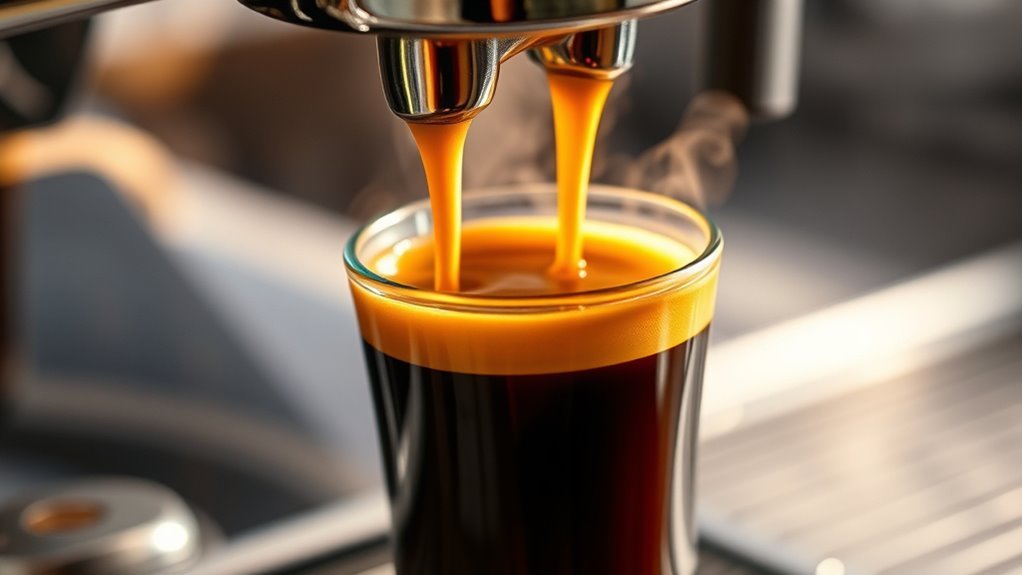
The Art of the Perfect Espresso Shot
To craft the perfect espresso shot, you need precise control over grind size, tamp pressure, extraction time, and water temperature. Choose fresh, single-origin beans to shape flavor, aiming for a fine, consistent grind and firm tamping. Extraction should be just right—not too short or long—to balance richness and aroma without bitterness. Master these essentials, and you’ll reveal a world of bold, vibrant espresso tailored to your taste. Keep exploring to refine your technique further.
Understanding Espresso Basics
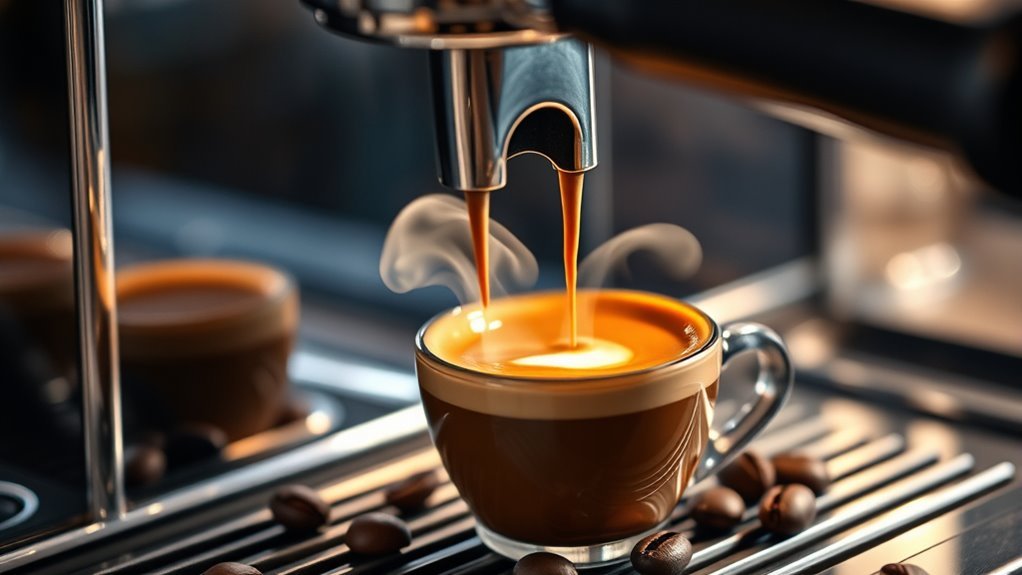
Before you pull your first shot, it’s crucial to grasp the fundamentals of espresso—the concentrated coffee brewed by forcing hot water through finely-ground beans under pressure. Understanding espresso origins connects you to a rich heritage, tracing back to Italy’s inventive spirit. This isn’t just coffee; it’s a craft refined through time. You’ll appreciate that brewing methods matter deeply—pressure, temperature, grind size—all must align perfectly to reveal espresso’s intense, bold character. As you master these basics, you gain freedom: the freedom to experiment, to tailor your shot to your exact taste, and to break free from mediocre coffee. Embracing these essentials sets you on the path to creating espresso that’s not just a drink, but a deliberate, liberating experience.
Selecting the Right Coffee Beans
How do you choose beans that release the full potential of your espresso? Start by exploring coffee origins—each region imparts unique flavor profiles that define your shot’s character. Ethiopian beans might offer vibrant floral notes, while Colombian ones bring balanced sweetness and nuttiness. Don’t settle for generic blends; seek single-origin beans that resonate with your palate and spirit. Remember, freshness is key—roasted within the last few weeks guarantees the oils and aromas remain intact. Consider the roast level too: lighter roasts preserve origin nuances, darker roasts deliver boldness and intensity. Selecting the right coffee beans is your first act of freedom in espresso crafting, allowing you to tailor every sip to your taste, revealing a world of depth and complexity in every shot you pull.
Grinding and Tamping Techniques
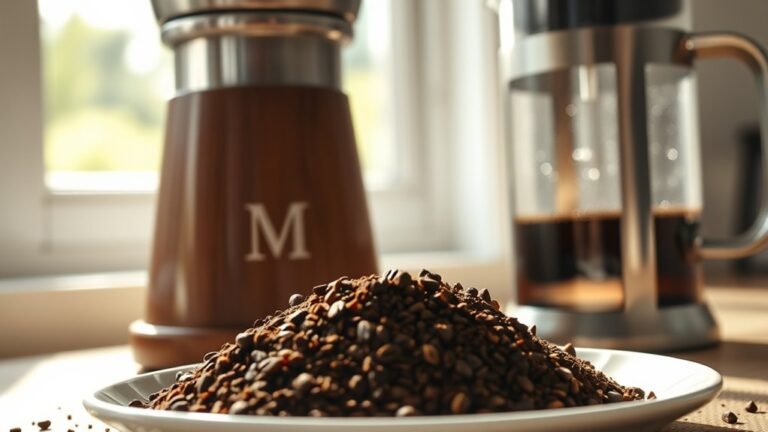
Grinding and tamping are the twin pillars that shape your espresso’s flavor and texture. First, dial in your grind size meticulously—too coarse, and your shot will be weak; too fine, and it’ll taste bitter and clog your machine. Aim for a consistency that resembles fine sand, releasing the coffee’s full potential without resistance. Next, apply tamp pressure evenly—around 30 pounds is the sweet spot. This compresses the grounds to create uniform density, ensuring water flows through evenly, extracting rich oils and aromas. Remember, your hands are instruments of freedom here; mastering these techniques lets you craft espresso that’s uniquely yours, balancing strength and smoothness. With precise grind size and confident tamp pressure, you control the foundation of every perfect shot.
Mastering Extraction Time and Temperature
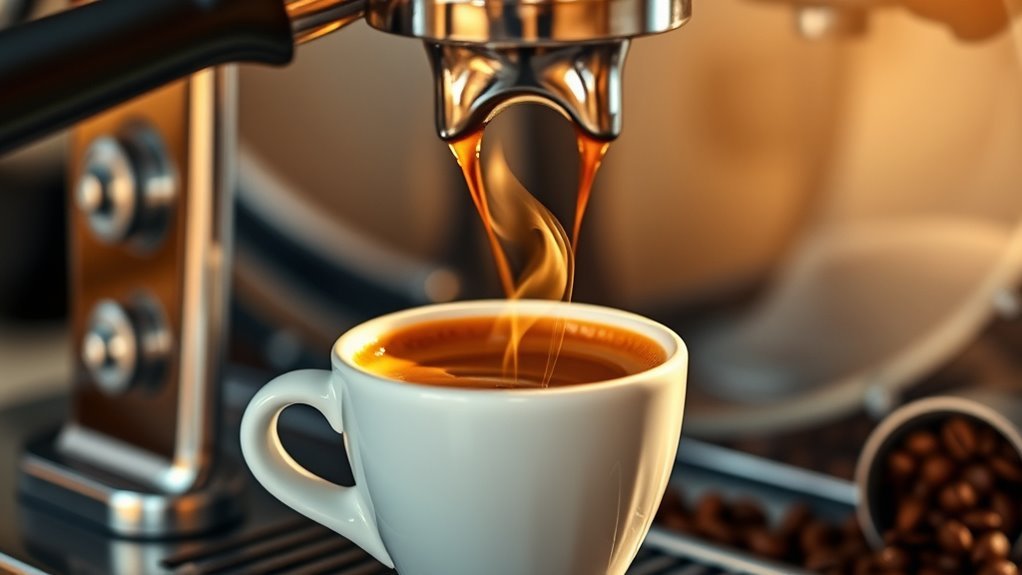
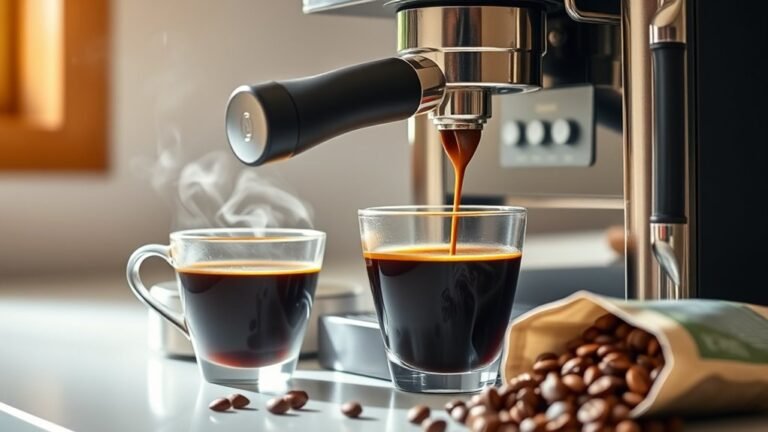
Though your grind and tamp set the stage, it’s mastering extraction time and temperature that truly reveals the espresso’s soul. You hold the power to release complex flavors by precisely adjusting these extraction variables. Extraction time influences how much of the coffee’s essence pours into your cup—too short, and you’ll miss richness; too long, bitterness creeps in. Temperature control is equally critical; water that’s too hot scalds, while too cool leaves the shot weak and underdeveloped. By tuning these elements with care, you unleash the espresso’s character, crafting a shot that’s balanced, vibrant, and expressive. Remember, freedom in espresso comes from understanding and commanding these variables, letting you tailor each pull to your unique taste and style.
Troubleshooting Common Espresso Issues
Mastering extraction time and temperature sets a solid foundation, but even the most skilled barista faces hiccups along the way. If your crema consistency is patchy or thin, start by checking your grind size—it should be fine and uniform to guarantee even extraction. Over-extraction often leads to bitter flavors, so if your espresso tastes harsh, shorten the shot time or adjust the tamp pressure. Conversely, under-extraction produces sour, weak shots lacking crema. Remember, water temperature plays an essential role; too hot, and bitter compounds dominate, too cool, and you lose depth. Don’t hesitate to experiment with these variables systematically. Embrace this troubleshooting process—it’s your path to freedom in crafting espresso that’s balanced, rich, and uniquely yours every time.
Frequently Asked Questions
How Does Water Quality Affect Espresso Flavor?
You’ll find that water quality dramatically influences espresso flavor. If the water temperature isn’t right, your shot can taste bitter or sour. Mineral content plays an essential role, too—too few minerals make the espresso flat and dull, while too many cause over-extraction and harshness. By controlling these factors, you’re not just brewing coffee; you’re revealing the full potential of your beans, giving you freedom to craft your perfect cup every time.
Can I Use Pre-Ground Coffee for Espresso?
Using pre-ground coffee for espresso is like trying to dance with untied shoes—it’s possible but limits your performance. You’ll struggle to achieve the ideal grind consistency essential for a balanced flavor profile. Freshly ground beans let you control extraction, revealing vibrant, nuanced tastes. If freedom in your espresso means experimenting and perfecting, grinding just before brewing is the way to go. Pre-ground compromises that liberty and your espresso’s soul.
What’S the Ideal Cup Size for an Espresso Shot?
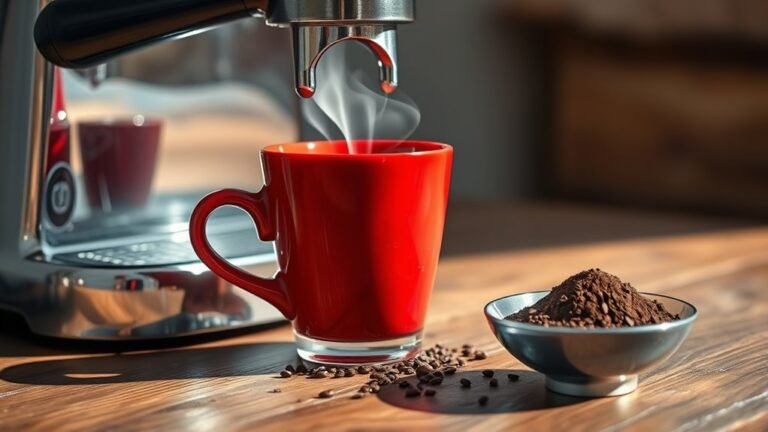
When you’re choosing espresso cup sizes, aim for something that perfectly matches the shot volume. A traditional single espresso shot is about 1 ounce (30 ml), so a small cup—typically 2 to 3 ounces—works best. This size lets the rich crema shine and keeps the espresso from cooling too fast. Picking the right cup size isn’t just about measurement; it’s about preserving that intense, bold flavor you crave every time.
How Often Should I Clean My Espresso Machine?
You should stick to a regular cleaning schedule to keep your espresso machine running smoothly and your coffee tasting amazing. Aim to clean the group head and portafilter after every use, and perform a deeper clean with backflushing weekly if your machine allows. Don’t forget descaling every one to three months, depending on water hardness. These maintenance tips free you from bitter flavors and machine breakdowns, letting you enjoy every shot with confidence.
Are There Health Benefits to Drinking Espresso?
You’ll love knowing espresso offers powerful antioxidant properties that help fight free radicals, boosting your overall health. Plus, its caffeine effects can sharpen your focus, elevate mood, and increase energy, freeing you from sluggishness. But remember, moderation’s key—too much caffeine can cause jitters or disrupt sleep. So, enjoy your espresso shot as a vibrant, healthful boost that fuels your freedom to seize the day with clarity and vigor.