
The Art of Decaf Coffee: Flavor Without the Caffeine
You’ll find that the art of decaf coffee lies in advanced methods like the Swiss Water Process and supercritical CO2 extraction, which delicately remove caffeine while preserving essential oils and flavor compounds. Roasting is carefully adjusted to balance acidity and body despite altered bean chemistry. Decaf retains antioxidants and supports heart health without caffeine’s jitters. With precise brewing and pairing techniques, you can savor complexity in every cup—explore further to unveil all the nuances behind perfect decaf craft.
Understanding the Decaffeination Process

Although decaffeination might seem straightforward, the process involves complex chemical and physical methods designed to remove caffeine while preserving the coffee’s flavor compounds. Understanding decaf history reveals that early attempts used direct solvent extraction, but modern techniques have evolved to include water processing and supercritical CO2 methods. These approaches target caffeine molecules selectively, sparing essential oils and aromatic compounds that define coffee’s character. As you explore caffeine alternatives, you’ll find that decaf coffee offers a unique balance—providing the sensory pleasure of coffee without the stimulant effect. By mastering the science behind decaffeination, you gain freedom to enjoy coffee’s richness anytime, without compromising your body’s response to caffeine. This technical precision guarantees decaf coffee remains a sophisticated choice for those prioritizing both flavor and wellness.
Techniques That Preserve Coffee’s Flavor
When you want decaf coffee that retains its full flavor profile, selecting the right preservation techniques is essential. Maintaining ideal flavor extraction while minimizing caffeine removal impact demands precision. Techniques like the Swiss Water Process and CO2 Decaffeination excel in preserving sensory profiles by targeting caffeine molecules selectively, thereby protecting key flavor compounds.
| Technique | Flavor Preservation Method |
|---|---|
| Swiss Water Process | Uses water saturation to gently extract caffeine, protecting delicate flavor oils |
| CO2 Decaffeination | Employs supercritical CO2 to selectively remove caffeine, preserving aromatic compounds |
| Ethyl Acetate Method | Uses natural solvents with minimal impact on flavor extraction |
The Role of Roasting in Decaf Coffee
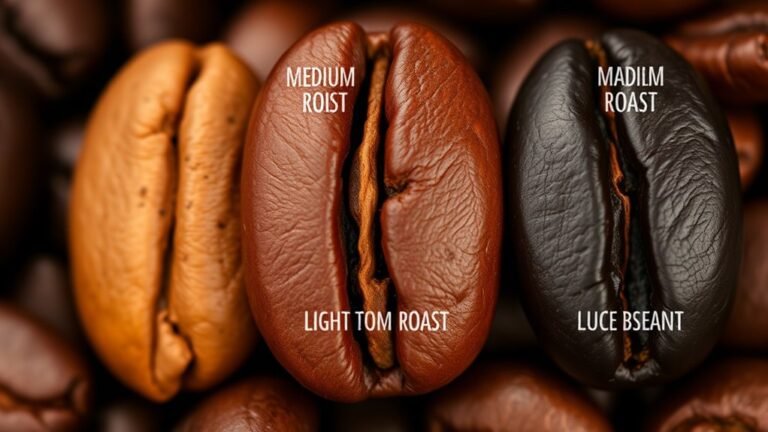
How does roasting influence the final taste and aroma of decaf coffee? Roasting profiles play a critical role in defining decaf’s flavor nuances. Since decaffeination alters the bean’s chemical structure, you can’t simply apply traditional roasting techniques. You need precision to adjust time and temperature, ensuring the development of key aromatic compounds without over-roasting. Lighter roasts preserve acidity and brightness, while darker profiles deepen body and bring out caramelized notes. Mastering these profiles allows you to reveal complexity despite caffeine’s absence. By manipulating Maillard reactions and pyrolysis during roasting, you control the balance between bitterness, sweetness, and acidity. For you, this means a cup that delivers freedom from caffeine without sacrificing the rich sensory experience you expect from quality coffee.
Health Benefits of Choosing Decaf

Since decaffeination removes most of the caffeine while retaining essential bioactive compounds, choosing decaf coffee can offer distinct health advantages. You benefit from antioxidants that support heart health without the stimulating effects that caffeine imposes. Additionally, decaf enhances sleep quality by eliminating caffeine-induced sleep disturbances, letting you enjoy coffee’s flavor freedom any time of day.
| Health Aspect | Decaf Coffee Benefit |
|---|---|
| Heart Health | Rich in antioxidants reducing cardiovascular risk |
| Sleep Quality | Absence of caffeine prevents insomnia |
| Reduced Anxiety | Lower caffeine minimizes jitteriness and stress |
Pairing and Brewing Tips for Decaf Coffee
Although decaf coffee undergoes a different processing method than regular coffee, optimizing its flavor requires specific pairing and brewing techniques. When selecting decaf blends, focus on those with robust flavor profiles to compensate for any muted notes caused by decaffeination. Use slightly coarser grinds to prevent overextraction, which can amplify bitterness in decaf. Water temperature should be precisely controlled—ideally between 195°F and 205°F—to extract balanced flavors without degrading delicate compounds. Pair decaf with complementary foods like dark chocolate or nutty pastries to enhance its subtle acidity and body. Experiment with brewing methods such as pour-over or Aeropress to highlight nuanced flavor profiles unique to decaf blends. Mastering these techniques grants you full freedom to enjoy decaf coffee’s complexity without compromise.
Frequently Asked Questions
Does Decaf Coffee Affect Sleep Quality Differently Than Regular Coffee?
You might expect decaf coffee to impact your sleep the same way regular coffee does, but it doesn’t. Unlike regular coffee, which contains caffeine disrupting your sleep patterns, decaf benefits you by minimizing this interference. While trace caffeine remains, it’s insufficient to considerably alter sleep quality. So, if you’re seeking freedom from caffeine-induced restlessness, decaf is a technically sound choice to support healthier sleep without sacrificing flavor.
Can Decaf Coffee Cause Withdrawal Symptoms if Stopped Suddenly?
If you stop drinking decaf coffee suddenly, you’re unlikely to experience significant decaf withdrawal symptoms because decaf contains minimal caffeine. However, if you have high caffeine sensitivity, even small amounts might cause mild effects, and stopping could trigger minor withdrawal-like symptoms such as headaches or irritability. Generally, the caffeine content in decaf is too low to cause the physical dependence associated with regular coffee withdrawal, offering you more freedom from caffeine-related issues.
Are There Different Caffeine Limits in Decaf Coffee Worldwide?
Yes, decaf regulations on caffeine content vary worldwide, so you’ll find different caffeine limits depending on where you are. Global standards aren’t fully harmonized; for instance, the EU allows up to 0.1% caffeine by weight, while the US permits slightly higher levels. This means you should check local guidelines if caffeine sensitivity matters to you. Understanding these technical differences empowers you to make informed choices about decaf coffee’s true caffeine freedom.
How Does Decaf Coffee Impact Athletic Performance or Energy Levels?
Decaf coffee offers decaf benefits by providing hydration and antioxidants without caffeine’s stimulant effects. While it won’t boost your immediate energy levels or athletic endurance like regular coffee, it supports recovery by reducing inflammation and oxidative stress. If you’re sensitive to caffeine or want to avoid jitters, decaf lets you enjoy coffee’s ritual without compromising your freedom to perform naturally. It’s a strategic choice for steady, sustained athletic support.
Is Decaf Coffee Environmentally Friendlier to Produce Than Regular Coffee?
You might not realize it, but decaf production methods can sometimes demand more water and energy than regular coffee, affecting environmental sustainability. The chemical solvents or water-intensive Swiss water process used in decaf extraction add layers of resource use, so decaf isn’t always greener by default. If you want to choose sustainably, look for certifications or brands prioritizing eco-friendly decaffeination techniques. That way, you keep your freedom to enjoy coffee without compromising the planet.