
The Art of Creating Unique Coffee Blends
To create unique coffee blends, you’ll need to understand how bean origin, genetics, and altitude influence flavor notes like acidity and body. Master balancing roast levels—from light to dark—to highlight sweetness, floral tones, or chocolate depth. Experiment with precise bean ratios, compatible roasts, and brewing methods to reveal layers of complexity. Keep detailed tasting notes and adjust carefully for refinement. If you want to uncover the full craft behind exceptional blends, there’s much more to explore.
Understanding Coffee Bean Varieties and Origins

Coffee bean varieties and their origins play an essential role in defining the flavor profiles and characteristics of your blends. When you explore bean characteristics, you’ll notice how genetics shape inherent qualities like acidity, body, and sweetness. Origin influence extends beyond genetics; soil composition, altitude, and climate impart unique nuances—Ethiopian beans often burst with floral and citrus notes, while Sumatran beans reveal earthy, herbal depths. Understanding these factors lets you craft blends that express freedom through complexity and balance. You’re not just mixing beans; you’re harmonizing distinct terroirs, each contributing layers of flavor and aroma. By mastering origin influence and bean characteristics, you gain control over your blend’s identity, empowering you to create coffee that’s as bold and independent as your own spirit.
Balancing Flavor Profiles and Roast Levels
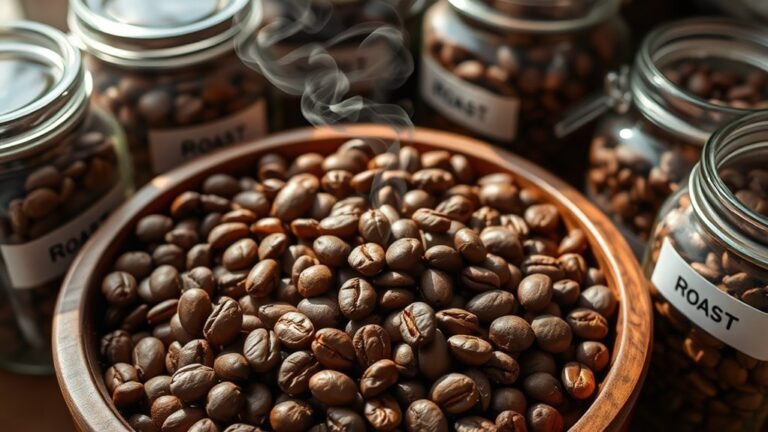
While understanding bean origins is essential, balancing flavor profiles with appropriate roast levels is what truly brings your blend to life. You’ll navigate the roast spectrum—from light, preserving acidity and origin nuances, to dark, enhancing body and bitterness—to achieve flavor harmony. Each roast level reveals distinct chemical reactions, influencing sweetness, acidity, and bitterness. To create an enchanting blend, you must calibrate these variables meticulously. Consider how a medium roast’s caramelization complements a bright, fruity bean, or how a dark roast can deepen chocolate notes without overpowering subtle floral tones. By mastering this equilibrium, you gain the freedom to craft blends that evoke emotion and complexity, ensuring every cup tells a unique story shaped by your precise control of flavor balance and roast intensity.
Techniques for Blending Coffee Beans
Although blending coffee beans might seem straightforward, it demands a precise understanding of each component’s characteristics and how they interact. When you start with bean selection, focus on origin, variety, and processing methods, as these factors profoundly influence flavor and aroma. Conduct detailed aroma analysis to identify complementary scent profiles that will harmonize in your blend. Use small test batches, adjusting ratios methodically to balance acidity, body, and sweetness. Don’t overlook the importance of roast level compatibility—blending beans roasted to similar profiles guarantees consistency. As you refine your technique, keep meticulous records of each blend iteration. This disciplined approach lets you release your creative freedom, crafting unique blends that express both technical mastery and personal artistry.
Experimenting With Brewing Methods

Once you’ve perfected your blend, experimenting with brewing methods becomes essential to reveal its full potential. You’ll want to adjust the grind size meticulously—finer for espresso, coarser for French press—to control extraction and flavor clarity. Brew temperature plays a pivotal role; too hot, and you risk bitterness, too cool, and the coffee tastes flat. Aim for 195–205°F to reveal your blend’s nuanced notes. Don’t hesitate to explore immersion versus drip methods; each highlights different flavor layers. By mastering these variables, you’re not just brewing coffee—you’re unleashing freedom in flavor expression. Embrace the science and art behind each parameter, letting your unique blend shine through every cup you craft.
Tips for Tasting and Refining Your Blend
A critical step in perfecting your coffee blend is developing a systematic tasting and refining process. Begin by cupping your blend in controlled conditions to isolate its core characteristics. Record precise tasting notes, focusing on acidity, body, aroma, and aftertaste. This disciplined approach lets you identify specific flavor profiles needing enhancement or balance. Don’t hesitate to adjust ratios or introduce new beans to amplify desired qualities. Consistency in your evaluation method empowers you to track subtle changes and their impacts effectively. Embrace this iterative cycle with passion and precision—it’s where your creativity meets science. By mastering these techniques, you gain the freedom to craft a blend that’s distinctly yours, delivering nuanced complexity and satisfying every palate with intentional flavor enhancement.
Frequently Asked Questions
How Should I Store My Unique Coffee Blends to Maintain Freshness?
To keep your unique coffee blends fresh, you should vacuum seal them to eliminate air exposure, which deteriorates flavor. For longer storage, consider freezer storage in airtight bags—just be sure to divide portions to avoid repeated thawing. This method locks in aromas and preserves the coffee’s vibrancy, letting you enjoy that fresh-roasted freedom anytime. Avoid moisture and light; store in a cool, dark place when not freezing for ideal freshness.
Can I Create Caffeine-Free Blends While Preserving Flavor Complexity?
Creating caffeine-free blends while preserving flavor complexity is like painting with a limited palette—you need precision. You can use caffeine alternatives like chicory or roasted barley to enhance depth without caffeine’s buzz. Mastering flavor extraction is key: control water temperature and grind size to pull nuanced notes. Experiment boldly, because your freedom to craft unique profiles depends on balancing these elements with passion and technical skill.
What Equipment Is Best for Grinding Coffee for Custom Blends?
When selecting equipment for grinding coffee, you’ll want a burr grinder because it offers consistent grind size crucial for precise grinding techniques. Burr grinders crush beans uniformly, letting you control coarseness—from espresso fine to French press coarse—which is essential for releasing flavor freedom. Avoid blade grinders; they produce uneven particles, compromising extraction. Investing in a quality burr grinder empowers you to experiment boldly, dialing in your custom blends with technical accuracy and passionate control.
How Do Seasonal Changes Affect the Availability of Coffee Beans?
You might not realize it, but seasonal shifts hold the key to your next cup’s fate. Climate impact dramatically influences harvest timing, causing beans to ripen earlier or later, affecting availability. These changes demand adaptability if you crave freedom in your coffee choices. Understanding this helps you anticipate flavor profiles and secure unique beans during scarce periods. Embrace the rhythm of nature to truly master your coffee journey.
Are There Sustainable Practices in Sourcing Beans for Blends?
You can absolutely embrace sustainable practices when sourcing coffee beans, ensuring ethical sourcing that respects both people and the planet. Fair trade certifications guarantee farmers receive fair wages and work under safe conditions, promoting social freedom and economic empowerment. By choosing beans from environmentally responsible farms, you support biodiversity and reduce ecological footprints. This approach lets you craft blends that not only taste exceptional but also honor the freedom and dignity of every contributor in the supply chain.