brewing perfect coffee guide

The Golden Cup Standard: A Guide to Brewing Perfect Coffee

The Golden Cup Standard helps you brew coffee that’s perfectly balanced in flavor, aroma, and strength by focusing on precise parameters like water temperature (195-205°F), coffee-to-water ratio (about 18-20g per 300ml), and grind size. By selecting quality beans and using clean water, you control extraction to avoid bitterness or weakness. Master your equipment and technique…

measuring coffee strength accurately

How to Use a Refractometer to Measure Coffee Strength

To measure coffee strength with a refractometer, first calibrate it using distilled water for accuracy. Brew your coffee and cool it to room temperature, then place a few drops on the refractometer’s prism. Close the cover, look through the lens, and note the TDS percentage. This number shows your coffee’s dissolved solids, indicating strength. Use…

top travel coffee grinders

The Best Manual Coffee Grinders for Travel and Home Use

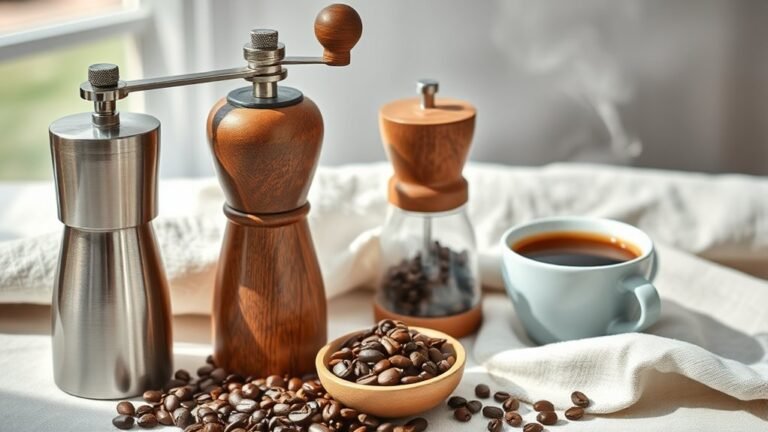
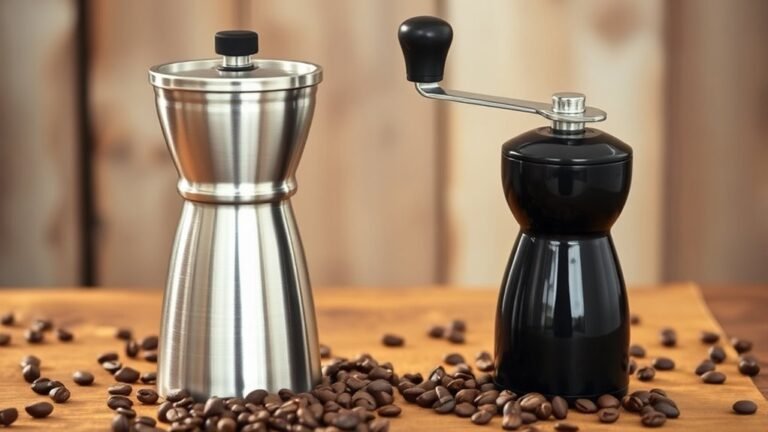
If you want a manual coffee grinder that works well both at home and while traveling, look for one with consistent, adjustable burrs—ceramic or steel—for precise grind sizes. Choose a compact, durable model that’s easy to clean and comfortable to crank by hand. A grinder that balances portability with a decent bean capacity suits varied…

burr and blade grinders

The Different Types of Coffee Grinders: Burr vs. Blade

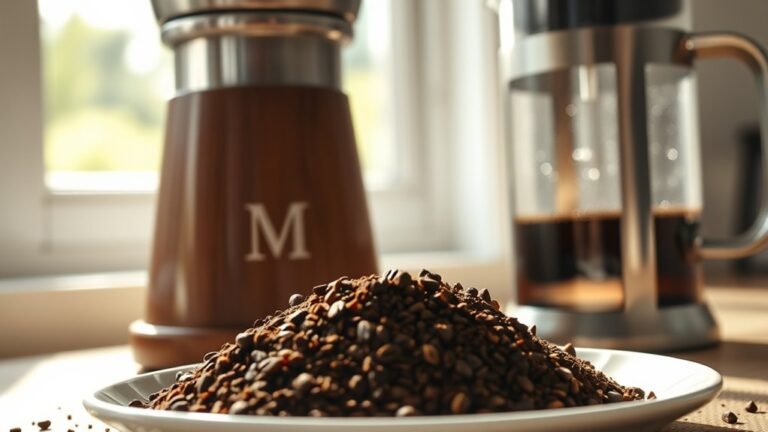
You’ll find two main coffee grinder types: burr and blade. Burr grinders crush beans between two abrasive surfaces, offering precise, uniform particle sizing that’s ideal for consistent extraction and flavor control. Blade grinders use spinning blades to chop beans unevenly, which works for coarser methods but compromises grind consistency. Burrs also reduce heat and static…

acidity contrasts with bitterness

The Difference Between Acidity and Bitterness in Coffee

You’ll find acidity in coffee as a bright, tangy sensation that adds vibrancy and complexity, often linked to organic acids like citric and malic acid. Bitterness, on the other hand, comes from compounds like caffeine and chlorogenic acids, delivering depth and a lasting, sometimes sharper taste. While acidity enlivens and balances sweetness, bitterness grounds and…

essential technique for espresso

The Art of Tamping: A Key to Great Espresso

You hold the key to great espresso with the art of tamping—applying consistent, firm pressure around 30 pounds compacts your coffee grounds evenly, ensuring balanced extraction and rich flavor. Using quality tools like a flat tamper and keeping them clean will enhance your technique. Adjust tamping pressure based on your grind and roast for the…