

The Importance of Hydration for Mental Well-being
Hydration is essential for your mental well-being, as even mild dehydration can impair your focus, memory, and mood. Your brain, composed of around 75% water, relies on proper hydration to function effectively. Dehydration can lead to irritability, fatigue, and increased anxiety, negatively impacting your mental clarity. To support your cognitive function, aim to drink at least eight glasses of water daily and incorporate water-rich foods into your diet. Discover more strategies to boost your hydration for better mental health.
The Science Behind Hydration and Brain Function
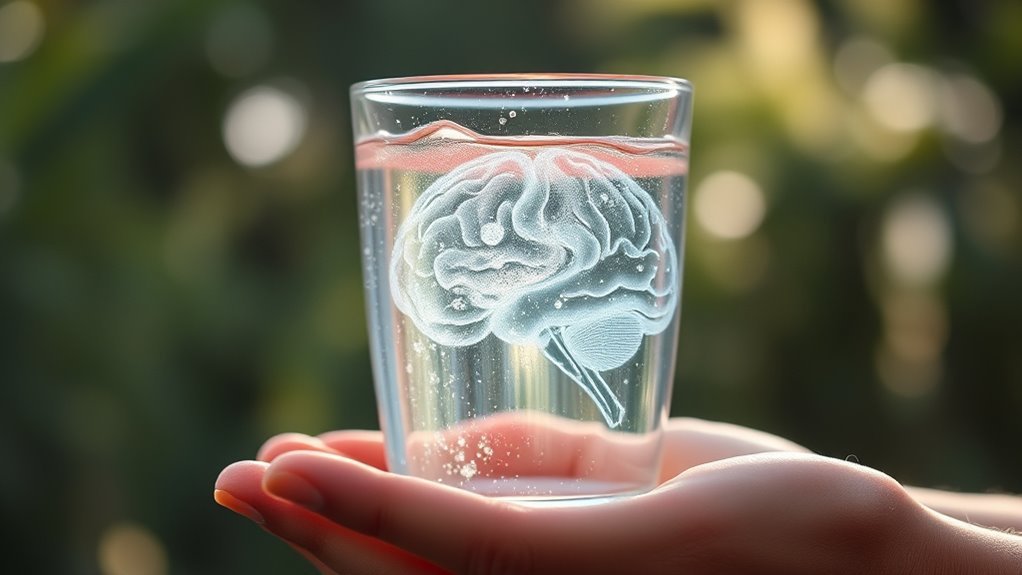
Although you might not think about it often, hydration plays an essential role in maintaining ideal brain function. Your brain is roughly 75% water, and proper brain hydration is vital for maximum cognitive function. Even mild dehydration can impair attention, memory, and overall mental performance. Studies show that staying hydrated can enhance your focus and decision-making abilities, allowing you to feel more in control of your thoughts. You might find that drinking enough water throughout the day not only boosts your productivity but also sharpens your mental clarity. To support your cognitive function, aim for at least eight glasses of water daily, adjusting based on activity level and climate. Remember, your brain thrives on hydration, so drink up for mental freedom and agility!
How Dehydration Affects Mood and Emotions
Staying hydrated is not just about keeping your brain sharp; it also greatly impacts your mood and emotions. When you’re dehydrated, the dehydration effects can lead to irritability, anxiety, and even depression. Maintaining emotional stability requires a delicate balance, and water plays an essential role in that balance.
| Dehydration Effects | Emotional Impact |
|---|---|
| Mild Dehydration | Increased fatigue |
| Moderate Dehydration | Heightened anxiety |
| Severe Dehydration | Mood swings |
| Chronic Dehydration | Risk of depression |
The Role of Water in Cognitive Performance
Water is essential for ideal cognitive performance, as even mild dehydration can impair your ability to think clearly and concentrate. Proper brain hydration optimizes your cognitive functions, enhancing memory, attention, and overall mental agility. Studies show that drinking enough water can lead to cognitive enhancement, helping you tackle complex tasks more efficiently. When you’re adequately hydrated, your brain can communicate effectively, improving decision-making and creativity. So, if you want to unleash your full potential, prioritize your water intake throughout the day. Remember, it’s not just about quenching your thirst; it’s about fueling your mind. By staying mindful of your hydration, you’re investing in your mental well-being and ensuring your brain functions at its best.
Signs of Dehydration: Recognizing the Symptoms
Recognizing the signs of dehydration is essential for maintaining your mental well-being and cognitive performance. Common dehydration symptoms include persistent thirst, dry mouth, fatigue, and dizziness. If you’re feeling unusually tired or find it hard to concentrate, these could be your body’s thirst signals. You might also notice changes in your mood or increased irritability, as dehydration can negatively impact your mental state. It’s vital to listen to these signals and act promptly. Even mild dehydration can hinder cognitive function, so keep a water bottle handy throughout your day. Staying aware of these symptoms empowers you to take charge of your hydration, supporting not just your body, but your mind as well.
The Connection Between Hydration and Stress Levels
Although you may not realize it, your hydration levels can greatly influence your stress levels. Studies show that even mild dehydration can lead to increased cortisol, the body’s primary stress hormone. When you’re well-hydrated, you’re more likely to experience stress reduction, as proper hydration supports brain function and emotional regulation. To manage stress effectively, consider incorporating simple hydration techniques into your daily routine. Carry a water bottle to guarantee easy access, set reminders to drink water throughout the day, or infuse your water with fruits for added flavor. By prioritizing your hydration, you’re not just supporting your physical health; you’re also empowering your mental well-being, allowing you to face stress with greater resilience and clarity. Stay hydrated, stay free!
Hydration Strategies for Better Mental Health
When it comes to enhancing your mental health, adopting effective hydration strategies can make a significant difference. Start by debunking hydration myths; you don’t need to target a specific number of glasses daily. Instead, listen to your body and drink when you’re thirsty. Incorporating water-rich foods into your meals can also help meet your hydration needs. To tackle hydration challenges, keep a water bottle handy to remind yourself to sip throughout the day. Set goals, like drinking a glass before each meal, to make it easier. Finally, pay attention to your energy and mood; if you notice dips, it might be time to increase your fluid intake. Your mental well-being deserves this simple yet impactful strategy!
Foods That Boost Hydration and Mental Well-being

Hydration isn’t just about drinking water; the foods you eat play an essential role in keeping you hydrated and supporting your mental well-being. Incorporating hydrating foods into your diet can enhance your mood and cognitive function. Here’s a quick look at some of the best options:
| Food | Benefits | Hydration Level |
|---|---|---|
| Fruit Smoothies | Packed with vitamins | High |
| Herbal Teas | Calming and hydrating | Moderate |
| Hydrating Soups | Comforting and nutrient-rich | High |
| Water Rich Fruits | Invigorating and hydrating | Very High |
Try options like coconut water, chia seeds, and yogurt parfaits for extra hydration. Don’t forget vegetable juices and infused water to keep things interesting!
Creating a Hydration Routine for Optimal Mental Health
To support your mental health, establishing a hydration routine can be essential. Setting daily water goals and using reminders can help you stay on track and guarantee you’re drinking enough throughout the day. By making hydration a priority, you’ll likely notice improvements in your focus and overall well-being.
Daily Water Goals
Establishing daily water goals can greatly enhance your mental well-being. By setting achievable hydration targets, you can combat hydration challenges that impede cognitive function and emotional stability. Aim for at least eight 8-ounce glasses a day, but adjust based on your activity level and climate.
| Time of Day | Water Goal (oz) | Notes |
|---|---|---|
| Morning | 16 | Start your day strong |
| Mid-Morning | 8 | Boost focus |
| Afternoon | 16 | Combat afternoon slump |
| Evening | 8 | Wind down |
| Before Bed | 8 | Stay hydrated overnight |
Use daily reminders to keep track. With a consistent hydration routine, you’ll feel more energetic and mentally clear, paving the way for a healthier mindset.
Hydration Reminders Techniques
Keeping track of your water intake can be a game-changer for maintaining mental wellness. To establish a hydration routine, consider using hydration apps that can help you set goals and monitor your progress. These apps often allow you to customize your reminders, ensuring you drink enough water throughout the day. You can also set reminder alarms on your phone or smartwatch, prompting you to take a sip every hour. Visual cues, like keeping a water bottle on your desk or in your bag, can reinforce this habit. By integrating these techniques into your daily life, you’ll not only stay hydrated but also support your mental clarity and emotional balance, contributing to overall well-being.
Frequently Asked Questions
How Much Water Should I Drink Daily for Optimal Mental Health?
Picture your body as a thriving garden; daily hydration is the sunlight it needs to flourish. For ideal intake, aim for about 2-3 liters (or half a gallon) of water daily, adjusting based on activity and climate. This keeps your energy levels high and mental clarity sharp. Remember, every sip fuels your mind and spirit, providing the freedom to tackle challenges with confidence and creativity. Stay hydrated, and watch your potential bloom!
Can Caffeine Affect My Hydration Levels and Mental Well-Being?
Caffeine consumption can definitely impact your hydration balance. While moderate caffeine intake might not cause dehydration, excessive amounts can lead to increased urination, potentially affecting your overall fluid levels. It’s crucial to balance your caffeine with adequate water intake to maintain ideal hydration. Remember, staying hydrated is key for your mental clarity and focus. So, if you enjoy your coffee or tea, just make sure you’re also drinking enough water throughout the day.
Are There Specific Times When Hydration Is More Crucial for Mental Health?
Imagine a vibrant garden thriving under the sun, yet parched due to neglect; that’s how your mind can feel without proper hydration habits. Specific times—like when you wake up, during intense focus, or after exercise—are essential for hydration. Neglecting to drink water at these moments can lead to mental fatigue, clouding your thoughts and creativity. By prioritizing hydration throughout the day, you can nurture your mental clarity and embrace the freedom of a sharp mind.
Does the Temperature of Water Impact Hydration Effectiveness?
The temperature of water can indeed impact hydration effectiveness. Cold water might be more invigorating, especially during intense physical activities, making you drink more. On the other hand, warm water can aid digestion and may be more soothing, encouraging you to sip consistently throughout the day. Ultimately, it’s about what you prefer and what keeps you drinking. Staying hydrated is the goal, so choose whatever temperature makes it easier for you.
Can Hydration Improve Sleep Quality and Mental Clarity?
Yes, proper hydration can definitely improve your sleep quality and mental clarity. By implementing effective hydration techniques, like drinking water throughout the day and especially before bedtime, you can enhance sleep hydration. Staying well-hydrated helps regulate body temperature and reduces sleep disruptions, leading to a more restful night. Better hydration often translates to improved cognitive function during the day, so make sure you’re drinking enough to feel your best!