How Long Can You Leave Water in Coffee Maker Reservoir
It’s best not to leave water in your coffee maker reservoir for more than a few days. Stagnant water can develop a stale taste and diminish your coffee’s flavor, not to mention pose potential health risks due to bacterial growth. Factors like temperature and humidity can accelerate spoilage. If you’re unsure whether the water is still suitable, look for signs like cloudiness or odor. Discover more about maintaining your coffee maker for peak performance and flavor.
The Impact of Stagnant Water on Coffee Quality
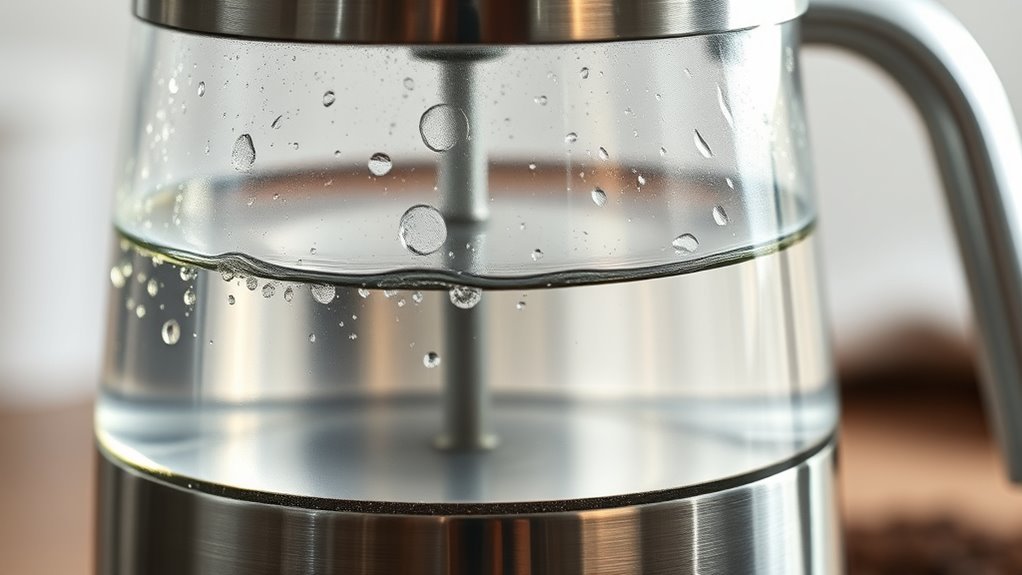
How does stagnant water affect the quality of your coffee? When water sits in your coffee maker for too long, it can lead to a decline in coffee flavor and brewing efficiency. Stagnant water can develop a stale taste, which negatively impacts the extraction process during brewing. This means that your beloved coffee may lack the rich, aromatic qualities you crave. Furthermore, the longer water sits, the more likely it is to absorb impurities and odors from the environment, further compromising the taste. It’s essential to use fresh water to guarantee ideal extraction, preserving the unique flavors of your beans. By being mindful of water freshness, you’ll enhance both the quality of your coffee and your overall brewing experience.
Factors Influencing Water Longevity in the Reservoir
When considering how long water can stay in your coffee maker’s reservoir, several key factors come into play. The quality of the water, the temperature of your environment, and the material of the reservoir all greatly impact water longevity. Understanding these influences can help you maintain ideal conditions for brewing.
Water Quality Impact
Water quality plays an essential role in determining how long you can safely leave water in your coffee maker’s reservoir. Poor water quality can lead to mineral buildup, affecting both your coffee’s taste and your machine’s longevity. Implementing effective water filtration can greatly improve water quality, allowing you to keep it in the reservoir longer without adverse effects.
| Water Quality | Impact on Longevity |
|---|---|
| High Mineral Content | Accelerates buildup |
| Filtered Water | Reduces buildup risk |
| Chlorine Presence | Alters taste |
| Hard Water | Increases maintenance needs |
Temperature and Environment
While you might not realize it, the temperature and environment around your coffee maker can greatly influence how long water remains safe in the reservoir. Understanding these factors can help you maintain your coffee’s quality and safety. Here are key elements to take into account:
- Water Temperature: Warm water promotes bacterial growth, so cooler conditions extend longevity.
- Humidity Levels: High humidity can lead to mold and mildew, which deteriorate water quality.
- Airflow: Poor ventilation can trap heat and moisture, affecting the reservoir environment.
- Direct Sunlight: Exposure to sunlight can raise water temperature, accelerating spoilage.
Reservoir Material Effects
Although the material of your coffee maker’s reservoir may seem like a minor detail, it greatly impacts how long water can safely sit inside. Different reservoir types, such as plastic, glass, or stainless steel, exhibit varying levels of material durability. Plastic can absorb odors and bacteria, leading to potential contamination, while glass is usually more resistant to these issues but can break easily. Stainless steel provides excellent durability and doesn’t retain flavors, making it a preferred choice for longevity. Understanding these differences allows you to make informed decisions about your coffee maker. If you value freshness and safety, consider your reservoir’s material when determining how long you’re willing to leave water inside.
Signs Your Water Has Been Sitting Too Long
When evaluating whether the water in your coffee maker has overstayed its welcome, there are several key indicators to watch for. These signs can help you determine if it’s time to refresh the reservoir:
- Water Clarity: If the water appears cloudy or murky, it’s likely been sitting too long.
- Odor Detection: A stale or musty smell is a clear sign that the water should be replaced.
- Surface Film: Notice any film or residue on the water’s surface? That’s a red flag.
- Color Change: Any discoloration, even slight, suggests the water isn’t fresh anymore.
Health Risks Associated With Old Water in Coffee Makers
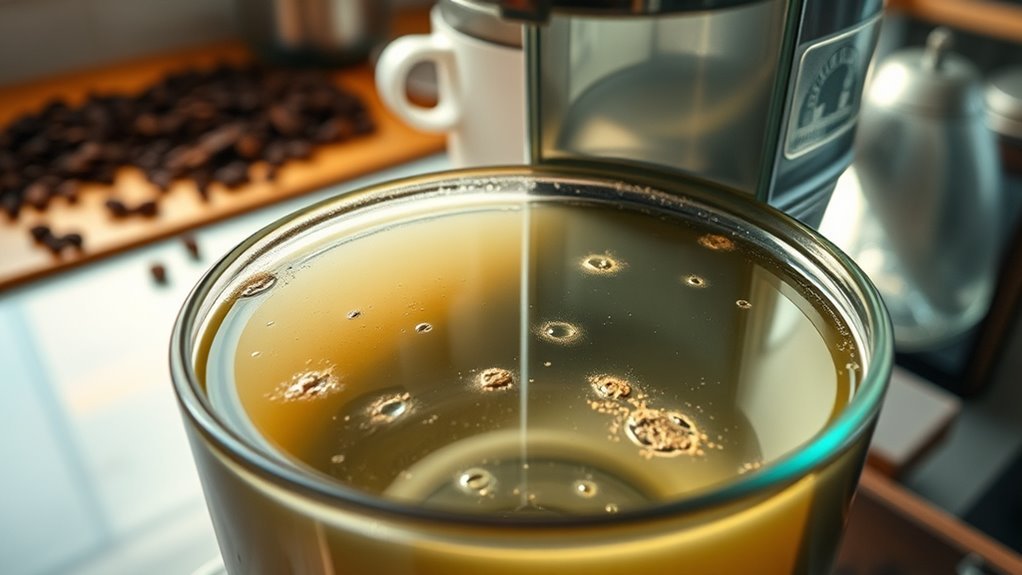
Leaving water in your coffee maker for extended periods can lead to significant health risks. Bacterial growth thrives in stagnant water, potentially contaminating your coffee and posing health hazards. Additionally, chemicals from the materials of the coffee maker can leach into the water, raising concerns about chemical contamination.
Bacterial Growth Concerns
While it might seem harmless to leave water in your coffee maker for an extended period, doing so can pose significant health risks due to bacterial growth. Stagnant water creates an ideal breeding ground for bacteria, especially at room temperature. Here are some concerns to take into account:
- Bacteria thrive: The longer water sits, the more bacteria can multiply.
- Water temperature: If the water isn’t heated, it won’t kill harmful microorganisms.
- Health risks: Ingesting contaminated water can lead to gastrointestinal issues or infections.
- Cleaning requirements: Regularly changing the water and cleaning your coffee maker can minimize these risks.
To keep your coffee habit safe, it’s essential to refresh the water regularly to prevent any potential health hazards.
Chemical Contamination Risks
Stagnant water in your coffee maker doesn’t just raise bacterial concerns; it can also lead to chemical contamination. When water sits too long, it can interact with the materials in the reservoir and components, resulting in chemical leaching. This process allows harmful substances from plastic or metal parts to seep into the water, posing health risks. Contamination sources can include residual cleaning agents or even minerals that accumulate over time. If you’re using old water for brewing, you might unknowingly introduce these chemicals into your coffee, impacting its flavor and safety. To maintain both the quality of your brew and your health, it’s best to empty and clean your coffee maker regularly. Stay informed and safeguard your coffee experience.
Best Practices for Maintaining Your Coffee Maker
To guarantee your coffee maker consistently brews delicious coffee, it’s essential to adopt best practices for its maintenance. Different coffee maker types may require varying approaches, but these general tips apply universally:
Ensuring your coffee maker brews great coffee requires adopting essential maintenance practices tailored to its type.
- Regular Cleaning: Clean your coffee maker monthly to remove buildup and maintain peak function.
- Use Filtered Water: Invest in a good water filtration system to enhance coffee taste and prolong machine life.
- Store Properly: When not in use, store your coffee maker in a dry place to prevent mold and moisture buildup.
- Check for Wear: Regularly inspect parts for wear and tear, replacing any damaged components promptly.
How to Properly Clean Your Coffee Maker’s Reservoir
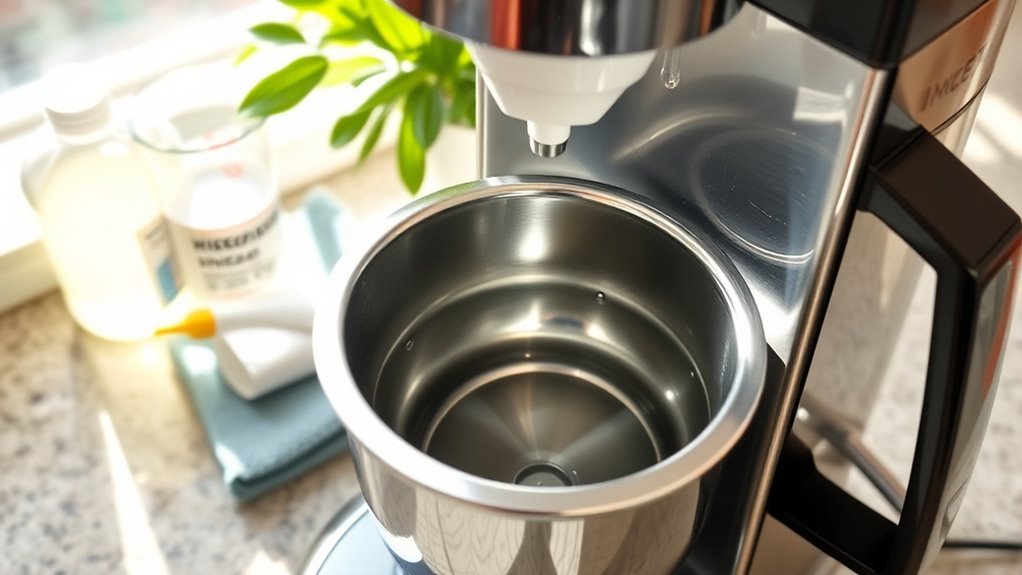
A clean reservoir is essential for maintaining the quality of your coffee and the longevity of your machine. Regularly cleaning your coffee maker’s reservoir can prevent mineral buildup and guarantee a fresh brew. Start by emptying the reservoir and rinsing it with warm water. For tougher stains, consider using a mixture of equal parts water and white vinegar—this is one of the most effective cleaning techniques. Let the solution sit for about 15 minutes before rinsing thoroughly. Don’t forget to check any filters or screens, as they may also require cleaning. As a maintenance tip, aim to clean your reservoir every month, or more frequently if you notice any odors. This simple routine fosters a better tasting cup and extends your coffee maker’s life.
Frequently Asked Questions
Can I Use Bottled Water in My Coffee Maker Reservoir?
Yes, you can use bottled water in your coffee maker reservoir. Bottled water benefits include consistent quality and taste, which can enhance your coffee experience. However, filtered water advantages shouldn’t be overlooked; it often contains fewer impurities, leading to a cleaner brew. If you prefer convenience and taste, bottled water’s a great choice. Just make sure it’s free from additives that could affect your coffee’s flavor or your machine’s performance.
Does the Type of Coffee Affect Water Longevity in the Reservoir?
The type of coffee you use can affect water longevity in the reservoir. Coffee acidity plays a role here; higher acidity can lead to quicker degradation of water quality, impacting brew quality. If you leave water in the reservoir too long, it might develop off-flavors or become less palatable. To maintain ideal taste, it’s best to use fresh water for each brew, ensuring you enjoy the fullest flavor experience from your coffee.
How Often Should I Replace the Water in the Reservoir?
You should replace the water in your coffee maker’s reservoir every few days to maintain ideal water storage and brewing efficiency. Stagnant water can develop bacteria and alter the taste of your coffee. If you’re not brewing daily, consider emptying the reservoir and refilling it with fresh water before each use. This practice not only guarantees better flavor but also promotes a healthier brewing environment, giving you the freedom to enjoy your coffee without concerns.
Is It Safe to Drink Coffee Made With Old Reservoir Water?
“Better safe than sorry” applies here. Drinking coffee made with old reservoir water raises safety concerns, as stale water can harbor bacteria and affect water quality. If water’s been sitting for more than a day or two, it’s best to replace it before brewing. Your health’s worth more than a cup of coffee. Always prioritize freshness to guarantee you’re enjoying a safe and flavorful brew. Don’t take unnecessary risks with your morning routine!
Can I Leave Water in the Reservoir While Traveling?
When you’re traveling, it’s best not to leave water in your coffee maker’s reservoir. Stagnant water can foster bacteria growth, impacting your health and coffee’s taste. For effective coffee maintenance, always empty the reservoir before you go. Consider these traveling tips: clean your coffee maker before your trip and refill it with fresh water upon your return. This guarantees you’ll enjoy a safe and flavorful cup when you’re back home.