

Can You Use Espresso Roast for Regular Coffee
Yes, you can use espresso roast for regular coffee, and it offers a bold flavor that adds depth to your daily brew. While espresso is typically brewed under high pressure, using a medium grind and appropriate brewing methods can balance its intensity. Adjusting water temperature and brew ratio helps avoid bitterness, creating a rich cup. With the right techniques, you’ll enjoy a complex flavor profile. Exploring different methods can enhance your coffee experience even further.
Understanding Espresso Roast vs. Regular Coffee

When it comes to coffee, what really distinguishes espresso roast from regular coffee? The key lies in the roast profile and the specific espresso blend used. Espresso roasts are typically darker and have a more intense flavor, designed to withstand the high pressure of espresso brewing. This results in a rich, concentrated shot that highlights bold flavors and a full-bodied mouthfeel. In contrast, regular coffee tends to have a lighter roast profile, emphasizing acidity and subtle notes. The grind size and brewing method also play significant roles, but understanding these foundational differences allows you to appreciate each type’s unique characteristics. Ultimately, knowing this can help you choose the right roast for your desired coffee experience.
The Brewing Process: How Methods Affect Flavor
The brewing process greatly influences the flavors extracted from coffee, including espresso and regular brews. Different brewing techniques, such as French press, pour-over, or espresso machines, each yield distinct flavor profiles. For instance, espresso relies on high pressure and a short extraction time, enhancing bold, concentrated flavors. In contrast, methods like drip brewing extract flavors more slowly, often resulting in a milder taste. The water temperature and grind size further impact flavor extraction, as coarser grinds may lead to under-extraction while fine grinds could result in bitterness. Understanding how these variables interact allows you to experiment with espresso roast in regular coffee, revealing unique tastes that cater to your preferences and creativity. Embrace the freedom to explore!
Tasting Notes: What to Expect From Espresso Roast
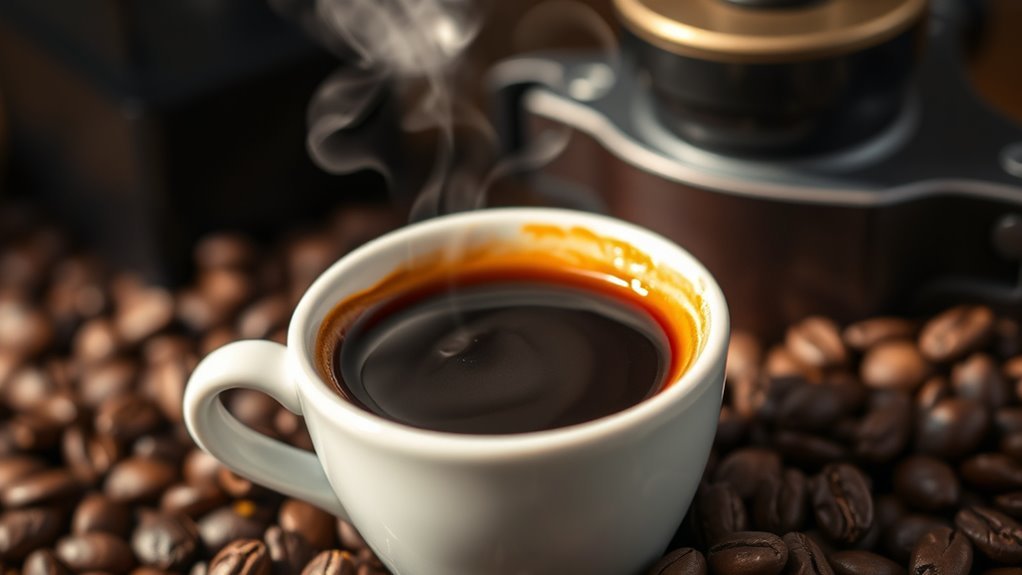
Espresso roast offers a rich tapestry of flavors that can surprise even seasoned coffee drinkers. When you plunge into its tasting notes, expect a bold intensity that dances between sweet and bitter. You’ll likely encounter flavor profiles featuring dark chocolate, caramel, and hints of smoky undertones. The natural acidity can provide a bright contrast, enhancing the overall experience.
As you sip, you might also detect subtle notes of nuts or spices, adding complexity to the cup. It’s important to note that the roast can influence mouthfeel, often resulting in a creamy texture that lingers pleasantly. Whether you’re enjoying it straight or in a milk-based drink, espresso roast promises a depth of character that’s both intriguing and satisfying.
Experimenting With Espresso in Your Daily Brew
Incorporating espresso into your daily coffee routine can elevate your brewing experience in unexpected ways. By experimenting with an espresso brew, you can explore diverse flavor profiles that traditional coffee may not offer. Below is a comparison of various espresso blends and their potential impact on your daily cup.
| Espresso Blend | Flavor Profile |
|---|---|
| Dark Roast | Bold, smoky, bittersweet |
| Medium Roast | Balanced, chocolatey |
| Light Roast | Bright, fruity |
| Single Origin | Unique, region-specific |
| Flavored Espresso | Sweet, aromatic |
Trying different blends can enhance not just the taste but also your appreciation for coffee. So, take the plunge and see how your daily brew transforms with the richness of espresso!
Tips for Brewing Espresso Roast as Regular Coffee

Exploring espresso blends can lead to new methods for brewing coffee that may surprise you. When you decide to use espresso roast for your regular coffee, consider these tips to enhance your brewing techniques and flavor profiles:
- Grind Size: Use a medium grind for ideal extraction without bitterness.
- Water Temperature: Aim for around 200°F to balance flavor while avoiding over-extraction.
- Brewing Ratio: Experiment with a 1:15 coffee-to-water ratio for a rich taste.
- Brewing Method: Try using a French press or pour-over for a different texture.
- Taste Adjustments: Play with brewing time and milk additions to find your perfect balance.
These strategies can reveal new dimensions in your coffee experience, allowing you to enjoy espresso roast in a whole new light.
Frequently Asked Questions
Can Espresso Roast Be Used in a Coffee Maker?
Yes, you can use espresso roast in a coffee maker. While espresso is typically brewed using specific methods like espresso machines, coffee makers can still extract rich flavors from the roast. The flavor profiles will differ, often resulting in a bolder cup compared to lighter roasts. Experimenting with brewing methods allows you to enjoy the versatility of espresso roast, giving you the freedom to tailor your coffee experience to your taste preferences.
Does Espresso Roast Have More Caffeine Than Regular Coffee?
When contemplating caffeine content, you might wonder if espresso roast packs a punch compared to regular coffee. Generally, espresso’s concentrated brewing method results in higher caffeine per ounce, but since servings differ, a standard cup of regular coffee often ends up with more total caffeine. So, while espresso roast can seem stronger, it’s essential to contemplate your brewing methods and serving sizes to truly compare their caffeine levels.
What Grind Size Is Best for Brewing Espresso Roast?
For brewing espresso roast, the best grind size is a fine consistency, typically resembling table salt. This grind size guarantees ideal espresso extraction, allowing water to flow through the coffee evenly and efficiently. If your grind is too coarse, you’ll end up with under-extracted, sour flavors; too fine, and it may clog the espresso machine. Achieving the right grind consistency is essential for a balanced, rich espresso experience that truly showcases the roast’s potential.
Can I Mix Espresso Roast With Regular Coffee Beans?
Sure, mixing espresso roast with regular coffee beans sounds like a recipe for a flavor disaster, doesn’t it? But in reality, blending beans can enhance your cup. By combining the boldness of espresso with the subtle nuances of regular coffee, you can create unique flavor profiles that balance richness and brightness. Experiment with ratios to find what suits your palate, and enjoy the freedom to craft your perfect brew!
How Should I Store Leftover Espresso Roast?
To store leftover espresso roast, you’ll want to contemplate a few effective storage methods. Airtight containers are your best bet; they keep moisture and air out. For longer freshness, try vacuum sealing. Keep the container in a cool, dark place, away from direct light and heat sources. Avoid storing in the fridge, as it can introduce moisture. Following these freshness tips will help maintain the rich flavor and aroma of your espresso roast.