
Can You Use Espresso Coffee in a French Press
Yes, you can absolutely use espresso coffee in a French press! This method releases the rich, bold flavors of espresso beans, making for a unique experience. By adjusting the grind size and brewing time, you can reveal deeper layers of taste that are often overshadowed in traditional espresso brewing. The smooth, rounded profile complements the intense characteristics of espresso beans beautifully. If you’re enthusiastic to elevate your coffee game even further, there’s so much more to explore.
Understanding Espresso and Its Unique Characteristics

When you think about espresso, you might picture a rich, concentrated shot of coffee that packs a punch, but its unique characteristics go far beyond just strength. The magic lies in espresso extraction, a meticulous process that maximizes flavor intensity. With finely ground coffee subjected to high pressure, the oils and complex flavors are coaxed out, creating a symphony of taste in every sip. You’ll experience notes that dance on your palate—sweet, bitter, and everything in between. This isn’t just coffee; it’s an experience that ignites your senses and liberates your spirit. Understanding espresso means embracing its boldness while appreciating the artistry behind each cup, an affirmation to freedom in flavor that invites you to explore and savor every moment.
The French Press Brewing Method Explained
While many coffee enthusiasts are drawn to the simplicity of a French press, its brewing method offers a depth of flavor that can rival even the most expertly crafted espresso. The French press allows for exceptional flavor extraction, bringing out the rich oils and nuances of your coffee beans. You’ll appreciate its brewing advantages, like the freedom to control steeping time and water temperature, which can enhance or mellow the coffee’s profile according to your taste. With a coarser grind, the coffee steeps fully, resulting in a full-bodied brew that captures the essence of your chosen beans. This hands-on process invites you to engage with the coffee, making every cup a personal journey of discovery and indulgence.
Can You Use Espresso Beans in a French Press?

Is it possible to brew a delightful cup of coffee with espresso beans in a French press? Absolutely! While espresso beans are typically designed for espresso machines, their rich flavors can be harnessed in a French press. Exploring various espresso bean varieties can lead you to discover unique profiles that enhance your brew. Using alternative brewing methods like the French press allows for a fuller extraction, resulting in a bold cup.
| Espresso Bean Varieties | Flavor Notes | Ideal Brewing Method |
|---|---|---|
| Arabica | Sweet, fruity | French Press |
| Robusta | Earthy, bitter | Espresso Machine |
| Blend | Complex | French Press/Drip |
Experimenting with these beans in your French press can ignite a passion for coffee in new ways!
Flavor Profiles: Espresso vs. French Press Coffee
Exploring the nuances of flavor profiles between espresso and French press coffee reveals a fascinating contrast that can elevate your coffee experience. Espresso flavor bursts with intensity, showcasing deep, rich notes and a velvety body that dances on your palate. It’s bold and concentrated, often with hints of chocolate or caramel, making each sip a powerful moment.
In contrast, the French press flavor offers a smoother, more rounded experience. The immersion brewing method allows oils and fine particles to mingle, creating a delightful complexity that highlights brighter, floral, or fruity notes. This freedom in flavor lets you enjoy a more varied spectrum, inviting you to savor the subtleties. Both styles have unique qualities, and exploring them could be a delightful journey for your taste buds.
Brewing Techniques for Espresso in a French Press

Brewing espresso in a French press might sound unconventional, but it opens up a world of rich flavors and textures that can surprise even the most seasoned coffee lovers. To master this technique, focus on these essential steps:
- Grind Size: Use a fine grind for better espresso extraction, allowing the water to interact fully with the coffee.
- Water Temperature: Aim for around 200°F (93°C) to guarantee ideal flavor balancing without bitterness.
- Brew Time: Let your coffee steep for about 4 minutes, giving it enough time to develop a robust profile.
Tips for Achieving the Best Flavor With Espresso in a French Press
To release the rich, bold flavors of espresso in your French press, you’ll need to pay close attention to a few key elements. The grind size, brewing time, and water temperature all play essential roles in creating that perfect cup. By fine-tuning these factors, you can transform your espresso experience into something truly extraordinary.
Coffee Grind Size
The key to accessing the rich, robust flavors of espresso in a French press lies in the grind size of your coffee beans. Getting it just right can elevate your brewing experience to new heights. Here are three tips to perfect your espresso grind for the French press:
- Coarse is Key: Use a coarser grind to prevent over-extraction, allowing the deep flavors to emerge without bitterness.
- Freshness Matters: Always grind your beans just before brewing to guarantee maximum freshness, preserving those aromatic oils.
- Experiment Freely: Don’t hesitate to adjust the grind size based on your taste preference; every palate is unique!
Brewing Time Matters
Achieving the perfect cup of espresso in a French press hinges considerably on brewing time—aim for a sweet spot of around four minutes. This duration allows for ideal flavor extraction, balancing richness and acidity without overwhelming your palate. If you brew too short, you risk under-extraction, leaving your cup tasting flat and lifeless. Brew too long, and bitterness may dominate, ruining that sought-after harmony. Aim for brewing consistency by sticking to this four-minute rule, letting your taste buds guide you. As you experiment, note how slight tweaks in time can enhance or diminish flavors. Embrace this freedom to explore, knowing that perfecting your brew is a journey, one that rewards you with exquisite, robust coffee experiences.
Water Temperature Tips
How hot should your water be for that perfect espresso in a French press? Achieving the best temperature is key to enhancing the rich flavors of espresso. Here are three tips to maximize your brewing efficiency:
- Heat water to 195°F – 205°F: This range allows for the best extraction, balancing bitterness and sweetness.
- Let your water sit: If boiling, let it rest for about 30 seconds. This cools it down to that ideal range.
- Experiment: Everyone’s palate is different. Adjust the temperature slightly to find what resonates with your taste buds.
Common Mistakes to Avoid When Brewing Espresso in a French Press
When brewing espresso in a French press, it’s easy to overlook key elements that can ruin your coffee experience. If you don’t pay attention to grind size, brewing time, and water temperature, you might end up with a bitter or weak cup that doesn’t do justice to the rich flavors of espresso. Let’s explore these common mistakes so you can elevate your brewing game and enjoy every sip.
Grind Size Matters
One of the most essential factors in brewing espresso in a French press is the grind size, and getting it wrong can lead to a disappointing cup. The grind consistency directly impacts the extraction process, so pay attention to these key points:
- Coarse Grind: Too coarse, and your espresso will taste weak and under-extracted.
- Fine Grind: Too fine, and you’ll risk over-extraction, resulting in bitterness.
- Uniformity: Inconsistent particles can lead to uneven brewing, ruining the flavor profile.
Finding that sweet spot in grind size can liberate your brewing experience. Embrace the freedom of exploration, knowing that the right grind can elevate your coffee ritual, transforming a simple cup into a luxurious espresso delight.
Brewing Time Issues
While the grind size sets the stage, brewing time can make or break your espresso experience in a French press. A common mistake is letting the coffee steep for too long, which can lead to over-extraction and bitter flavors. Aim for brewing consistency by sticking to a two to four-minute steeping time. This way, you’ll allow the rich oils and subtle notes to blossom without overwhelming your palate. Conversely, under-brewing can result in weak and lifeless coffee, robbing you of that robust flavor extraction that espresso lovers crave. Pay attention to the clock, and don’t rush the process. Embrace the art of brewing, and let each cup reflect your passion for coffee freedom.
Water Temperature Control
Achieving the perfect cup of espresso in a French press hinges considerably on water temperature, as using water that’s too hot can scorch the coffee grounds, resulting in an unpleasantly bitter brew. To master water temperature control, keep these tips in mind:
- Ideal Temperature: Aim for 195°F to 205°F (90°C to 96°C) for best extraction.
- Water Heating Technique: Use a thermometer or kettle with temperature settings to guarantee precision.
- Temperature Stability: Allow the water to sit for about 30 seconds after boiling to avoid overheating.
Comparing Other Brewing Methods for Espresso Beans
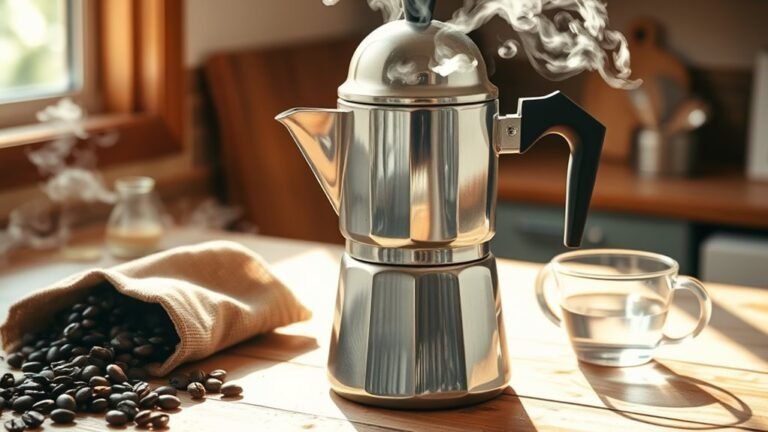
When exploring the world of espresso beans, it’s fascinating to discover the various brewing methods that can deliver a delicious cup, each with its unique characteristics. The classic espresso machine, with its pressure-driven extraction, truly honors the espresso’s origins, bringing out rich flavors and velvety crema. Alternatively, the AeroPress offers a versatile approach, allowing you to experiment with grind size and steep times, creating a bold brew that still captures the essence of those beans. Then there’s the moka pot, a simple yet effective piece of brewing equipment that produces a strong, robust coffee. Each method has its charm, inviting you to explore different nuances and textures, ultimately granting you the freedom to enjoy espresso in your own way.
Frequently Asked Questions
Can I Mix Espresso and Regular Coffee in a French Press?
You can definitely mix espresso and regular coffee in a French press! Imagine the rich, bold espresso flavor intertwining with the smooth, mellow notes of regular coffee, creating a unique coffee blend that excites the palate. This combination allows you to explore new depths in your morning ritual, releasing a freedom of taste that’s truly yours. Experimenting with ratios can lead to your perfect cup, so don’t hesitate to embrace this delicious journey!
How Much Espresso Coffee Should I Use in a French Press?
Did you know that the ideal brewing ratio for coffee is often 1:15? When using espresso coffee in a French press, you’ll want to adjust your espresso measurement accordingly. Start with about 1 ounce of espresso for every 15 ounces of water. This balance lets the rich flavors shine without overwhelming your palate. Experimenting with these brewing ratios can set you free to discover your perfect cup, bringing your coffee experience to new heights!
Can I Use Pre-Ground Espresso for French Press Brewing?
Yes, you can use pre-ground espresso for French press brewing, but there are a few things to contemplate. Espresso grind size is much finer than what’s ideal for a French press, which can lead to over-extraction and a bitter taste. If you’re seeking freedom in your brewing techniques, try experimenting with the brew time and water temperature. You might just find a unique flavor profile that surprises your palate!
Does Brewing Time Differ for Espresso in a French Press?
When exploring the enchanting world of brewing techniques, you’ll find that time plays a pivotal role in crafting those rich flavor profiles. Using espresso in a French press, you might discover that the brewing time differs from traditional methods. It’s best to steep for about four minutes, allowing the bold essence to bloom, while avoiding bitterness. Embrace this journey, and let your taste buds revel in the freedom of choice and experimentation!
Will Using Espresso in a French Press Affect Caffeine Content?
Using espresso in a French press can definitely affect caffeine content. The brewing methods vary greatly; espresso extracts caffeine quickly under pressure, while a French press allows for a longer immersion. This longer brewing time can lead to more caffeine extraction from the grounds. So, if you’re seeking a bold, invigorating cup, experimenting with espresso in your French press might just release a potent, liberating caffeine experience you’ll love. Enjoy the freedom of exploration!