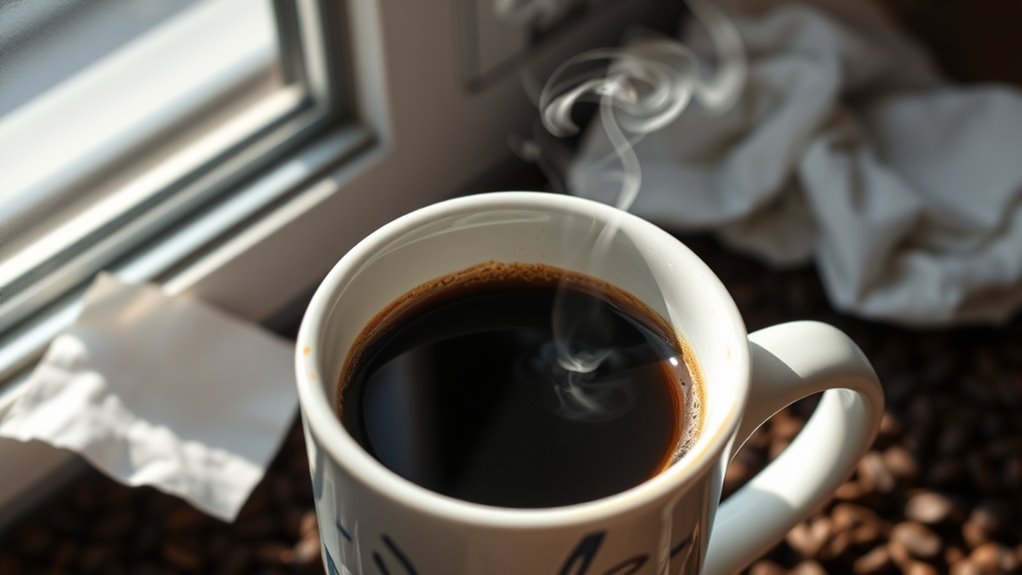
Can You Drink Black Coffee Left Out Overnight
Drinking black coffee left out overnight isn’t recommended. The flavor degrades due to oxidation, leading to bitterness and a flat taste. Additionally, bacteria can grow in room temperature coffee, increasing health risks. While acidity in coffee can limit bacterial survival, it’s best to prioritize safety. Proper storage in airtight containers can help maintain quality. If you’re curious about how to properly store coffee and when to discard it, there’s more to explore.
Understanding Coffee Composition

When you consider drinking black coffee left out overnight, it’s essential to understand its composition. Coffee’s complex mixture contains numerous flavor compounds and acids that contribute to its unique taste. The primary factor influencing coffee’s flavor is its acidity, which can vary based on the bean type, roast level, and brewing method. When left out, the volatile flavor compounds begin to dissipate, altering the overall profile. As time passes, the balance of acidity can shift, leading to a more bitter or stale taste. While some may appreciate the earthy notes that develop, others might find the changes unpalatable. Understanding these elements helps you make informed choices about enjoying your coffee, whether fresh or left out overnight.
The Effects of Time on Flavor
The way time influences coffee flavor after it’s brewed is significant. As hours pass, a cup of black coffee undergoes a taste evolution that alters its flavor profile. Initially, you might enjoy vibrant notes of acidity and sweetness. However, as it sits, oxidation occurs. This process breaks down compounds, leading to a duller and more bitter taste, often overshadowing the coffee’s original nuances. The aromatic oils can also evaporate, diminishing the overall experience. If you’re seeking the best flavor, it’s advisable to consume your coffee shortly after brewing. While time can enhance some beverages, in the case of black coffee, it typically detracts from the fresh, lively qualities you initially loved. Enjoy it at its peak for the best experience.
Safety Concerns of Leftover Coffee

While it might be tempting to sip on that leftover coffee from last night, there are important safety concerns to take into account. Coffee’s acidity can change over time, affecting its flavor profile and potentially causing discomfort if consumed after being left out. The longer it sits, the more it oxidizes, leading to a bitter taste that many find unappealing. Furthermore, the stability of compounds in coffee diminishes, which can impact its overall quality. While you might enjoy the bold flavor of fresh coffee, the safety of drinking older brews should be prioritized. If you want to enjoy coffee without compromising safety, consider brewing only what you can drink in a short time, ensuring a balanced and enjoyable experience.
Microbial Growth and Bacteria
Although coffee is often perceived as a safe beverage, leaving it out overnight can create an environment conducive to microbial growth and bacteria proliferation. When coffee sits at room temperature, it can attract various microorganisms, leading to potential health risks.
| Factor | Impact on Coffee |
|---|---|
| Temperature | Promotes bacteria growth |
| Time at room temp | Increases microbial safety concerns |
| Exposure to air | Enhances contamination risk |
| Acidity | Affects bacteria survival |
To maintain your coffee’s freshness and safety, be mindful of how long it sits out. Understanding these factors can help you enjoy your brew without the worry of unwanted microbial activity.
Tips for Proper Coffee Storage

To maintain the freshness and quality of your coffee, it’s crucial to contemplate ideal storage conditions. Using airtight containers can greatly reduce exposure to oxygen and moisture, which can compromise flavor. Additionally, understanding when to refrigerate versus keeping your coffee at room temperature can help preserve its taste for longer periods.
Ideal Storage Conditions
Proper coffee storage is vital for preserving freshness and flavor, particularly if you want to enjoy a rich cup every time. To achieve this, keep your coffee in a cool, dark place with an ideal temperature between 60°F and 70°F. Avoid exposing it to light and heat sources, as these can degrade the beans’ quality over time. Additionally, maintaining ideal humidity is essential; aim for a humidity level below 60%. Too much moisture can lead to mold growth and spoilage. If you can control these conditions, you’ll greatly enhance the longevity of your coffee. Ultimately, taking these steps will guarantee that each brew remains delicious and aromatic, giving you the ultimate freedom to savor your coffee experience.
Airtight Containers Importance
When it comes to preserving the quality of your coffee, using airtight containers is essential. These containers prevent exposure to air, moisture, and light, which can degrade your coffee’s flavor and aroma. Understanding the different container types can help you make an informed choice. Here are some airtight benefits to take into account:
- Flavor retention: Keeps the rich taste intact.
- Freshness preservation: Maintains ideal freshness for longer.
- Moisture control: Protects against humidity that can spoil coffee.
- Odor prevention: Avoids absorption of unwanted smells.
- Extended shelf life: Allows you to enjoy your coffee at its best for weeks.
Refrigeration vs. Room Temperature
While some people believe refrigeration is the best way to keep coffee fresh, it’s essential to weigh the pros and cons of both refrigeration and room temperature storage. Refrigeration benefits include slowing down the oxidation process, which can preserve flavor for a longer period. However, chilling can also introduce moisture, leading to unwanted condensation in your coffee. On the other hand, room temperature storage allows for a more consistent flavor profile, but exposure to air can accelerate staleness and spoilage. If you choose room temperature, keep your coffee in an airtight container to mitigate these effects. Ultimately, the best choice depends on your consumption habits and preferences, so consider what aligns with your desire for fresh, flavorful coffee.
Reheating and Its Impact on Quality

Although you might think reheating black coffee is a simple fix for enjoying your morning brew, it can greatly affect its overall quality and flavor. The reheating methods you choose play a significant role in flavor preservation, as they can alter the coffee’s compounds. Here are some factors to take into account:
Reheating black coffee may seem easy, but it can significantly impact its quality and flavor.
- Temperature: High heat can lead to bitterness.
- Duration: Longer reheating times can degrade flavor.
- Method: Microwaving can create uneven heating, affecting taste.
- Container: Using metal or ceramic can influence heat retention.
- Oxygen Exposure: Repeated reheating can introduce air, causing oxidation.
Being mindful of these factors can help you enjoy a more satisfying cup, even if it’s been sitting out overnight.
When to Discard Coffee for Safety
When it comes to coffee safety, it’s essential to contemplate bacterial growth, which can occur if coffee is left out for too long. Not only does the taste of your brew degrade over time, but the conditions in which it’s stored also play a significant role in how long it remains safe to drink. Understanding these factors can help you make informed decisions about when to discard your coffee.
Bacterial Growth Risk
If you leave black coffee out overnight, it’s important to be aware of the potential for bacterial growth. Bacterial contamination can occur, especially if the coffee’s acidity decreases over time, creating a more hospitable environment for bacteria. To guarantee your safety, consider these guidelines:
- Coffee left at room temperature for more than 12 hours should be discarded.
- If you’ve added milk or sugar, the risk increases considerably.
- Look for changes in smell or appearance, which may indicate spoilage.
- Always store leftover coffee in the fridge if you plan to consume it later.
- Trust your instincts—if it seems off, it’s better to err on the side of caution.
Keeping these points in mind will help you enjoy your coffee safely.
Taste Degradation Over Time
As coffee sits out over time, its flavor profile can change considerably, leading to a less enjoyable drinking experience. The taste compounds responsible for coffee’s rich flavor begin to degrade, resulting in a flat and bitter taste. This degradation can start within a few hours of exposure to air, as oxidation occurs and volatile aromatic compounds dissipate. You might notice that your once vibrant brew now tastes dull and lifeless. For peak enjoyment, it’s best to consume coffee within 30 minutes of brewing. If it’s been left out overnight, the taste degradation often renders it unpalatable. While it may not pose immediate safety concerns, the diminished flavor can make you think twice before sipping that stale cup.
Storage Conditions Matter
While many people might not consider the safety of coffee left out overnight, it’s important to recognize that storage conditions play a crucial role in determining whether it’s still safe to drink. Various environmental factors can impact the longevity of your coffee, so understanding these can help you decide when to discard it.
Consider these key points:
- Storage duration: Coffee left out for more than 12 hours may be risky.
- Temperature: Warm environments accelerate bacterial growth.
- Contamination: Exposure to dust or insects can introduce harmful elements.
- Light exposure: UV light can alter the composition, affecting safety.
- Humidity levels: High humidity can promote mold growth.
Always prioritize your health and be mindful of how long your coffee’s been sitting out.
Frequently Asked Questions
Can I Add Milk to Black Coffee Left Out Overnight?
Adding milk to black coffee left out overnight isn’t advisable. Milk spoilage can occur when left unrefrigerated, leading to harmful bacteria growth. The flavor changes in the coffee itself can also affect how the milk tastes. While you might enjoy the taste of fresh coffee with milk, combining them after they’ve been sitting out could pose health risks. It’s best to stick to freshly brewed coffee and milk for peak flavor and safety.
Does the Type of Coffee Bean Affect Overnight Storage?
The type of coffee bean varieties can indeed affect how your coffee behaves during overnight storage. Different beans have varying levels of oils and acidity, which can influence flavor and spoilage. If you’re storing your coffee in warm or humid conditions, it may spoil faster. To maintain quality, consider the storage conditions; a cool, dark place is ideal. Ultimately, it’s best to consume your coffee fresh for the best experience.
What Happens to Caffeine Levels in Overnight Coffee?
When coffee sits out overnight, its caffeine levels generally remain stable; caffeine doesn’t degrade considerably over time. However, you might notice taste changes due to oxidation, which can lead to a stale or bitter flavor. While the caffeine itself is still effective, the overall experience may not be enjoyable. If you’re seeking the best flavor, it’s best to consume your coffee fresh, but if you enjoy it cold, go ahead!
How Does Brewing Method Impact Leftover Coffee Quality?
Think of brewing methods as the sculptor shaping your coffee masterpiece. Different methods, like pour-over or French press, influence the extraction process and affect coffee freshness. A pour-over often yields a cleaner taste, while a French press can create a richer, fuller body. As coffee sits, oxygen exposure degrades its quality, leading to bitterness. So, if you want to savor your cup, consider how you brew and how long it sits before drinking.
Can I Use Leftover Coffee for Cooking or Baking?
Absolutely, you can use leftover coffee for cooking or baking! It can enhance flavor in various coffee recipes, adding depth to cakes, marinades, or even sauces. The compounds in coffee, like antioxidants, can contribute positively to your dishes. Just keep in mind that the flavor might intensify over time, so adjust your quantities accordingly. Experimenting with leftover coffee can be a fun way to discover new culinary creations while reducing waste.