
A Guide to South American Coffees: Colombia, Brazil, and More
If you’re exploring South American coffees, start with Colombia’s high-altitude Arabica beans, known for bright acidity and complex fruity flavors. Brazil, the world’s largest producer, offers a wide range from nutty to chocolatey, amplified by diverse climates. Don’t overlook Peru and Ecuador, where emerging regions yield floral and citrus notes thanks to unique microclimates and sustainable growing practices. The interplay of geography and climate truly shapes each cup’s character—there’s much more to uncover about these vibrant coffee traditions.
Colombia: The Heart of Arabica Excellence
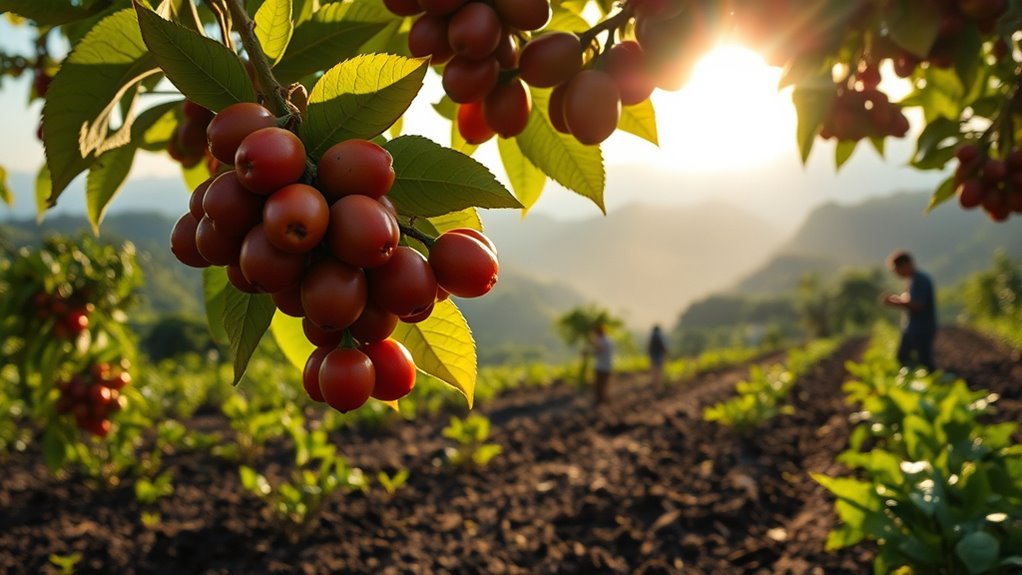
Although Colombia’s diverse climate zones contribute to its reputation, it’s the consistent quality of its Arabica beans that truly makes the country stand out. You’ll find that the Colombian terroir—marked by high altitudes, volcanic soils, and balanced rainfall—creates an ideal environment for cultivating a wide range of Arabica varieties. This terroir imparts a distinctive brightness and complexity to the coffee, setting it apart globally. When you savor Colombian Arabica, you’re experiencing beans nurtured under conditions that promote resilience and flavor clarity. By understanding these unique environmental factors and the meticulous care in cultivation, you gain insight into why Colombia maintains its status as the heart of Arabica excellence, offering you both freedom in flavor and assurance in quality.
Brazil: The World’s Largest Coffee Producer
While Colombia captivates with its refined Arabica beans shaped by unique highland conditions, Brazil commands the coffee world through sheer scale and diversity. Brazilian coffee isn’t just about volume; it’s a dynamic fusion of sustainable farming, artisan roasters, and vibrant coffee culture. You’ll find:
Brazil leads coffee with vast scale, sustainability, artisan roasters, and a vibrant culture shaping global flavors.
- Sustainable farming practices that minimize environmental impact while boosting quality.
- Artisan roasters pushing flavor innovations, creating profiles from nutty to fruity.
- Renowned coffee festivals celebrating the nation’s rich coffee heritage and economic impact.
Brazil’s dominance in the coffee trade guarantees you access to a vast spectrum of beans. Whether you’re savoring a bold espresso or exploring new tastes, Brazilian coffee offers a gateway to freedom through its diverse, innovative flavors. It’s not just a commodity—it’s a cultural experience shaping global coffee trends.
Peru and Ecuador: Emerging Coffee Destinations
If you’re looking to explore coffee beyond the usual giants, Peru and Ecuador offer compelling, emerging profiles that are reshaping South America’s coffee landscape. Peru coffee is gaining recognition for its organic cultivation in high-altitude regions, where smallholder farmers prioritize sustainability and quality. You’ll find that Peru’s diverse microclimates contribute to the distinctiveness of its beans, allowing for nuanced expressions in your cup. Ecuador coffee, meanwhile, is carving out a niche with its unique growing conditions along the Andes and Pacific coast, producing coffee that stands out for its balance and complexity. Both countries are investing in infrastructure and training, empowering farmers to meet international standards. If you want freedom in your coffee choices, exploring Peru and Ecuador coffee lets you support emerging markets while enjoying exceptional quality.
Unique Flavor Profiles of South American Coffees
You’ll notice South American coffees stand out thanks to distinctive regional tastes shaped by diverse climates. These variations influence the beans’ acidity and sweetness, while unique processing methods further refine their complex flavor profiles. Understanding these factors helps you appreciate the rich diversity behind every cup from this region.
Distinctive Regional Tastes
Although South America is often recognized as a collective coffee-producing region, each country’s unique geography, climate, and processing methods create distinctive flavor profiles that set their beans apart. When you explore these regional varieties, you’ll uncover remarkable flavor nuances shaped by local conditions. Consider these key distinctions:
- Colombia’s high-altitude Arabica beans offer bright acidity and fruity notes, perfect for those who appreciate complexity.
- Brazil cultivates large volumes with nutty, chocolatey flavors, ideal if you prefer a smooth, balanced cup.
- Peru and Ecuador produce coffees with floral and citrus hints, reflecting their diverse microclimates and traditional processing.
Impact of Climate Variations
Because South America’s diverse climates range from tropical lowlands to high-altitude mountains, the variations in temperature, rainfall, and humidity profoundly influence coffee cultivation and flavor. You’ll find that subtle shifts in these conditions create unique flavor profiles—from Colombia’s bright acidity to Brazil’s nutty sweetness. However, climate change is disrupting these delicate balances, forcing farmers to adapt quickly. You must understand how evolving weather patterns challenge traditional agricultural practices, pushing producers to innovate with shade management, altered planting schedules, and soil conservation. This dynamic environment means the coffee you enjoy today reflects both nature’s variability and human resilience. Embracing this complexity lets you appreciate the nuanced tastes born from South America’s shifting climate, highlighting the intimate connection between terroir and cup.
Processing Methods Effects
As climate shapes the raw character of South American coffee beans, the way those beans are processed further defines their final flavor profiles. You’ll find that processing methods directly influence flavor extraction, revealing distinct nuances unique to each region.
- Washed Process: This method emphasizes clarity and brightness, washing away the fruit to spotlight the bean’s intrinsic qualities. It’s common in Colombia, offering crisp, clean cups.
- Natural Process: Beans dry with their fruit intact, intensifying sweetness and body. Brazil often uses this, creating rich, fruity flavors that feel indulgent.
- Honey Process: A hybrid approach retains some mucilage, balancing acidity and sweetness, producing complex, layered profiles.
How Climate and Geography Affect Coffee Quality
When you examine South American coffees, you’ll find that climate and geography play essential roles in shaping their distinctive flavors and quality. The region’s diverse climate zones—from the cool, high-altitude Andes to the warmer lowlands—create unique microenvironments where coffee plants thrive differently. Geographical features like volcanic soil and mountain slopes influence bean density, acidity, and sweetness. For example, Colombia’s elevated terrain offers cooler temperatures and misty conditions, slowing bean maturation and enhancing complex flavor profiles. Brazil’s vast plateaus and varying elevations provide a range of taste experiences, from nutty to fruity. Understanding these natural factors helps you appreciate why South American coffees exhibit such rich variety and why their origin profoundly impacts your cup’s character and quality.
Brewing Tips for South American Coffee Varieties
How can you bring out the best flavors in South American coffees during brewing? It starts by mastering your brewing methods and understanding the vital role of grind size. Here’s how:
- Choose the right grind size: For lighter Colombian beans, a medium grind enhances their bright acidity. Brazilian coffees, often denser, benefit from a coarser grind to reveal their chocolatey notes.
- Select an appropriate brewing method: Use pour-over for clarity and brightness, French press for body and richness, or espresso to concentrate intense flavors.
- Control water temperature and extraction time: Aim for 195–205°F to avoid bitterness or under-extraction, adjusting brew time to your grind size and method.
Frequently Asked Questions
What Are the Best Coffee Festivals in South America?
If you’re craving authentic festival experiences, South America’s coffee culture won’t disappoint. You’ll want to visit the National Coffee Festival in Colombia, where you can dive deep into local traditions and specialty brews. Brazil’s Coffee Festival offers vibrant events blending music and tastings, immersing you in the heart of coffee heritage. These festivals let you freely explore rich aromas, connect with passionate growers, and celebrate coffee in unforgettable ways.
How Does Fair Trade Impact South American Coffee Farmers?
Fair trade benefits you by ensuring South American coffee farmers receive fair prices, empowering their freedom to thrive. It supports farmer cooperatives, which strengthen community bonds and improve bargaining power. These cooperatives invest in sustainable practices, education, and healthcare, boosting farmers’ quality of life. By choosing fair trade coffee, you contribute to a system that promotes economic independence, environmental stewardship, and social justice for the people behind your daily cup.
What Are Common Pests Affecting South American Coffee Crops?
Imagine tiny invaders nibbling away at your coffee dreams—common pests like the coffee borer beetle and leaf rust fungus relentlessly challenge your crop’s health. Effective pest management is essential to boost your coffee plants’ crop resilience, ensuring they withstand these threats. By mastering these techniques, you gain freedom from devastating losses, protecting your harvest and livelihood. Staying vigilant helps you nurture stronger, more vibrant coffee crops season after season.
Are There Any Organic Certification Standards in South American Coffee?
Yes, you’ll find several organic certifications in South American coffee, like USDA Organic and EU Organic, ensuring farmers meet strict sustainable practices. These certifications promote eco-friendly methods, avoiding synthetic chemicals and encouraging biodiversity. By choosing certified organic coffee, you’re supporting growers who prioritize soil health and natural pest control, giving you a product that’s not only better for the planet but also richer in flavor and integrity.
How Do South American Coffee Prices Compare Globally?
Coffee price trends ripple through the global market comparison like waves shaping the shore. You’ll find South American coffee prices often sit competitively, thanks to vast production in Brazil and Colombia. While quality and certifications can push prices higher, the region’s scale helps maintain affordability. As you explore, remember these prices reflect global demand, weather impacts, and trade policies—factors that shape the freedom you have to enjoy diverse, fairly priced coffee worldwide.