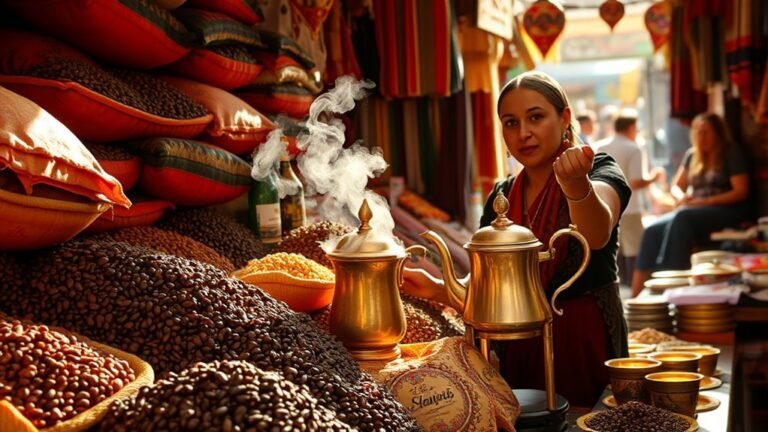

A Guide to African Coffees: Ethiopia, Kenya, and Beyond
If you’re exploring African coffees, start with Ethiopia, known for its bright citrus and floral notes from heirloom varieties grown at high altitudes. Kenya offers vibrant acidity and fruity, wine-like flavors, while Rwanda and Tanzania bring floral, spicy, and fruity profiles shaped by volcanic soils and unique microclimates. Uganda adds bold, earthy notes through both Arabica and Robusta beans. These distinct flavors shape global coffee trends, highlighting quality and sustainability across the continent. Discover how each region’s heritage influences the cup.
The Origins of Coffee in Africa

Although coffee is enjoyed worldwide today, its origins trace back to Africa, specifically the Ethiopian highlands. You’ll find that coffee legends from this region reveal how coffee’s energizing effects were first discovered by a goat herder named Kaldi. These stories aren’t mere myths but emphasize coffee’s deep historical significance in shaping social and cultural freedoms. Understanding these origins helps you appreciate how coffee evolved from a regional stimulant to a global symbol of liberation and connection. When you explore this rich heritage, you recognize coffee as more than a beverage—it’s a catalyst for community and independence. By tracing coffee’s African roots, you embrace a narrative of discovery and empowerment that continues to inspire freedom in your daily rituals.
Distinctive Characteristics of Ethiopian Coffees
Building on Ethiopia’s role as the birthplace of coffee, it’s important to recognize what sets Ethiopian coffees apart in the global market. Ethiopian coffee is renowned for its exceptional flavor complexity, offering a spectrum of tastes from bright citrus and floral notes to deep wine-like undertones. This diversity stems from Ethiopia’s unique heirloom coffee varieties and distinct growing regions, such as Sidamo, Yirgacheffe, and Harrar, each imparting their own signature profiles. When you choose Ethiopian coffee, you’re embracing beans cultivated under traditional, often organic, methods at high altitudes, which contribute to its vibrant acidity and layered aromas. These characteristics make Ethiopian coffee a benchmark for quality and an expression of freedom in flavor, inviting you to explore and savor every nuanced sip.
Exploring the Flavor Profiles of Kenyan Beans
When you explore Kenyan coffee beans, you’ll discover a profile defined by its bright acidity, full body, and vibrant fruitiness. Kenyan acidity is renowned for its clarity and crispness, often described as wine-like or citrusy, which immediately awakens your palate. The unique Kenyan processing method—typically washed or wet-processed—enhances these qualities by removing the fruit’s pulp early, preserving the bean’s intrinsic flavors. You’ll also notice Kenyan sweetness, a natural sugary balance that complements the acidity without overpowering it. The Kenyan aftertaste lingers pleasantly, often with berry or blackcurrant notes, inviting you to savor every sip. Embracing these characteristics lets you fully appreciate why Kenyan coffee stands out, offering a dynamic, freeing experience for those who seek complexity and vibrancy in their cup.
Coffee Cultivation in Rwanda and Tanzania
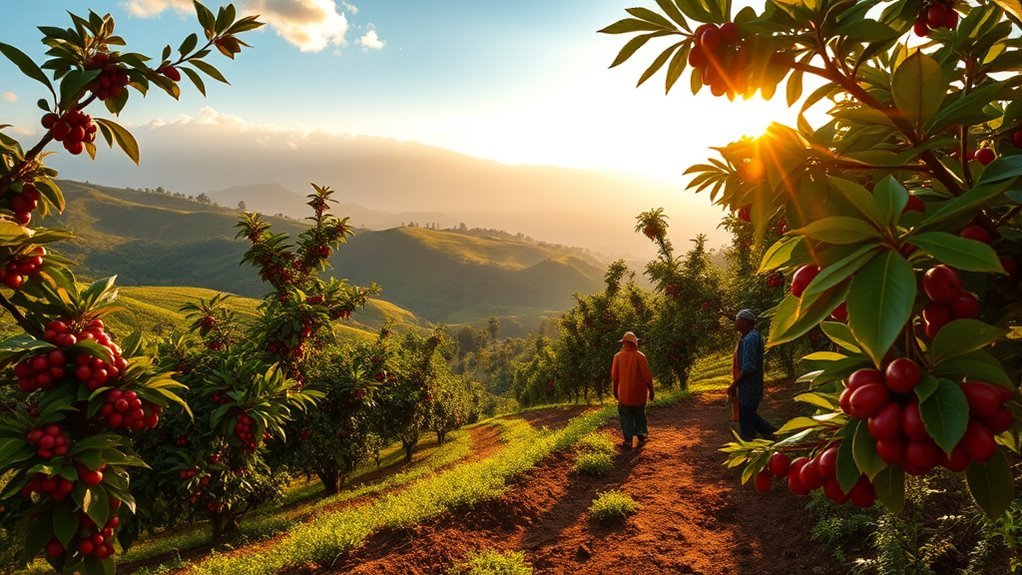
When you explore coffee cultivation in Rwanda, you’ll find key growing regions like Nyungwe and the Congo Nile Crest that produce beans with vibrant acidity and floral notes. In Tanzania, you’ll encounter unique varietals such as Bourbon and Kent, which thrive at high altitudes and deliver balanced, fruity flavors. Understanding these regional distinctions will sharpen your appreciation of East African coffees.
Rwanda Coffee Growing Regions
Although Rwanda is a small country, its diverse coffee growing regions produce some of the continent’s most distinctive beans. When you explore Rwanda coffee, you’ll find that its unique microclimates and volcanic soils contribute to exceptional quality. Coffee production here thrives because farmers harness these natural advantages with care.
You’ll appreciate how these three regions stand out:
- Kigali Ngali Hills – Known for bright acidity and floral notes, perfect if you crave vibrancy.
- Nyungwe Forest Area – Offers complex, fruity flavors, appealing to those who seek depth.
- Lake Kivu Region – Delivers a smooth, balanced cup, ideal for lovers of subtlety.
Your freedom to savor distinct tastes comes from Rwanda’s commitment to quality in every bean.
Tanzania Coffee Varietals
Since Tanzania shares similar high-altitude terrains and volcanic soils with Rwanda, its coffee varietals offer unique profiles that coffee enthusiasts will find compelling. When you explore Tanzania coffee, you’ll notice the Arabica beans, mainly of Bourbon and SL28 varietals, thrive here due to the ideal growing conditions. These beans, influenced by Tanzanian origins, often produce bright acidity with fruity and floral notes, making them stand out in African coffee markets. Additionally, Robusta beans are grown in lower altitudes, contributing a bolder, earthier flavor preferred by some drinkers. Understanding these varietals helps you appreciate how Tanzania’s diverse microclimates shape coffee flavors. If you seek freedom in your coffee experience, Tanzanian coffee offers a nuanced and authentic taste that reflects its rich terroir and heritage.
Unique Coffee Varieties From Uganda

When you explore Uganda’s coffee scene, you’ll find both Arabica and Robusta varieties thriving in distinct regions. Each offers unique flavor profiles—Arabica tends to be bright and fruity, while Robusta delivers a bold, earthy taste. Understanding where these beans grow helps you appreciate the diversity and quality Uganda brings to African coffee.
Arabica Vs Robusta
While both Arabica and Robusta coffees are cultivated extensively across Uganda, understanding their distinct characteristics is key to appreciating the unique qualities each variety offers. You’ll notice Arabica characteristics include a smoother, more complex profile, thriving in higher altitudes with cooler climates. In contrast, robusta cultivation focuses on lower altitudes and warmer conditions, producing beans known for their strong, bold nature and higher caffeine content.
Here’s why this matters to you:
- Arabica’s delicate traits allow you to savor subtle nuances.
- Robusta’s resilience means reliable, consistent harvests.
- Choosing between them empowers your coffee experience, aligning with your taste freedom.
Grasping these differences lets you embrace Uganda’s coffee diversity on your terms.
Flavor Profiles Unique
Although Uganda is widely recognized for its Arabica and Robusta beans, the country also offers unique coffee varieties that present distinct flavor profiles you won’t find elsewhere. When you explore Ugandan coffees, expect flavor notes ranging from bright citrus and floral hints to rich, earthy undertones. These tasting profiles reflect the country’s diverse microclimates and traditional processing methods. Unlike other African coffees, Ugandan varieties often deliver a bold body combined with subtle fruity acidity, giving you a balanced yet vibrant cup. If you’re seeking freedom in flavor exploration, Uganda’s coffees invite you to experience complexity without compromise. These unique profiles make Ugandan beans a valuable addition to any coffee lover’s repertoire, setting them apart with unmistakable character and depth.
Growing Regions Overview
Three key regions in Uganda stand out for producing its unique coffee varieties: Bugisu, Mount Elgon, and the Western Highlands. Each offers distinct growing conditions shaped by regional climates, soil types, and elevation ranges, which influence flavor and quality. You’ll appreciate how these factors combine with expert cultivation techniques and precise harvest seasons to create exceptional coffee.
- Bugisu’s volcanic soils and high elevation (1,500–2,200m) yield Arabica with bright acidity and floral notes.
- Mount Elgon’s cooler climate and rich soils support robust Robusta beans, prized for their boldness.
- The Western Highlands, with moderate elevation and fertile soils, produce balanced coffees with smooth profiles.
Understanding these regions helps you savor Uganda’s coffee freedom, embracing diversity in every cup.
How African Coffees Influence Global Coffee Trends
Because African coffees boast unique flavor profiles and rich histories, they’ve become pivotal in shaping global coffee trends. You’ll notice how coffee sustainability and evolving market trends are directly influenced by African producers who prioritize quality and environmental stewardship. This impact extends beyond taste—it’s about ethical sourcing and innovation.
| Region | Flavor Notes | Market Impact |
|---|---|---|
| Ethiopia | Floral, Citrus | Drives specialty demand |
| Kenya | Berry, Bright Acid | Sets quality benchmarks |
| Tanzania | Spicy, Winey | Expands market diversity |
| Rwanda | Sweet, Nutty | Promotes sustainability |
| Uganda | Earthy, Chocolatey | Enhances robust blends |
Frequently Asked Questions
What Brewing Methods Best Highlight African Coffee Flavors?
Did you know that 75% of coffee enthusiasts prefer pour over and French press for African beans? If you want to highlight those vibrant fruity and floral notes, pour over is your go-to for clarity and brightness. French press, on the other hand, gives you a fuller body and richer texture, emphasizing the coffee’s complexity. Both methods let you savor the distinctive flavors, giving you freedom to explore every nuanced sip.
How Does Altitude Affect African Coffee Bean Quality?
You’ll find that altitude variation plays an essential role in shaping coffee bean quality. Higher altitudes slow cherry maturation, allowing complex sugars and acids to develop, enhancing the flavor profile with brighter acidity and intricate fruit notes. Conversely, lower altitudes often yield beans with a heavier body but less complexity. Understanding this helps you appreciate how elevation influences the nuanced characteristics you crave in your perfect cup.
Are African Coffees Typically Organic or Shade-Grown?
Did you know over 70% of African coffee farms use shade-grown methods? While not all African coffees have organic certifications, many are cultivated using traditional, low-impact practices that align with organic principles. Shade grown benefits include preserving biodiversity, improving bean quality, and protecting ecosystems. If you value environmental freedom and purity, you’ll appreciate how these coffees often grow naturally, with minimal chemicals and under protective canopies that enhance flavor and sustainability.
What Are the Best Storage Tips for African Coffee Beans?
To keep your coffee freshness intact, store African coffee beans in airtight storage containers that block light and moisture. Avoid using clear jars or leaving beans exposed to air, as oxygen speeds up staling. Keep containers in a cool, dark place away from heat and humidity. Don’t refrigerate beans, since condensation can harm flavor. By controlling these factors, you’ll preserve the vibrant, complex notes unique to African coffees longer, letting you enjoy the full experience freedom offers.
How Do African Coffee Prices Compare Globally?
You might find it surprising that African coffee prices can fluctuate up to 30% annually due to varying global demand and climate impacts. These price fluctuations mean you’ll often see African beans priced higher than some counterparts because of their unique flavors and limited supply. If you value quality and uniqueness, understanding these market dynamics helps you make informed choices while maneuvering through the global coffee landscape with confidence.