How to Choose the Right Coffee Beans for Your Taste Preferences
To pick the right coffee beans, start by identifying the flavor profiles you prefer—fruity acidity from East African arabicas or bold, earthy tones from Southeast Asia robustas. Consider roast levels: light roasts preserve acidity, while dark roasts highlight bitterness. Match beans to your brewing method; espresso favors dark, finely ground beans, while pour-over suits medium roast. Freshness matters—choose beans roasted within weeks and store them airtight and cool. Explore these factors to refine your ideal coffee experience.
Understanding Coffee Bean Varieties
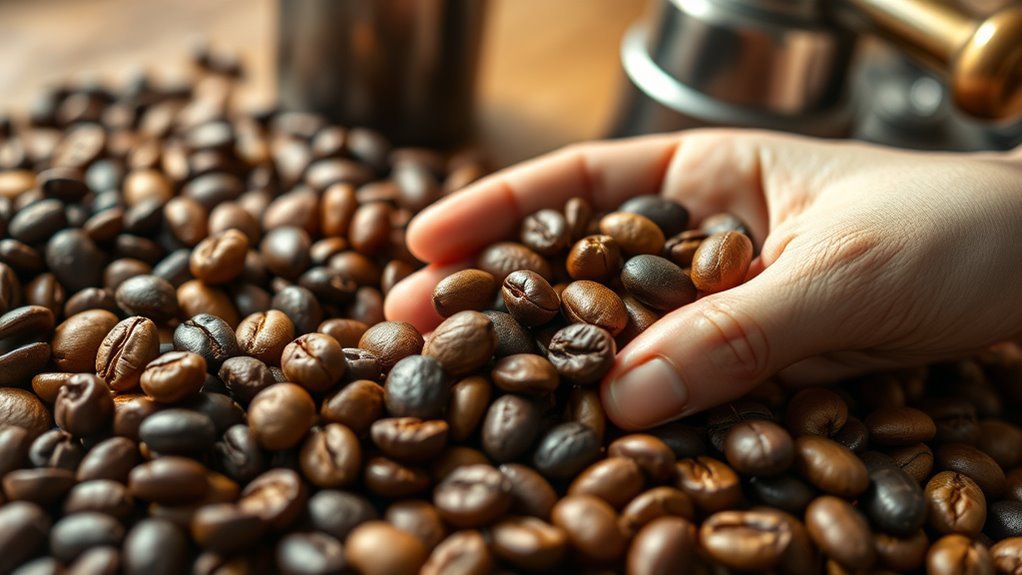
Although you might think all coffee beans are the same, understanding the distinct varieties is essential for selecting beans that match your taste preferences. The primary distinction lies between arabica vs robusta beans. Arabica beans typically offer nuanced acidity and complex flavors like fruity or floral notes on the flavor wheel, appealing if you want a refined, lighter profile. In contrast, robusta beans contain higher caffeine and present earthier, more bitter, and woody tones, giving a stronger, bolder cup. Knowing this difference empowers you to choose beans that align with your desired experience—whether you seek delicacy or intensity. Exploring the flavor wheel further helps you pinpoint specific taste notes, ensuring your coffee freedom by tailoring your selection to the exact characteristics you crave.
Exploring Roast Levels and Their Impact
When you choose light roast coffee beans, you’ll notice they preserve the bean’s original acidity and complex floral or fruity notes due to shorter roasting times. Medium roasts strike a balance by developing sweeter, caramelized flavors while maintaining some of the bean’s inherent characteristics. Dark roasts, roasted longer at higher temperatures, emphasize bold, smoky, and bittersweet flavors as the sugars caramelize fully and oils rise to the surface.
Light Roast Characteristics
Light roast coffee beans preserve much of the original flavor profile of the coffee cherry, offering higher acidity and a lighter body compared to darker roasts. You’ll notice pronounced flavor notes—often fruity or floral—due to minimal Maillard reaction and caramelization during roasting. Acidity levels remain elevated, providing a bright, vibrant cup that reveals the bean’s origin characteristics.
| Characteristic | Description |
|---|---|
| Flavor Notes | Fruity, floral, citrus, herbal |
| Acidity Levels | High, crisp |
| Body | Light, delicate |
Choosing light roasts means embracing transparency in your cup, allowing you to explore the unique terroir and original coffee bean nuances without the heavy influence of roasting. This roast level gives you freedom to savor clarity and complexity.
Medium Roast Balance
Since medium roasts strike a balance between preserving origin flavors and developing roast-derived notes, you’ll find they offer a harmonious profile with moderate acidity, fuller body, and enhanced sweetness. Understanding medium roast flavor nuances empowers you to select beans that satisfy both complexity and smoothness.
- Medium roast acidity is more subdued than light roasts, providing a pleasant brightness without sharpness.
- Caramelization at this stage enhances sweetness, creating rich, rounded taste profiles.
- The fuller body results from partial breakdown of cell structures, increasing mouthfeel and depth.
- Subtle roast notes like toasted nuts or mild chocolate emerge without overpowering origin characteristics.
Choosing medium roast beans gives you freedom to enjoy balanced complexity and comfort in every cup.
Dark Roast Boldness
Though dark roasts sacrifice some origin-specific flavors, they develop bold, intense profiles characterized by pronounced bitterness, smoky undertones, and a heavier body. When you choose dark roast flavors, you’re embracing beans roasted longer, reaching higher internal temperatures—typically between 465°F to 480°F—resulting in deeper caramelization and Maillard reactions. This process diminishes acidity while amplifying bold coffee characteristics, including a robust, almost syrupy mouthfeel. If you crave freedom from delicate, fruity notes, dark roast boldness offers a commanding experience. Keep in mind, these beans exhibit less complexity but deliver consistency in strength and flavor intensity. To fully appreciate dark roast flavors, pair them with brewing methods that emphasize body, like French press or espresso, ensuring you harness their full potential without masking their signature smoky and bittersweet essence.
Identifying Flavor Profiles You Enjoy
How do you determine which coffee flavors truly resonate with your palate? Start by exploring the flavor wheel, a technical tool that categorizes tasting notes into distinct groups—fruity, floral, nutty, spicy, and more. This framework helps you pinpoint specific flavor nuances you prefer.
- Sample diverse beans and note the tasting notes that stand out.
- Use cupping sessions to train your palate in detecting subtle flavor distinctions.
- Record your preferences systematically to identify patterns.
- Experiment with brewing methods, as they can highlight different flavor aspects.
Considering Coffee Origin and Terroir
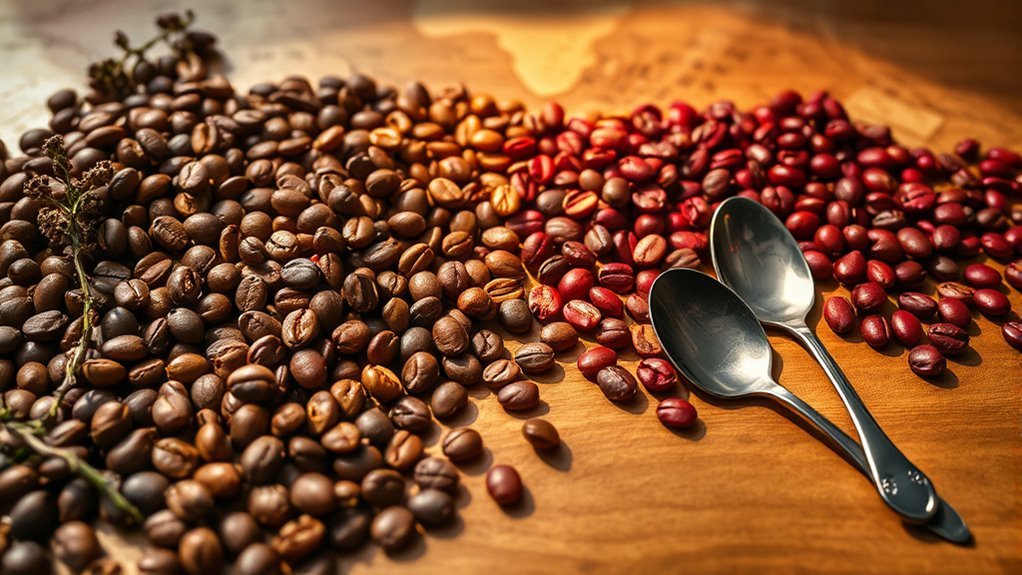
You’ll notice that coffee beans from different regions exhibit distinct flavor profiles, influenced by factors like soil composition, climate, and local farming practices. Altitude plays a critical role as well, affecting bean density and acidity, which directly impact taste complexity and brightness. Understanding these terroir elements helps you select beans that align precisely with your flavor preferences.
Flavor Profiles by Region
Because coffee’s flavor is deeply influenced by its origin, understanding regional profiles can help you select beans that align with your palate. Arabica vs. Robusta distinctions aside, regional differences shape acidity, body, and aromatic complexity. Here’s a precise overview:
- East Africa – Known for bright acidity, floral and fruity notes; primarily Arabica thrives in high-altitude terroirs.
- Central and South America – Balanced profiles with nutty, chocolate undertones; moderate acidity, often Arabica varieties.
- Southeast Asia – Earthy, full-bodied flavors with low acidity; Robusta is common, influencing bitterness and strength.
- Caribbean – Smooth, medium-bodied coffees with mild fruitiness and subtle spice, mostly Arabica.
Impact of Altitude
Although altitude might seem like a simple geographic detail, it profoundly affects coffee’s chemical composition, influencing acidity, sweetness, and aroma. When you choose beans grown at higher elevations, you’re tapping into the high altitude impact, where cooler temperatures slow bean maturation. This extended development enhances sugar accumulation and organic acid complexity, resulting in brighter acidity and heightened flavor intensity. Conversely, lower-altitude beans mature faster, often yielding milder, earthier profiles. Understanding this terroir element lets you select beans that align with your taste preferences—whether you crave vibrant, crisp notes or smoother, heavier-bodied cups. So, next time you explore coffee origins, consider altitude as a critical factor shaping the sensory experience you desire, giving you the freedom to pinpoint the perfect balance between acidity and richness.
Matching Brewing Methods to Bean Types
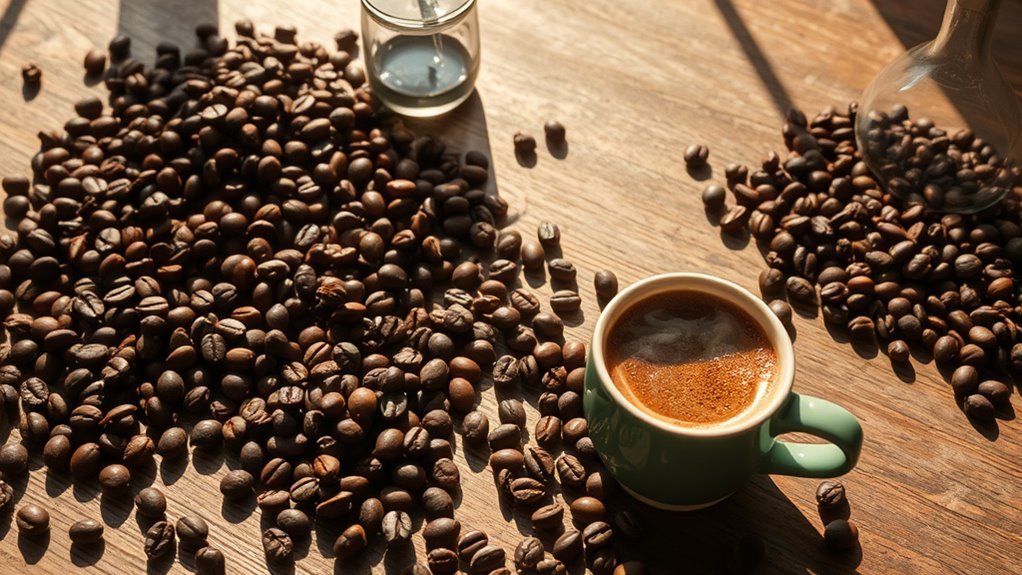
When selecting coffee beans, understanding how their characteristics interact with different brewing methods is essential to revealing the best flavors. You’ll want to take into account brewing techniques and bean compatibility carefully to release each bean’s potential. Here’s a quick guide:
- Espresso — Opt for dark roasts with a fine grind; their bold, concentrated flavors shine through high-pressure extraction.
- Pour-over — Medium roasts work best here, highlighting nuanced floral and fruity notes with a balanced grind size.
- French Press — Coarse-ground beans, often medium to dark roast, provide a full-bodied, rich cup due to immersion brewing.
- Cold Brew — Light to medium roasts with coarse grounds extract smooth, less acidic profiles over extended steeping.
Matching brewing methods to bean types guarantees you’re free to craft coffee that truly satisfies your palate.
Evaluating Freshness and Storage Tips
Understanding the ideal brewing method and bean type is only part of achieving the perfect cup; ensuring your coffee’s freshness is equally important. You need to look for freshness indicators like roast date and aroma strength. Proper storage containers are critical to preserving flavor by limiting oxygen, moisture, and light exposure.
| Freshness Indicator | Importance |
|---|---|
| Roast Date | Best consumed within 2-3 weeks |
| Aroma | Strong scent signals freshness |
| Packaging | One-way valve bags preserve CO2 |
| Storage Temperature | Cool, stable temps prevent degradation |
| Storage Containers | Airtight, opaque containers ideal |
Choose airtight, opaque containers and keep beans cool and dry. Avoid clear jars or plastic bags, which degrade quality quickly. This approach preserves your freedom to enjoy coffee at its peak.
Experimenting to Discover Your Perfect Blend
How do you pinpoint the coffee blend that perfectly matches your palate? The key lies in systematic blend experimentation through structured tasting sessions. Start by selecting diverse beans with varying roast levels and origins. Then, brew small batches to isolate flavor profiles. Follow these steps:
- Record sensory notes—acidity, body, aroma, aftertaste—for each sample.
- Adjust ratios of different beans to create custom blends.
- Reassess blends in multiple tasting sessions to detect subtle differences.
- Refine your blend based on cumulative data and personal preference.
This methodical approach liberates you from guesswork, empowering you to craft a blend that aligns precisely with your taste desires. Experimentation isn’t just fun—it’s the path to your ultimate coffee freedom.
Frequently Asked Questions
How Do Coffee Bean Prices Affect Quality and Flavor?
Imagine a delicate dance between cost and craft—when you consider coffee bean prices, you’re peering into the heart of price quality balance. Higher-priced beans often hail from meticulous cultivation, enhancing their flavor profile with complex notes. However, price doesn’t always guarantee perfection; some affordable beans surprise with unique characteristics. You’ll want to explore how price influences quality, but ultimately trust your palate to find freedom in flavor discovery.
Can Coffee Bean Certifications Guarantee Ethical Sourcing?
Certification labels can provide a level of sourcing transparency, but they don’t always guarantee fully ethical practices. You’ll find that some labels enforce strict standards, securing fair wages and sustainable farming, while others might have looser criteria. To truly guarantee ethical sourcing, you should research the certification’s credibility and the company’s supply chain transparency. Don’t rely solely on labels; dig deeper to align your freedom of choice with genuine ethical values.
What Equipment Is Best for Grinding Different Coffee Beans?
Like a blacksmith choosing the right hammer for each strike, you’ll want to pick your grinding equipment carefully. Burr grinders offer consistent particle size, essential for precise extraction, while blade grinders are less uniform but budget-friendly. For espresso, fine burrs excel; French press calls for coarse settings. Mastering grinding techniques means adjusting grind size and time to match your bean type and brewing method, giving you complete control over flavor freedom.
How Do Seasonal Changes Impact Coffee Bean Availability?
Seasonal changes affect coffee bean availability because coffee relies on seasonal harvests, which vary by region due to climate impact. You’ll notice certain beans become scarce or plentiful depending on when and where they’re grown. Climate fluctuations can shift harvest times or reduce yield, limiting supply. Understanding these patterns lets you anticipate when your favorite beans are fresh or rare, giving you freedom to plan your coffee choices throughout the year with precision.
Are Single-Origin Beans Better Than Blends for Beginners?
Wondering if single-origin beans are better for beginners? Single origin advantages include distinct flavor profiles that let you explore unique regional notes, enhancing your coffee knowledge. However, blends offer blend versatility, balancing flavors for a consistent, approachable cup. If you crave freedom to experiment, start with single origins to develop your palate, but don’t overlook blends—they simplify brewing without sacrificing quality. You’ll find your favorite by tasting both.