Tips for Finding the Best Coffee Beans in Your Local Area
To find the best coffee beans locally, start by exploring specialty shops and local roasters where beans are fresh and unique. Attend coffee tastings or farmers markets to sample flavors and learn about origins. Ask baristas for expert recommendations tailored to your taste. Always check roast dates to guarantee freshness, and experiment with different roast levels and single-origin varieties to discover what you enjoy most. There’s plenty more to uncover about sourcing and savoring exceptional coffee in your area.
Explore Local Coffee Roasters and Specialty Shops
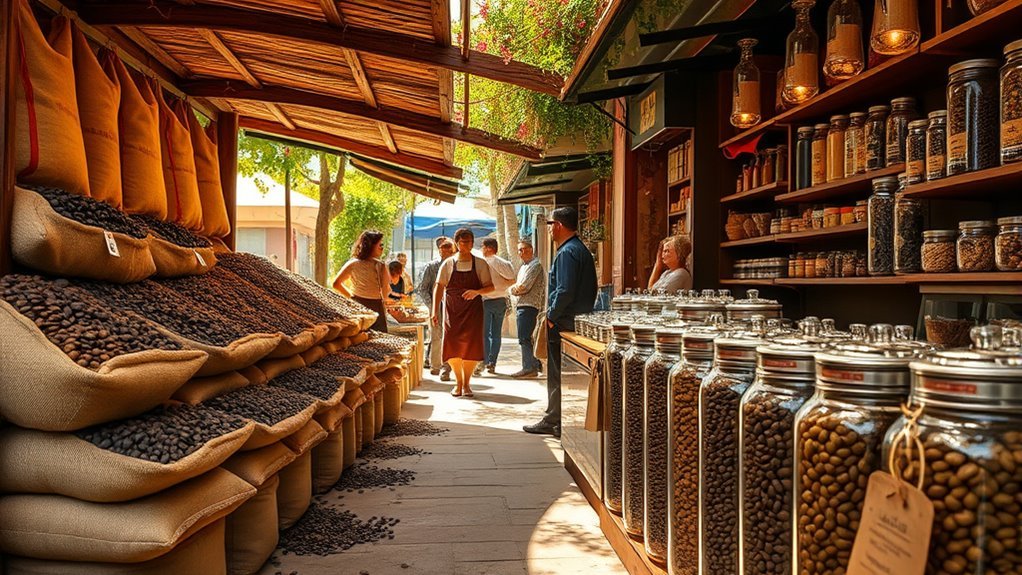
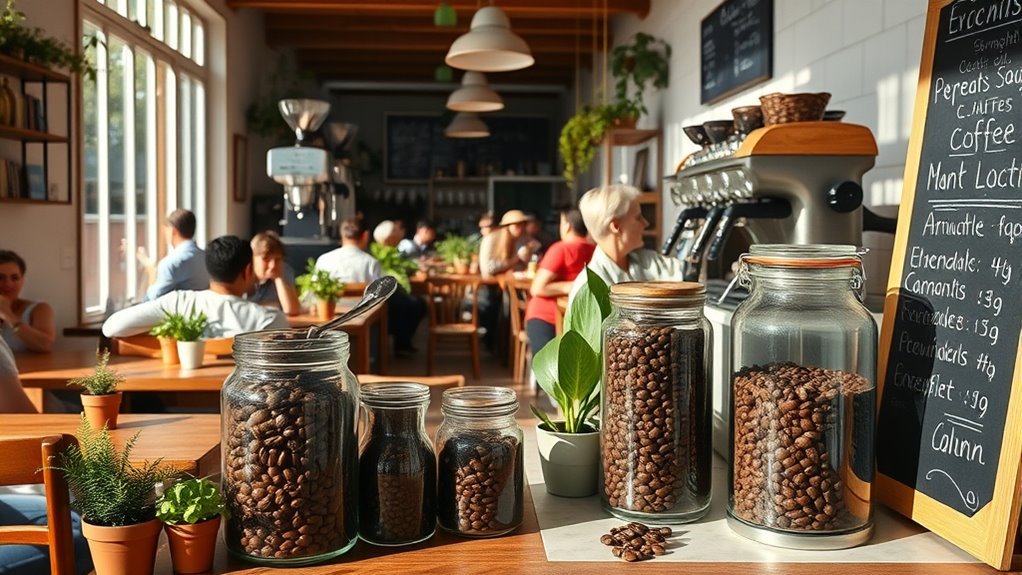
Where can you find coffee beans that truly capture the essence of your region? Exploring local coffee roasters and specialty shops is your best bet. These places offer unique specialty shop varieties that reflect the distinct flavors and craftsmanship of your area. When you buy from a local roaster, you enjoy benefits like fresher beans, direct support for small businesses, and access to expertly curated selections tailored to your tastes. Local roaster benefits include personalized recommendations and transparency about sourcing, ensuring your coffee experience feels authentic and liberating. By embracing these local sources, you’re not just buying coffee—you’re connecting with a community that values quality, diversity, and the freedom to discover new, exciting flavors. Your next perfect cup awaits nearby.
Attend Coffee Tasting Events and Farmers Markets
How often do you get the chance to sample a variety of coffee beans side by side before making a purchase? Attending coffee tasting events and farmers markets offers exactly that freedom. These gatherings let you explore diverse flavor profiles firsthand—whether it’s fruity, nutty, or earthy notes—helping you identify what truly excites your palate. At these events, you’re not just tasting; you’re learning about the beans’ origins, roast levels, and processing methods. This direct experience empowers you to make informed choices, steering clear of guesswork. Plus, farmers markets often feature local roasters who bring fresh, unique selections you won’t find elsewhere. By immersing yourself in coffee tastings, you reveal a world of flavor possibilities while supporting your local coffee community.
Ask for Recommendations From Baristas and Coffee Enthusiasts
Why guess when you can get expert advice? Tap into barista insights by chatting with the skilled professionals behind your local coffee counter. They know which beans shine in your area and can tailor recommendations to your taste preferences. These conversations open doors to unique varieties and brewing tips that elevate your coffee experience. Don’t stop there—immerse yourself in your local coffee community. Fellow enthusiasts often share their favorite bean sources and hidden gems, providing a rich pool of knowledge. Engaging with both baristas and coffee lovers empowers you to make informed choices, breaking free from generic options. By seeking their advice, you’re not just buying beans; you’re embracing a journey toward discovering coffee that truly resonates with your palate.
Check Roast Dates and Bean Origin Information
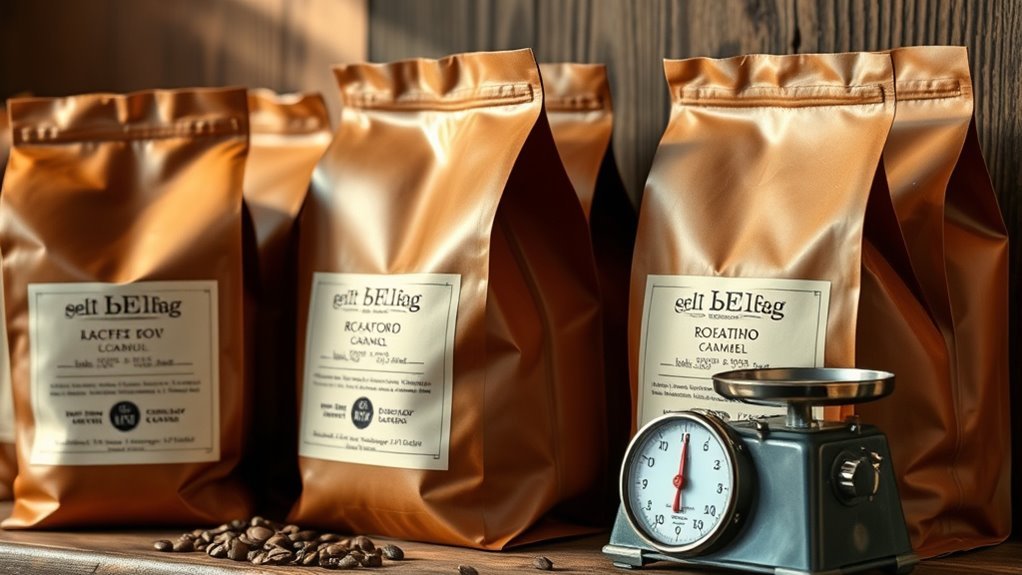
You’ll want to check the roast date to ascertain your coffee beans are fresh, as flavors peak within a few weeks after roasting. Knowing the bean’s origin helps you anticipate flavor profiles, since regions impart distinct characteristics. Paying attention to these details assures a more vibrant and enjoyable cup.
Importance of Freshness
Although many factors influence coffee quality, freshness plays an essential role in delivering the best flavor and aroma. When you select your beans, always check the roast date—freshly roasted beans peak within two to four weeks. Beyond that, the freshness impact diminishes rapidly as oils and aromatic compounds degrade. Proper coffee storage is vital to preserve this freshness; exposure to air, moisture, and light accelerates staleness. You’ll want to store your beans in an airtight container, away from heat and sunlight, to secure their vibrant flavors. By prioritizing freshness, you free your coffee experience from dull, flat tastes and reveal the full spectrum of the bean’s character. Fresh beans offer you the freedom to savor every sip at its peak.
Understanding Bean Origins
Freshness sets the stage for enjoying coffee, but understanding where your beans come from adds another layer to appreciating their unique qualities. When you check roast dates, you guarantee the beans are at their peak flavor potential. Beyond that, knowing the origin profiles helps you anticipate the bean flavor—whether it’s bright and citrusy from Ethiopia, rich and chocolatey from Colombia, or earthy and bold from Sumatra. Each region imparts distinct taste notes shaped by climate, soil, and altitude. By paying attention to origin information on packaging or from your local roaster, you gain insight into the story behind your cup, empowering you to select beans that match your personal flavor preferences and elevate your coffee experience.
Experiment With Different Roast Profiles and Varieties
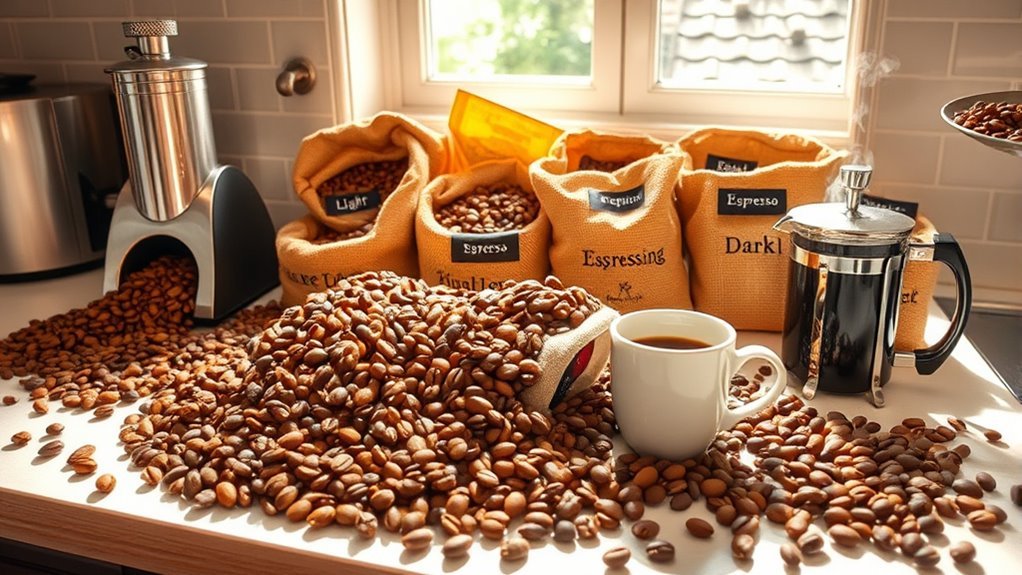
You’ll notice light roasts highlight bright, acidic flavors, while dark roasts bring out deeper, smoky notes. Trying single-origin beans lets you appreciate unique regional characteristics, whereas blends offer a balanced, consistent profile. Experimenting with these options helps you pinpoint the flavor profile that suits your palate best.
Light Vs Dark Roasts
When exploring coffee beans, understanding the differences between light and dark roasts is essential because each roast level reveals distinct flavor profiles and aromas. You’ll find that light roast benefits include preserving the bean’s original characteristics, offering bright acidity, and floral or fruity notes. On the other hand, dark roast flavors emphasize boldness with smoky, chocolatey, and caramelized undertones due to prolonged roasting.
Consider these points when choosing your roast:
- Light roasts highlight origin-specific flavors and vibrant acidity.
- Dark roasts provide a fuller body and richer, bittersweet notes.
- Light roasts retain more caffeine compared to dark roasts.
- Dark roasts often yield a smoother, less acidic cup.
Experiment with both to enjoy the freedom of discovering your perfect brew.
Single-Origin Vs Blends
Exploring single-origin coffees versus blends opens up a world of flavor complexity and variety that can elevate your brewing experience. Single origin advantages lie in their unique, traceable flavor profiles, often highlighting specific regions’ terroir—from bright, fruity notes to rich, earthy undertones. These coffees let you savor the distinctive character of one location, making each cup a journey. On the other hand, blend characteristics offer balance and consistency, combining beans from various origins to create harmonious flavors that suit diverse palates. Blends can smooth out acidity or intensify body, giving you flexibility to match your mood or brewing method. By experimenting with different roast profiles and varieties, you gain freedom to discover what resonates with your taste, revealing the full potential of your local coffee selection.
Join Local Coffee Clubs or Subscription Services
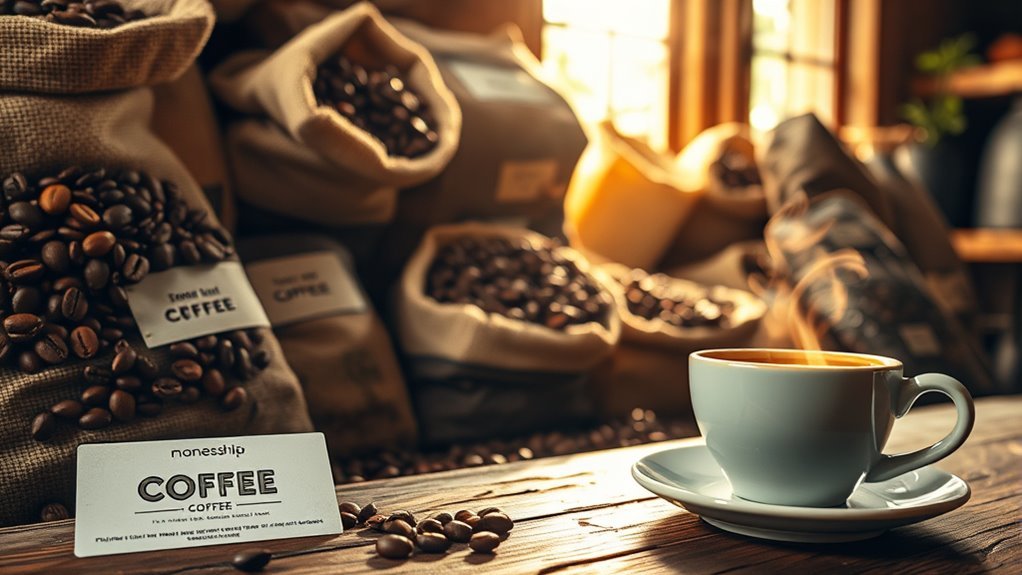
Joining one of the several local coffee clubs or subscription services can transform how you discover and enjoy coffee beans. With coffee subscriptions or local memberships, you gain access to curated selections that reflect your preferences and introduce you to new flavors without leaving home. These options offer freedom in your coffee journey, allowing you to explore diverse origins and roast profiles effortlessly.
Benefits include:
- Regular delivery of fresh, high-quality beans
- Exclusive access to limited or seasonal varieties
- Insightful tasting notes and brewing tips
- Opportunities to connect with local roasters and fellow enthusiasts
Frequently Asked Questions
How Should I Store Coffee Beans to Maintain Freshness?
Imagine your coffee beans as delicate treasures that could vanish into stale oblivion in seconds! To keep them fresh, you’ve got to give them the best storage possible—airtight containers are your ultimate shield against air, moisture, and light. Store beans in a cool, dark spot, avoiding the fridge or freezer to preserve their flavor freedom. Seal them tight, and you’ll savor every aromatic sip like it’s freshly roasted.
What Grind Size Is Best for Different Brewing Methods?
When choosing grind settings, you’ll want to match them to your brewing techniques. For espresso, a fine grind works best, allowing quick extraction under pressure. French press calls for a coarse grind to avoid over-extraction and bitterness. Drip coffee makers prefer a medium grind, balancing flavor and flow rate. Adjusting your grind size lets you control taste and strength, giving you the freedom to craft your perfect cup every time.
Can I Reuse Coffee Grounds for Another Brew?
You can reuse coffee grounds for another brew, but you’ll notice a weaker coffee extraction and a diminished flavor profile. The first brew extracts most of the soluble compounds, so the second cup tends to be more bitter and less aromatic. If you want a bolder taste, it’s best to use fresh grounds each time. Still, reusing grounds works if you’re aiming for a lighter, less intense coffee experience.
How Does Water Quality Affect Coffee Taste?
Did you know that 90% of your coffee’s flavor comes from water? Water hardness and mineral content play essential roles in how your brew tastes. If the water is too hard, it can make your coffee bitter; too soft, and it might taste flat. Finding the right balance of minerals lets you access the full flavor potential, giving you the freedom to enjoy a rich, vibrant cup every time.
What Equipment Is Essential for Brewing at Home?
When brewing at home, essential equipment includes a quality grinder, a reliable scale, and a brewing device like a French press, pour-over, or espresso machine. Mastering different brewing techniques lets you control extraction and flavor precisely. You’ll want fresh, filtered water and a thermometer too, since temperature impacts taste. With these tools, you’re free to experiment and craft coffee that suits your unique palate perfectly.